Leaf blower wins on speed; garden rake wins on control, cost, and composting.
I’ve tested both tools across yards, seasons, and soil types. This guide on leaf blower vs garden rake draws on hands-on experience, product knowledge, and practical tips. Read on to learn when to choose a leaf blower, when a garden rake is better, and how to use both to get the clean yard you want without fuss or waste.
Why compare leaf blower vs garden rake?
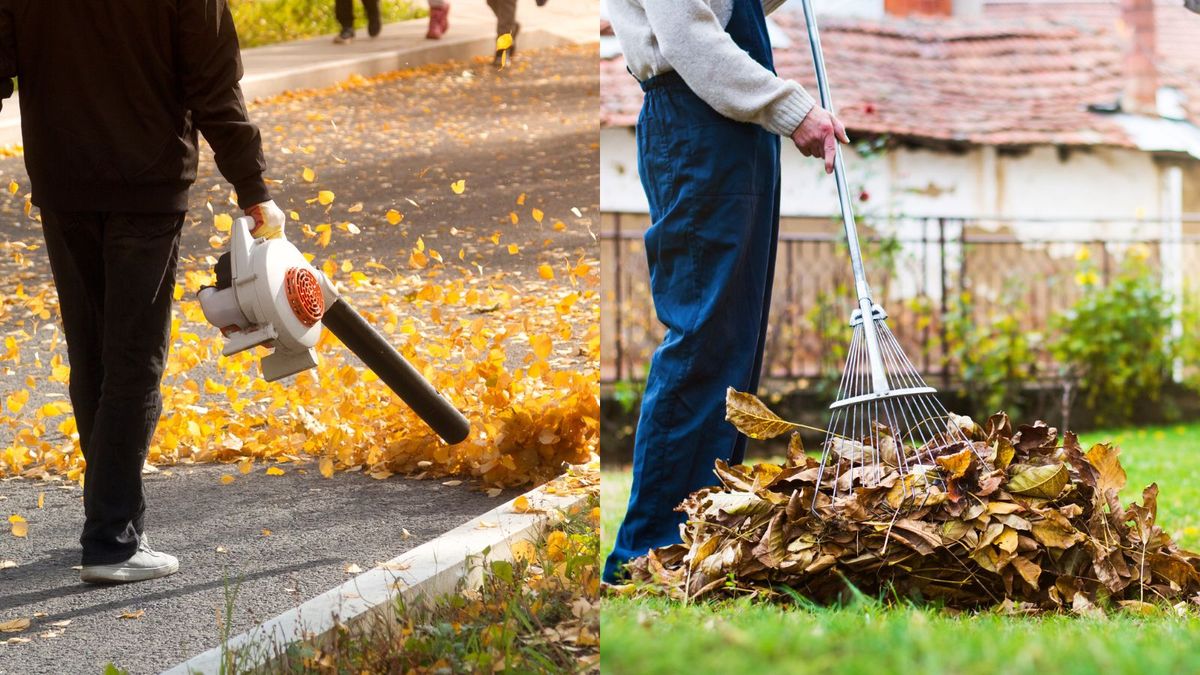
Choosing between a leaf blower vs garden rake affects time, noise, cost, and yard health. A leaf blower moves debris fast. A garden rake gives you control and collects material for compost. Comparing them helps you pick the right tool for your yard and lifestyle.
I will break down pros, cons, costs, and use cases. You’ll learn which tool fits your routine and how to combine both for the best result.

How each tool works and when to use it
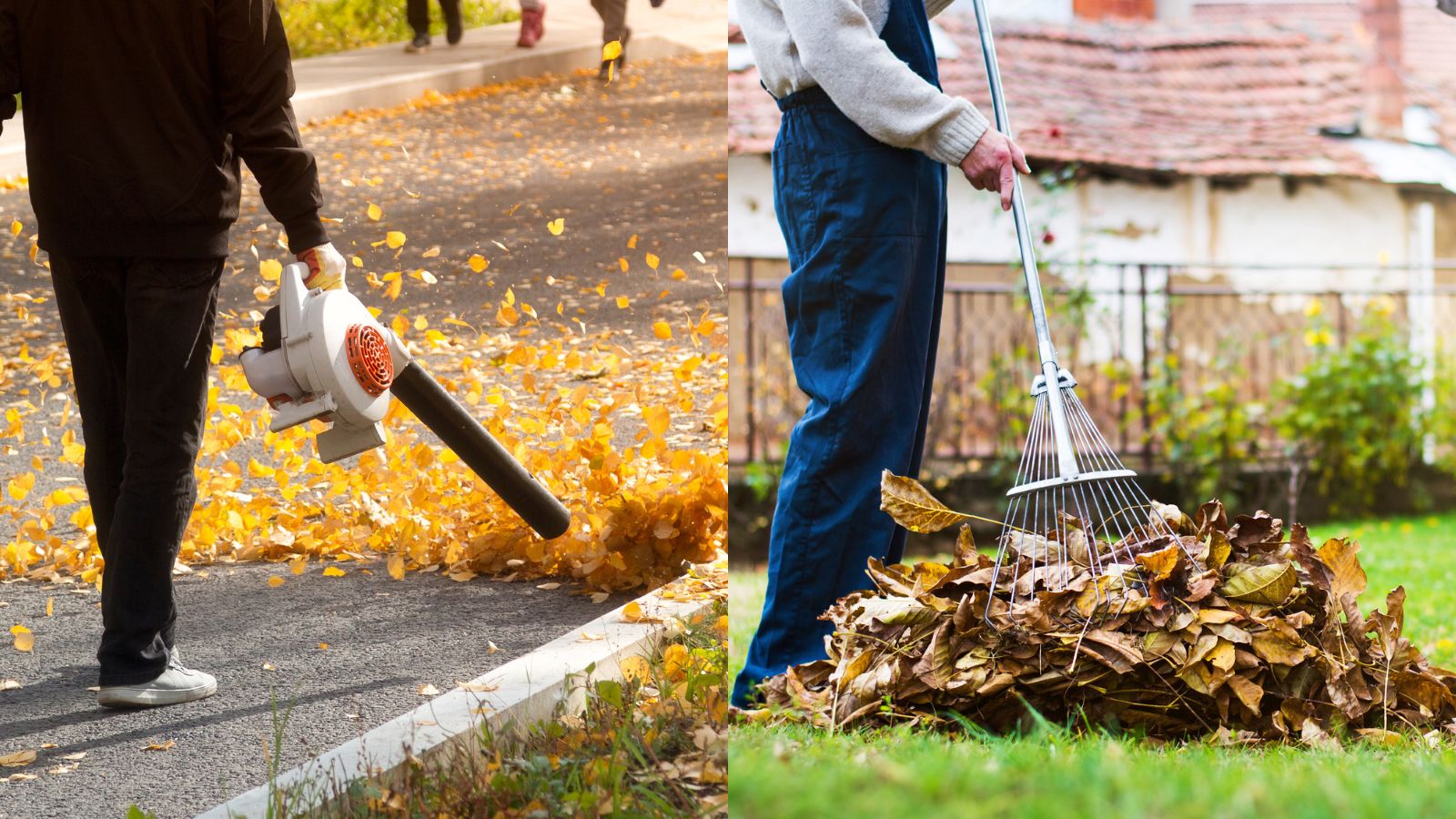
Leaf blower vs garden rake works very differently. Use a blower to push leaves, dust, and light debris with airflow. Use a rake to lift and gather debris with tines and muscle. Each has ideal moments.
Leaf blower best uses
- Clearing large lawns quickly
- Dry leaves and light debris
- Tight spaces like gutters and under decks with a nozzle
Garden rake best uses
- Collecting wet leaves and heavy debris
- Working on mulch beds or around plants without damage
- Preparing leaves for compost or bundles
Understanding these core differences helps you pick the right tool for each task.

Pros and cons: leaf blower vs garden rake
Here are practical pros and cons for each. I include real-life trade-offs I learned from years of yard work.
Leaf blower pros
- Fast clearing of large areas
- Low physical strain for users
- Good for getting leaves out from cracks and gutters
Leaf blower cons
- Noise can bother neighbors and violate local rules
- Gas models emit fumes; battery life limits cordless models
- Can scatter debris into beds or storm drains if used poorly
Garden rake pros
- Low cost and simple care
- Gentle on plants and lawns
- Raked leaves are easy to compost or bag
Garden rake cons
- Time-consuming on big yards
- Physically demanding; can strain back if used wrong
- Can be less efficient on wet or compacted leaves
When I first moved to a house with many oaks, I tried only a blower. It was fast but left wet piles that needed raking later. Now I use both. The blower moves leaves to piles. The rake helps me collect and compost them. This combo saves time and effort.

Types and features to consider
Choosing the right variant matters for both tools. Here’s what to look for when shopping for a leaf blower vs garden rake.
Leaf blower features
* Power source options include gas, cordless battery, and corded electric
- Power metrics: CFM (cubic feet per minute) and MPH (miles per hour) for airflow and speed
- Styles: handheld for small jobs, backpack for large yards, and walk-behind for heavy duty
- Additional features: variable speed, vacuum/mulcher function, anti-vibration handles
Garden rake features
- Tine material: metal tines last longer; plastic tines are lighter and gentler
- Tine count and spacing affect how well it picks up small debris
- Adjustable width models can save storage space
- Ergonomic handles reduce strain and improve posture
Tip from experience: For a medium yard, a battery blower of 400–600 CFM handles most fall work. Pair it with a 24–30 inch metal leaf rake for fast collection and composting.

Practical comparison: speed, effort, and results
You likely care about speed and results. Here’s how the leaf blower vs garden rake stack up by common yard metrics.
Speed
- Leaf blower cleans a large lawn in minutes.
- Garden rake takes longer but yields neater piles for compost.
Effort
- Leaf blower is low effort but requires standing and aiming.
- Garden rake needs physical exertion and good posture.
Quality of cleanup
- Leaf blower moves debris quickly but can leave small bits behind.
- Garden rake collects debris and leaves a tidy finish ready for compost.
If you have health limits or want a quick weekend tidy, choose a blower. If you want clean piles for compost and low cost, choose a rake. Or do both: blow to piles, rake to collect.
Cost, maintenance, and environmental impact
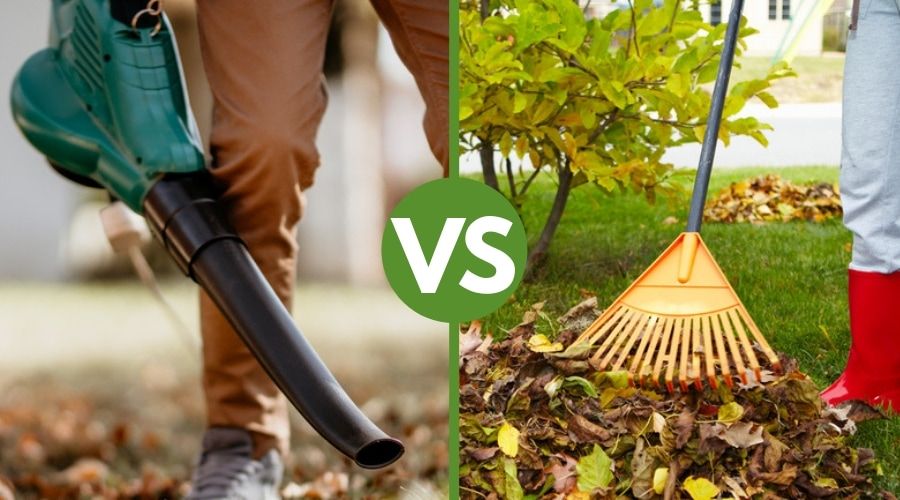
Cost and upkeep differ sharply between leaf blower vs garden rake. Think upfront cost, running cost, and local rules.
Costs and running expenses
- Leaf blower: $50–$600+ upfront depending on model, plus fuel or battery replacements
- Garden rake: $10–$60 upfront, nearly no running cost
Maintenance
- Leaf blower needs filters, spark plugs, battery care, and occasional repairs
- Garden rake needs occasional cleaning and handle care
Environmental impact
- Gas blowers produce emissions and noise. Many areas restrict use during certain hours.
- Electric blowers cut emissions at point of use but still use electricity.
- Rakes have near-zero emissions and support composting, which helps soil health.
Note: Local regulations increasingly limit gas blower hours. Check rules before buying a high-power gas model.

Safety, etiquette, and best practices
Using either tool the right way keeps you safe and keeps neighbors happy.
Safety tips for leaf blower vs garden rake
- Wear ear and eye protection with blowers.
- Use gloves and wear a back-friendly stance with rakes.
- Avoid blowing debris into public sidewalks or storm drains.
- Respect quiet hours and local noise rules.
Etiquette and composting
- Blow leaves into piles on your property, not into the street.
- Rake wet leaves into bags or compost them for mulch and soil health.
From personal mistakes: I once blew leaves into a neighbor’s yard by aim error. I learned to work from the property edge inward and ask neighbors about preferred timing. This avoids conflict and fines.
How to combine both tools for best results
Combining a leaf blower vs garden rake gives speed and compost-ready piles. Here’s a simple step-by-step method I use for fall cleanups.
- Start with the blower to move leaves toward the center or a collection point.
- Use the blower on low speed near plants to avoid damage.
- Rake the piled leaves into bags or a compost bin for reuse.
- Use the blower again to clear small leftover debris from hard surfaces.
This workflow saves time and reduces physical strain. It also gives you clean piles ready for composting or disposal.

Quick PAA-style questions (short answers)
Will a leaf blower damage plants or mulch?
Leaf blowers can shift mulch and damage small plants if used on high power nearby. Use lower speed and keep the nozzle off delicate beds.
Is a rake better for wet leaves?
Yes, rakes work better on wet, heavy leaves because they lift and gather material. Blowers struggle with wet, compacted leaves.
Can using a blower reduce compost quality?
Blowers can blow away fine leaf fragments that aid compost; raking preserves full leaf mass for better composting. Use rakes when you plan to compost.
Frequently Asked Questions of leaf blower vs garden rake
Is a leaf blower better than a rake?
A leaf blower is faster on large, dry areas. A rake is better for control, compost, and wet leaves. Many homeowners use both for best results.
Can a rake replace a leaf blower?
For small yards and composters, yes. A rake gives clean piles and low cost. For big yards, a rake can be slow and tiring.
Are electric blowers quieter and more eco-friendly than gas blowers?
Electric blowers are usually quieter and have lower direct emissions. They still use electricity, but they are more eco-friendly than gas models at point of use.
How do I avoid damaging my lawn with either tool?
Keep blower speed moderate and avoid close blasts over soil. Use a rake with proper technique and a wide head to reduce digging in grass.
What is the best routine for fall leaf cleanup?
Blow leaves into central piles, then rake and compost or bag them. Do work on dry days and follow local noise rules for blowers.
How often should I maintain a leaf blower?
Check and clean filters after heavy use and store batteries in recommended conditions. Annual tune-ups help gas blowers run well.
Are there rules about using leaf blowers in neighborhoods?
Yes, many areas restrict noise hours or ban gas blowers. Check local ordinances to avoid fines and neighbor complaints.
Conclusion
Leaf blower vs garden rake is not a strict either-or choice. A leaf blower saves time on large, dry jobs. A garden rake wins for control, composting, cost, and quiet. Use a blower to gather and a rake to collect. That combo keeps your yard tidy and your soil healthy.
Try this: pick the tool that fits your yard size and goals. Test a workflow this season, and adjust based on time, noise rules, and comfort. If this helped, share your experience, subscribe for more yard tips, or leave a comment with your yard size so I can suggest a tool mix that fits you.