Polycarbonate outperforms standard greenhouse plastic for strength, insulation, and long-term value.
I have designed and managed small and hobby greenhouses for years, and I’ve tested both materials in real weather and plant cycles. This article compares greenhouse plastic vs polycarbonate across light, warmth, cost, durability, and environmental impact. Read on for a practical, experience-based guide to choose the right covering for your greenhouse needs.

Understanding greenhouse plastic vs polycarbonate: basic definitions and types
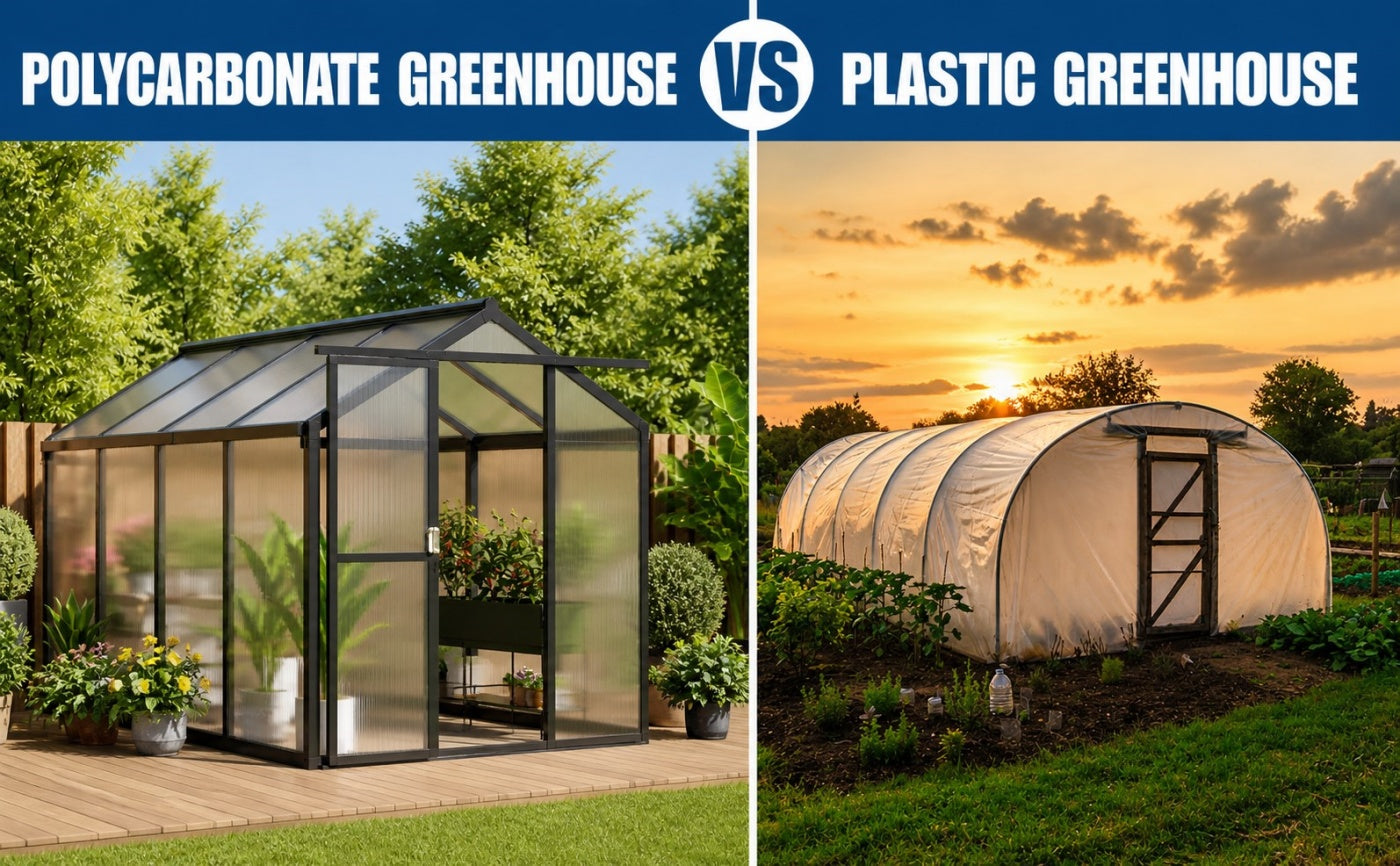
Greenhouse plastic usually means polyethylene film. It is thin, flexible, and sold as single-layer or double-layer films. Growers use it because it is cheap and easy to install.
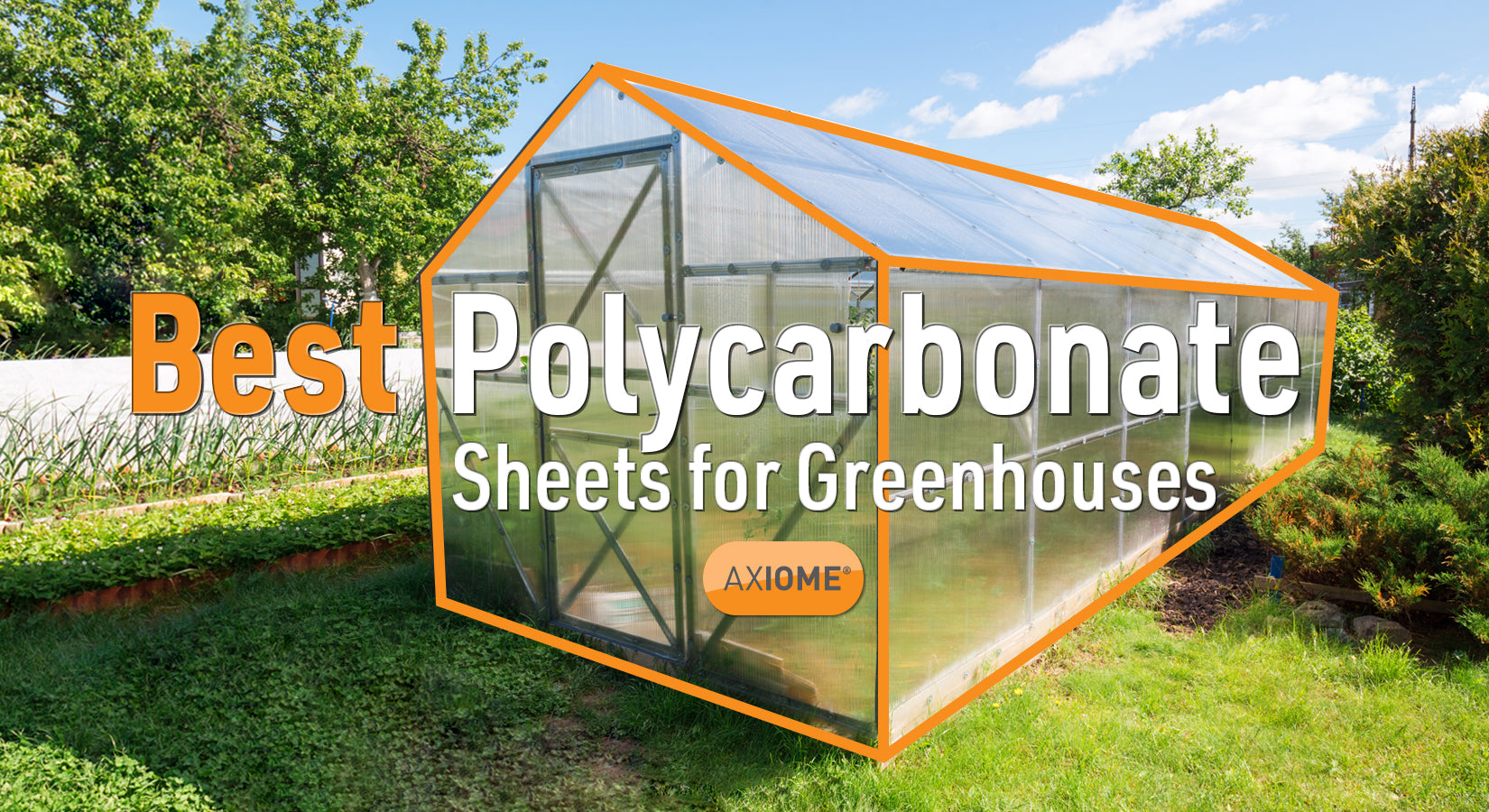
Polycarbonate is a rigid plastic panel. Panels come in single-sheet, twinwall, and multiwall forms. Twinwall polycarbonate traps air between layers and boosts insulation.
Key differences at a glance:
- Greenhouse plastic vs polycarbonate: plastic is flexible and low-cost, polycarbonate is rigid and long-lasting.
- Plastic is often replaced every 2–4 years. Polycarbonate can last 10–20 years.
- Polycarbonate gives better insulation; thin plastic transmits similar light but loses heat faster.
Light transmission and crop performance
Light matters most to plants. Both greenhouse plastic and polycarbonate let useful light through, but they do it differently.
Typical light numbers:
- Clear polyethylene film transmits about 80–90% of visible light when new.
- Clear polycarbonate sheets transmit 80–88% depending on thickness and wall design.
- Textured or diffusing polycarbonate reduces direct glare and spreads light more evenly.
For seedlings and sensitive crops, even light helps reduce hotspots and leaf burn. In my experience, twinwall polycarbonate with light diffusion delivered more uniform growth under bright sun than a single-layer plastic film. If you need maximum initial daylight and are on a tight budget, greenhouse plastic works well. If uniform light and less shading are priorities, choose polycarbonate.
Insulation and energy efficiency: keeping heat where you want it
Insulation affects winter heating and daytime heat retention. Polycarbonate outperforms plastic in this area.
Thermal characteristics:
- Single-layer polyethylene has very low R-value and little insulating effect.
- Twinwall polycarbonate creates air pockets and offers higher R-value, reducing heat loss.
- Double-layer inflated plastic systems add insulation but increase complexity.
If you heat your greenhouse, polycarbonate lowers fuel or electricity needs. I once replaced single-film cover with twinwall polycarbonate on a 10-foot hobby greenhouse and cut overnight heat loss noticeably. The heater ran less often and seedlings established faster in cool snaps.
Durability, UV protection, and lifespan
Longevity matters for cost-per-year and maintenance time. This is where greenhouse plastic vs polycarbonate diverge most clearly.
Durability facts:
- Polycarbonate resists impact and hail far better than thin films.
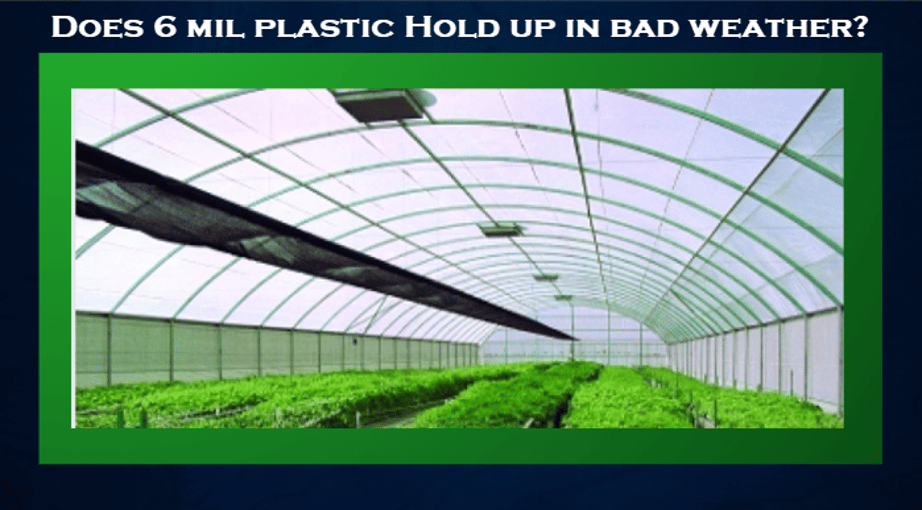
- UV-stabilized polyethylene can last 2–4 years; additives help but they still degrade faster than polycarbonate.
- High-quality polycarbonate sheets include UV coatings and often carry 10-year warranties.
If you face hail, heavy wind, or animal contact, polycarbonate will likely save you time and money. However, note that polycarbonate can scratch over time; avoid abrasive cleaners.
Cost, installation, and maintenance
Upfront cost differs a lot between greenhouse plastic vs polycarbonate. Installation effort also varies.
Cost and installation notes:
- Greenhouse plastic film is low-cost and easy to replace. It’s light and often attached with simple clips.
- Polycarbonate costs more initially and needs a rigid frame and correct trimming or sealants.
- Over time, polycarbonate often costs less per year due to its longer life and lower repair frequency.
Maintenance tips:
- Replace damaged plastic promptly to avoid drafts and pests.
- Clean polycarbonate with mild soap and a soft cloth to prevent scratches.
- Support polycarbonate properly to avoid sagging or water pooling.
Environmental impact and recycling
Both materials have environmental trade-offs. Consider lifecycle and disposal.
Environmental factors:
- Polyethylene film uses less material per cover but is replaced frequently, increasing waste.
- Polycarbonate is longer-lasting; its longer service life can lower overall waste, but it is more energy-intensive to produce.
- Recycling options vary by region. Polycarbonate recycling is possible but not always available; polyethylene films often have limited recycling streams.
From my experience, choosing the longer-lasting option reduced waste at my greenhouse. If recycling access is limited, aim for durable materials and proper disposal routes.
Best uses and practical decision guide
Which should you choose? Use this quick guide to align material with your needs.
Choose greenhouse plastic if:
- You need a low-cost temporary cover.
- You want an easy seasonal solution.
- Low initial outlay is crucial.
Choose polycarbonate if:
- You want a long-term structure with better insulation.
- Your site has hail, wind, or animal risks.
- You plan to heat the greenhouse and save on energy.
Practical checklist before buying:
- Confirm frame strength for polycarbonate panels.
- Check local weather risks.
- Decide on light diffusion needs.
- Calculate cost per year, not just upfront cost.
Personal tip: When I built my first permanent greenhouse, I budgeted for polycarbonate and framed the structure accordingly. The upfront cost felt high, but the reduced replacements and stable crops paid back the investment within a few seasons.
Practical installation and care tips I’ve learned
Simple steps make a big difference:
- Use UV-rated materials to extend life.
- Seal edges of polycarbonate to prevent moisture ingress.
- Stretch polyethylene film tight to avoid flapping and wear.
- Inspect covers after storms and remove snow buildup promptly.
- Keep cleaning gentle to preserve coatings and clarity.
I made the mistake of using abrasive brushes on polycarbonate early on. The panels lost some clarity. A soft cloth and mild soap work fine and preserve the sheet.
PAA-style quick questions
Q: Will polycarbonate overheat plants?
A: Polycarbonate can trap heat, but proper ventilation prevents overheating. Use vents and shading in hot seasons.
Q: Can I use greenhouse plastic and polycarbonate together?
A: Yes. Some growers use polycarbonate panels on windward sides and film elsewhere to save cost. This hybrid can balance cost and durability.
Q: Is twinwall always better than single-sheet polycarbonate?
A: Twinwall adds insulation and light diffusion. Single-sheet is clearer and may suit specific light needs but insulates less.
Frequently Asked Questions of greenhouse plastic vs polycarbonate
What are the main advantages of polycarbonate over greenhouse plastic?
Polycarbonate offers better impact resistance, insulation, and longer lifespan. It reduces replacement frequency and improves year-round temperature control.
How long does greenhouse plastic typically last?
Standard polyethylene film lasts about 2–4 years depending on UV treatment and weather. Heavier or multi-layer films may last longer but still less than polycarbonate.
Can greenhouse plastic provide good light for seedlings?
Yes. Fresh polyethylene film transmits a high percentage of light and works well for seedlings. However, it offers less uniform diffusion than textured polycarbonate.
Is polycarbonate worth the extra cost for hobby gardeners?
Often yes, if you plan to keep the greenhouse for several years or heat it. The lower maintenance and energy savings usually justify the higher initial cost.
How do I clean and maintain polycarbonate sheets?
Use mild soap, water, and a soft cloth. Avoid solvents and abrasive tools that can scratch or damage UV coatings.
Can I recycle greenhouse plastic or polycarbonate locally?
Recycling availability varies by area. Check with local facilities; both materials can be recycled in some centers but may need special handling.
Conclusion
Choosing between greenhouse plastic vs polycarbonate comes down to budget, climate, and how long you want the cover to last. Polycarbonate wins on durability, insulation, and long-term value. Greenhouse plastic wins on low cost and easy replacement. Decide by weighing upfront cost against yearly performance and maintenance needs.
Take action now: assess your weather risks, set a budget, and use the checklist above to pick the right material. If you found this helpful, try one upgrade this season—replace worn film or trial a small polycarbonate panel—and share your results or questions below.