Determinate vs Indeterminate Tomatoes: One produces all at once; the other vines and fruits continuously.
I’ve spent years growing tomatoes in containers, raised beds, and small farms, so I know how confusing “Determinate vs Indeterminate Tomatoes” can be for home gardeners. This article explains the core differences, practical growing tips, and which type fits your garden, schedule, and cooking goals. Read on for clear guidance, proven techniques, and hands-on advice so you can pick and grow tomatoes with confidence.

What are determinate and indeterminate tomatoes?
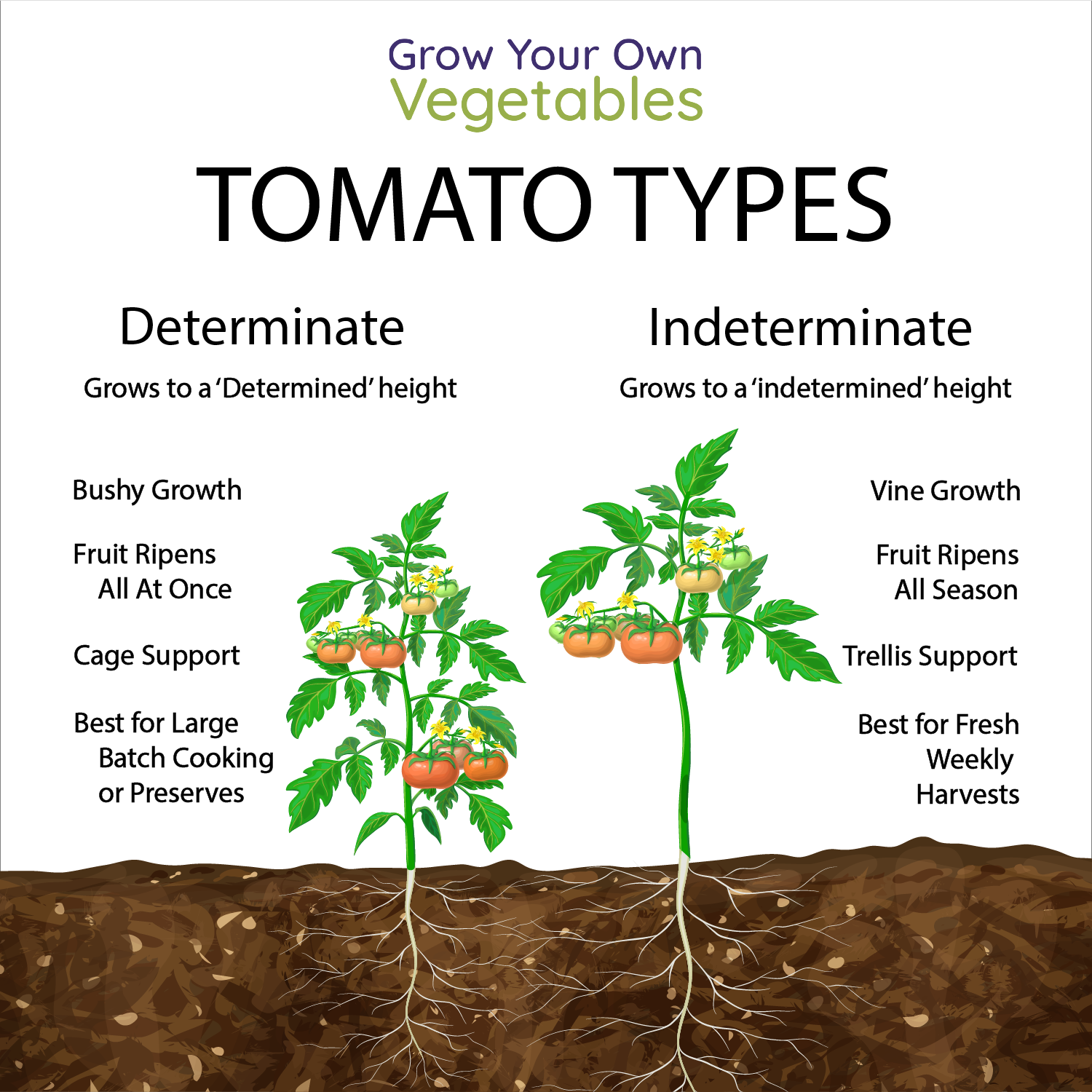
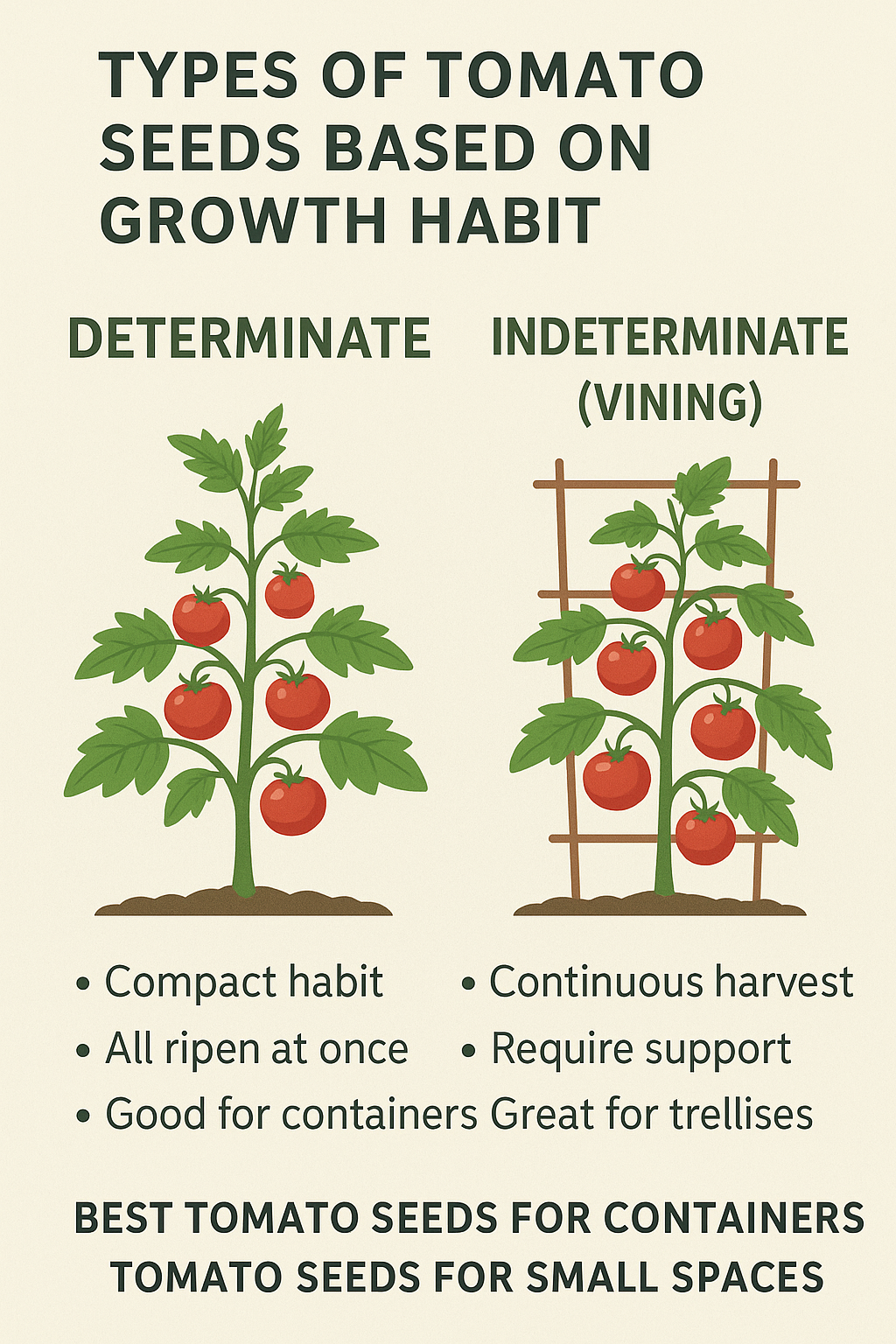
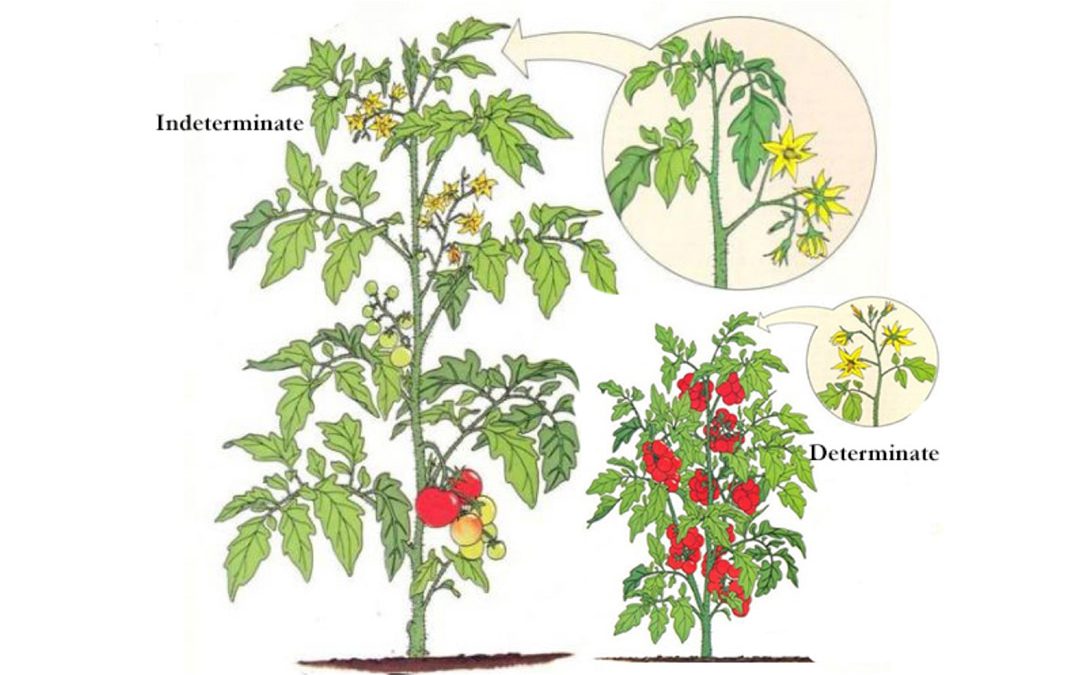
Determinate vs Indeterminate Tomatoes describes two growth habits of tomato plants. Determinate tomatoes stop growing when they set a terminal flower cluster. Indeterminate tomatoes keep growing and producing flowers and fruit along the vine all season.
Determinate types form a bush. Indeterminate types form long vines that can reach several feet. Knowing which habit you have helps with spacing, support, and harvest planning.
Key differences at a glance
Determinate vs Indeterminate Tomatoes differ in growth, harvest timing, and care. Here are quick, practical contrasts:
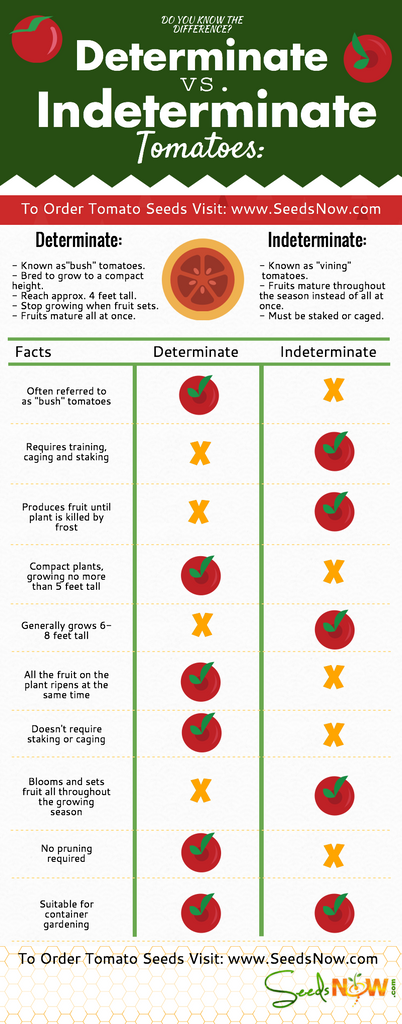
- Growth habit: Determinate are bushy and compact. Indeterminate are vining and tall.
- Harvest pattern: Determinate ripen many fruits in a short window. Indeterminate give a steady supply over months.
- Support needs: Determinate need light staking. Indeterminate need strong stakes, cages, or trellises.
- Best use: Determinate for canning and single-harvest needs. Indeterminate for fresh eating and long-season harvests.
People also ask: Do determinate tomatoes need pruning? Light pruning helps, but heavy pruning is unnecessary. Do indeterminate tomatoes produce more fruit? They often yield more over a season because they keep flowering. These short answers reflect common search intent about Determinate vs Indeterminate Tomatoes.
Benefits and limitations of each type
Determinate vs Indeterminate Tomatoes offer trade-offs. Choose by space, time, and culinary goals.
Determinate benefits:
- Compact size for containers and small gardens.
- Concentrated harvest suits canning and sun-drying.
- Easier to manage and prune in limited time.
Determinate limitations:
- Short harvest window means many tomatoes ripen at once.
- Lower overall season-long yield for some gardeners.
Indeterminate benefits:
- Continuous harvest across months for fresh eating.
- Often stronger plants with larger total yield.
- Ideal for long-season climates and succession harvests.
Indeterminate limitations:
- Need more support and pruning.
- Can overwhelm small spaces or beginners if left unchecked.
Balancing these pros and cons helps gardeners decide whether Determinate vs Indeterminate Tomatoes best fit their needs.
Choosing the right type for your garden
Pick based on space, time, and how you use tomatoes. Ask yourself simple questions: Do you want a big batch in late summer or tomatoes all season? Do you have room for tall stakes? Will you process or eat fresh?
Consider these guidelines:
- For containers or small yards, choose determinate varieties.
- For patio-to-table, choose indeterminate for ongoing harvest.
- For canning or festivals, plant determinate for a single large harvest.
- For high-yield and variety taste, choose indeterminate and plan support.
My experience: On a small balcony, determinate plants saved the season. On a family plot, indeterminate varieties supplied salads all summer. These real examples show how Determinate vs Indeterminate Tomatoes affect planning and results.
Growing tips for determinate tomatoes
Determinate vs Indeterminate Tomatoes demand different care. Here’s how to get the most from determinate types.
- Soil and feeding: Use rich, well-drained soil with balanced fertilizer at planting. Avoid heavy nitrogen later to prevent lush leaves instead of fruit.
- Watering: Water evenly to reduce cracking and blossom end rot.
- Support and pruning: Minimal staking or short cages usually work. Remove only damaged or crossing branches.
- Spacing: Plant 18–24 inches apart to allow airflow without waste.
- Timing: Expect a concentrated harvest about 60–80 days after transplant for many determinate varieties.
Practical tip: I once planted three determinate cans for canning. Timing the plantings two weeks apart helped spread the workload for processing.

Growing tips for indeterminate tomatoes
Indeterminate vs determinate differences are most visible during care. Indeterminate types need more work and reward patience.
- Soil and feeding: Start with rich soil and add side-dress fertilizer every 4–6 weeks to sustain production.
- Watering: Keep soil consistently moist; mulch heavily to conserve water and reduce weeds.
- Pruning: Remove suckers below the first flower cluster for cleaner growth. Prune lightly higher up to open the canopy for light.
- Support: Use tall stakes, sturdy cages, or trellis systems. Tie vines loosely to avoid cutting stems.
- Spacing: Plant 24–36 inches apart for airflow and vine spread.
Personal note: I train indeterminate vines up strings. The system keeps fruit off the ground and makes picking faster. With Determinate vs Indeterminate Tomatoes, the extra work yields a steady stream of ripe fruit.
Pruning, staking, and trellising
Good support reduces disease and improves yield for Determinate vs Indeterminate Tomatoes.
- Staking: Use 6–8 foot stakes for indeterminate vines. Short 3–4 foot stakes or small cages are fine for determinate bushes.
- Trellising: Vertical trellises or the Florida weave work well for multiple indeterminate plants in a row.
- Pruning: For indeterminate, remove low suckers and thin the canopy moderately. For determinate, limit pruning to dead or diseased foliage to preserve fruiting sites.
- Timing: Train and tie plants early when stems are still flexible to avoid damage.
Tip from the field: Tie every 6–8 inches as vines grow. It keeps heavy fruit clusters supported and reduces breakage.

Harvesting, storing, and yield patterns
Understanding harvest patterns helps plan meals and preservation when choosing Determinate vs Indeterminate Tomatoes.
- Determinate harvest: Many ripe fruits in weeks. Ideal for canning, sauce, or a big harvest event.
- Indeterminate harvest: Slow, steady ripening for fresh eating, preserves, and continuous supply.
- Storing: Keep ripe tomatoes at room temperature for best flavor. Refrigerate only overripe fruit to slow decay.
- Preservation: Blanch and freeze or can surplus from determinate harvests. Indeterminate excess can be roasted or made into sauces periodically.
I once had a glut of determinate tomatoes and made tomato paste for the winter. That burst harvest was perfect for large batch processing.
Pests, diseases, and maintenance
Both Determinate vs Indeterminate Tomatoes can face similar threats. Preventive care matters more than reactive fixes.
- Common pests: Aphids, tomato hornworms, and whiteflies. Inspect leaves weekly.
- Diseases: Early blight, late blight, and fusarium wilt can affect both types. Rotate crops and choose resistant varieties.
- Prevention: Mulch, proper spacing, and good airflow reduce fungal problems. Remove and compost diseased foliage away from beds.
- Organic controls: Handpick pests, use row covers early, and introduce beneficial insects when possible.
Always be transparent: Some varieties have resistance markers, but no plant is fully immune. Rotate and monitor for best results.
Varieties and examples
Knowing specific varieties makes choosing between Determinate vs Indeterminate Tomatoes easier.
- Popular determinate varieties: Roma, Rutgers, Celebrity. These are great for sauces and small spaces.
- Popular indeterminate varieties: Brandywine, Cherokee Purple, Sungold. These are prized for flavor and continuous fruiting.
- Hybrid vs heirloom: Hybrids often add disease resistance and uniform harvests. Heirlooms offer unique flavor and variety.
Local trials: I trialed a determinate Roma and an indeterminate cherry side by side to compare yield and taste. Both had strengths depending on use.
My experience and practical tips
I’ve grown both types in city plots and rural beds. Here are lessons learned from real work in the garden.
- Start with your end use: For canning, choose determinate. For fresh salads, pick indeterminate.
- Plan support early: Indeterminate plants need stakes before they outgrow neighbors.
- Succession planting: Stagger determinate plantings to avoid one overwhelming harvest.
- Test small: Try one or two plants of each type your first season. Compare taste, disease resistance, and yield.
Mistake to avoid: Letting indeterminate vines sprawl without support. I learned this the hard way—plants tangled and yield dropped.
Frequently Asked Questions of Determinate vs Indeterminate Tomatoes
What is the main difference between determinate and indeterminate tomatoes?
Determinate tomatoes stop growing at a certain size and fruit in a short period. Indeterminate tomatoes keep growing and yield fruit continuously through the season.
Which type is better for containers?
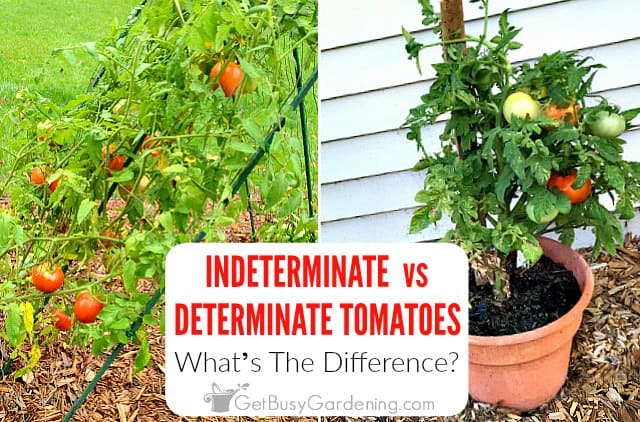
Determinate tomatoes are usually better for containers because they stay compact and need less support. Choose compact or patio varieties for small spaces.
Do indeterminate tomatoes need more fertilizer?
Yes, indeterminate tomatoes benefit from regular feeding during the season because they keep producing flowers and fruit. Use balanced fertilizer every 4–6 weeks.
Can I prune determinate tomatoes?
Light pruning is okay, but heavy pruning can reduce yield because determinate plants fruit on set clusters. Remove only dead or diseased stems.
Which type ripens faster?
Determinate varieties often reach harvest faster and produce a bulk of ripe fruit over a short period. Indeterminate types spread ripening over many weeks.
Conclusion
Choosing between Determinate vs Indeterminate Tomatoes comes down to space, time, and how you plan to use the fruit. Determinate varieties offer compact growth and concentrated harvests. Indeterminate varieties provide steady production and extended flavor through the season. Try both types in small numbers, note what you enjoy, and adapt soil, support, and watering to match the plant habit. Start a small experiment this season—plant one determinate and one indeterminate—and see which fits your garden and kitchen best. Share your results, subscribe for more tips, or leave a comment about your tomato successes and questions.