Sprinkler systems suit lawns and broad coverage; drip irrigation saves water and feeds plant roots.
I’ve designed and installed both systems for gardens and small farms for over a decade. This article compares Sprinkler vs Drip Irrigation clearly and practically. I’ll explain how each works, where each shines, real costs, maintenance tips, and how to choose the best fit for your lawn, garden, or crop. Read on for expert, experience-based advice you can use today.

Overview: Sprinkler vs Drip Irrigation — what they are and why it matters
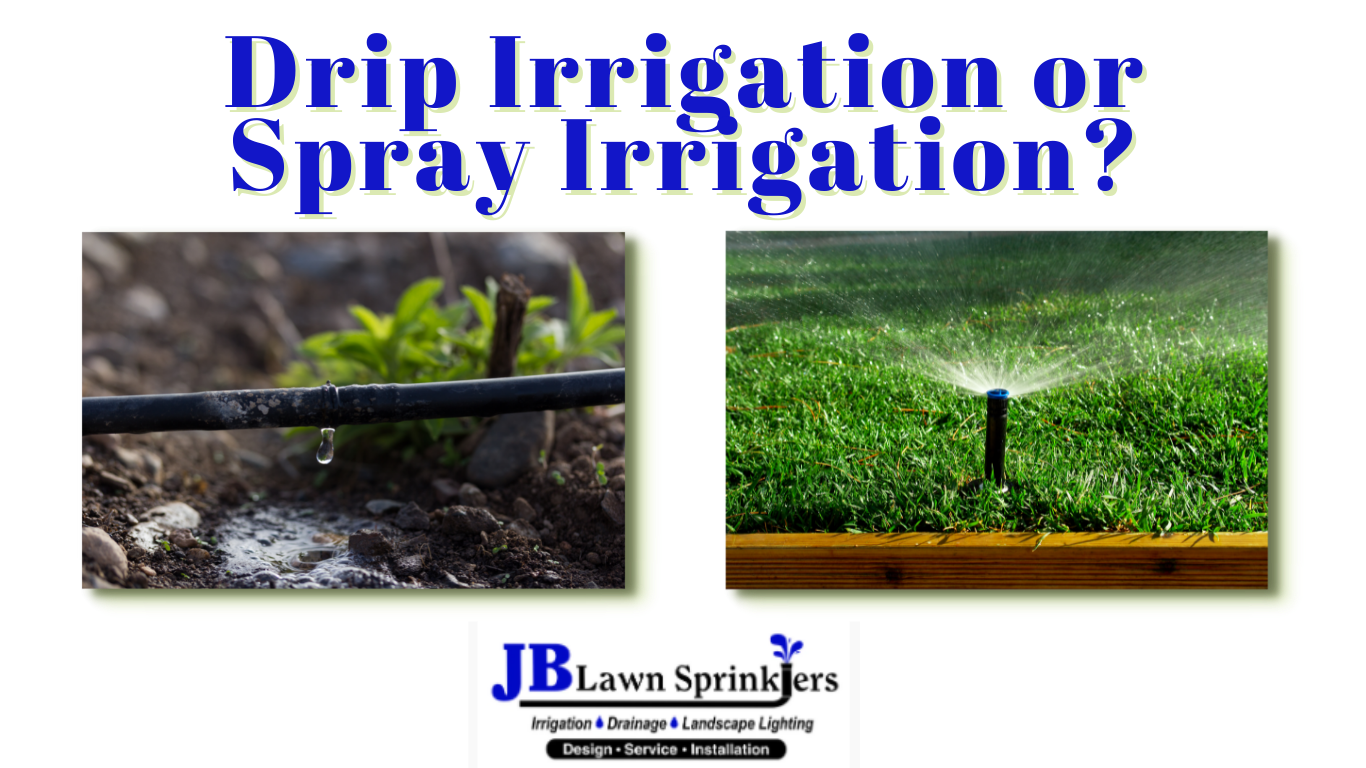
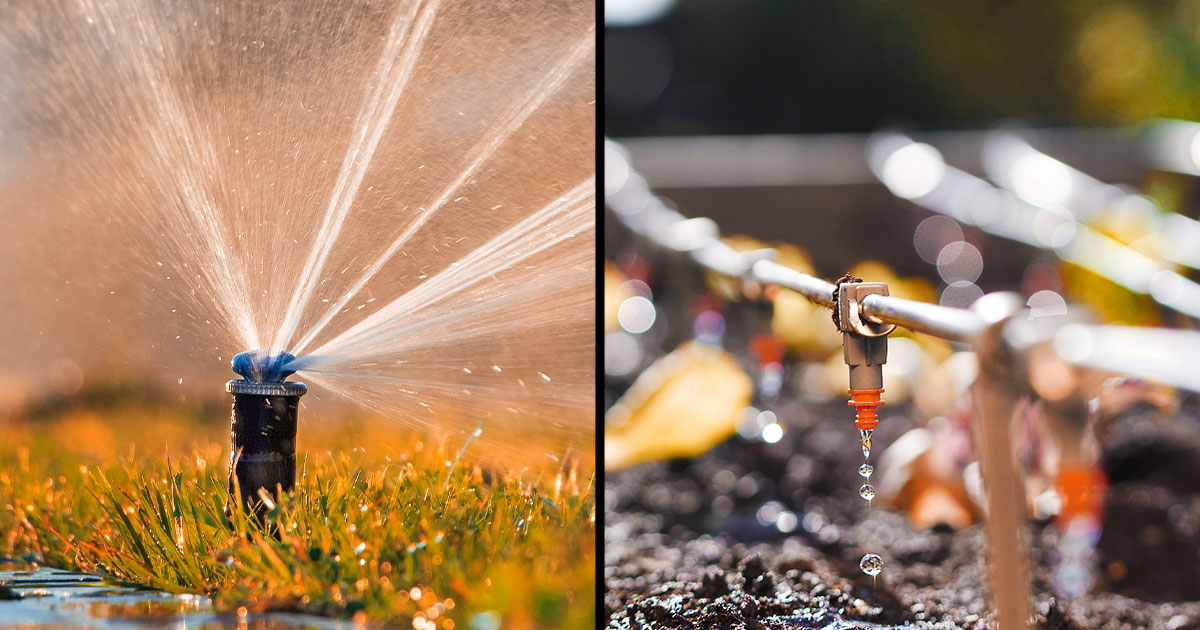
Sprinkler vs Drip Irrigation is a core choice for watering. Both deliver water but in very different ways. A sprinkler sprays water over an area. Drip irrigation delivers water slowly at the soil surface or below it. Each method affects plant health, water use, and maintenance.
Key differences at a glance:
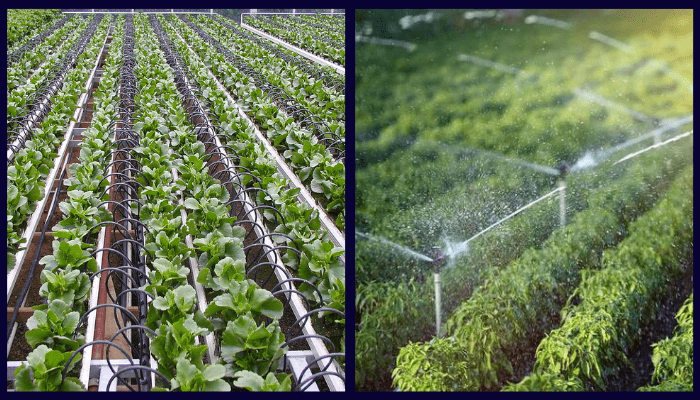
- Sprinkler systems water the air and leaves, covering broad areas quickly.
- Drip irrigation targets roots with slow, precise delivery.
Why this choice matters:
- Water efficiency changes your bill and local water footprint.
- Plant disease risk shifts when leaves stay wet or dry.
- Time and cost for installation and upkeep vary greatly.
Common quick answers you might wonder about:
- Does drip reduce weeds? Yes, drip limits surface wetting so weeds sprout less.
- Can sprinklers work with fertilizers? Yes, with fertigation you can feed through sprinklers, but losses are higher.
- Is one system cheaper to run? Often drip uses less water and saves money long term, but installation cost may be higher.
How each system works: mechanics and components
Sprinkler systems
- Components: pump or mains connection, pipes, control valves, heads, timer.
- Operation: Water pressurizes pipes and pops up heads that spray water in chosen patterns.
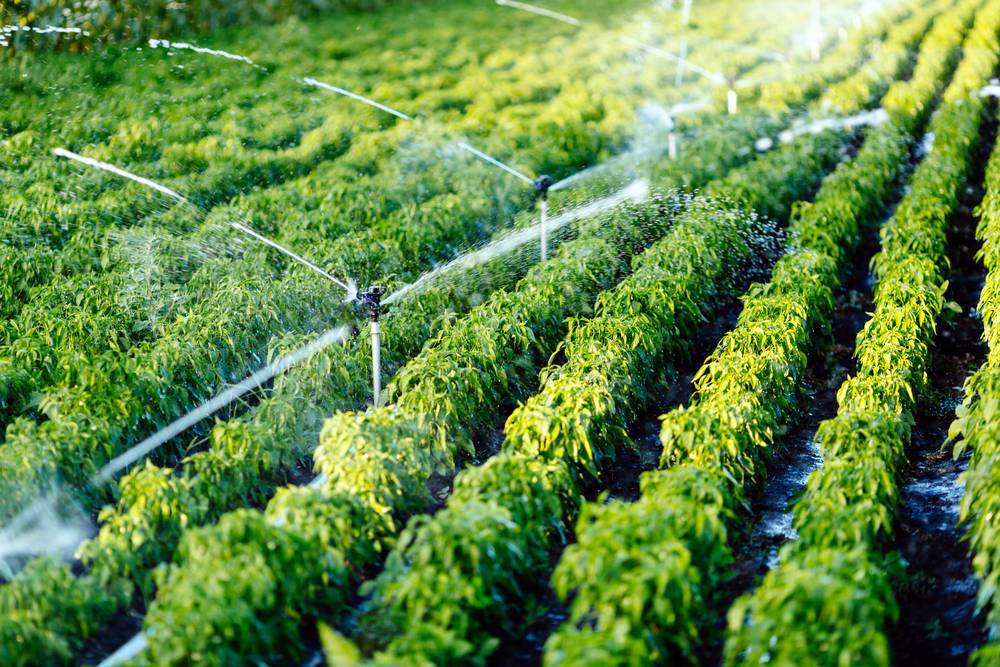
- Coverage: Good for lawns, large beds, and areas with uniform plant needs.
Drip irrigation systems
- Components: filters, pressure regulator, mainline tubing, laterals, emitters, connectors, timer.
- Operation: Water flows slowly through small emitters placed near roots. Pressure is low.
- Coverage: Ideal for rows, shrubs, potted plants, and trees with targeted needs.
How pressure and flow differ
- Sprinklers need higher pressure and higher flow rate.
- Drip uses lower pressure and much lower flow, so pumps and pipes can be smaller.
Benefits and limitations: practical pros and cons
Sprinkler benefits
- Fast coverage of large areas.
- Easy to water lawns and turf uniformly.
- Simple to set timers for scheduled runs.
Sprinkler limitations
- Higher water loss to evaporation and wind.
- Wet foliage can increase disease risk.
- Not ideal for plants with different water needs in the same zone.
Drip irrigation benefits
- High water efficiency and lower bills.
- Minimal evaporation and runoff.
- Precise delivery supports root health and reduces disease.
Drip irrigation limitations
- Higher risk of clogging without good filters.
- More emitters to install for complex layouts.
- Not the best for lawns or areas needing surface wetting.
Real-world trade-offs
- Sprinkler systems are low-effort for large turf areas.
- Drip systems save water and improve yields in beds and orchards.

Water efficiency, costs, and return on investment
Water use comparison
- Sprinklers can use 30–50% more water than drip for the same plants.
- Drip typically achieves 60–90% water efficiency.
Cost factors
– Initial cost: Sprinkler systems are usually cheaper to set up for lawns. Drip can cost more per plant because of emitters and filters.
- Operating cost: Drip lowers your water bill and can reduce fertilizer cost if using fertigation.
- Lifespan: Both systems last many years with care. Drip tubing and emitters may need more frequent replacement in harsh sun.
Simple ROI example
- Small vegetable bed: drip might cost $200 to install but save $50 per year on water and yield more produce, paying back in 4–6 years.
- Large lawn: sprinkler install might be $800 to $2,000, with moderate water savings if you switch to efficient heads. Payback depends on local water rates.
Budget tips
- Prioritize drip for high-value beds and trees.
- Use smart controllers with either system to cut waste.
- Consider hybrid setups: drip for beds, sprinklers for turf.

Best uses and plant types: when to pick each system
Choose sprinkler when:
- You irrigate turf or lawns.
- You need quick, uniform coverage for erosion control.
- Plants have similar water needs across the zone.
Choose drip when:
- You grow vegetables, fruit trees, or container plants.
- Water conservation is a priority.
- Plants need different water amounts in nearby zones.
Plant-specific examples
- Lawns: Sprinkler is usually best.
- Row crops and gardens: Drip improves yields and saves water.
- Ornamental beds: Drip reduces disease and localizes watering.

Installation, maintenance, and troubleshooting — practical steps and tips
Installation basics for sprinklers
- Map zones based on sun, slope, and plant type.
- Place heads to overlap for even coverage.
- Use a smart controller and rain sensor to avoid waste.
Installation basics for drip
- Start with a filter and pressure regulator.
- Run main tubing and place emitters near roots.
- Test flow and flush lines before covering.
Maintenance tasks
- Sprinklers: clean nozzles, check for leaks, adjust heads after mowing.
- Drip: clean filters monthly, flush lines seasonally, replace clogged emitters.
Troubleshooting common problems
- Uneven spray: check head alignment or pressure.
- Clogged emitters: check filter and flush lateral lines.
- Low pressure: inspect pump, regulators, or blocked valves.
Personal experience
- I once installed drip for a backyard orchard. I forgot a fine filter and faced clogging in two weeks. Lesson learned: always size and clean the filter. Now I recommend a clear, easy-to-access filter housing to clients.

Environmental and regulatory considerations
Water restrictions and local rules
- Many areas limit sprinkler hours during drought. Drip often has looser rules.
- Check local codes before major installs.
Environmental impacts
- Sprinklers increase evaporation and runoff, risking nutrient loss.
- Drip minimizes runoff and can lower fertilizer leaching when used with fertigation.
Soil and microclimate effects
- Drip helps keep soil structure healthy by avoiding frequent surface saturation.
- Sprinklers can cool foliage and soil temporarily but may increase fungal disease.
Choosing the right system: checklist and hybrid options
Decision checklist
- What are you watering? Turf, beds, trees, or containers?
- How much do you want to save on water?
- What is your budget for installation and maintenance?
- How much time can you spend on upkeep?
Hybrid approach ideas
- Drip for vegetable beds and trees plus sprinklers for lawn.
- Use micro-sprays for shrub beds where overhead wetting is not harmful.
- Install smart controllers that manage both drip and sprinkler zones.
Step-by-step selection
- Map the area and plant types.
- Group plants with similar needs.
- Choose system by group: drip for roots, sprinkler for turf.
- Plan for filtration, pressure control, and seasonal maintenance.
Frequently Asked Questions of Sprinkler vs Drip Irrigation
What is the main difference between sprinkler and drip irrigation?
Sprinkler systems spray water above the ground to cover an area. Drip irrigation delivers water slowly at the soil level near plant roots.
Which system saves more water?
Drip irrigation generally saves more water because it targets roots and reduces evaporation and runoff. Sprinklers can waste water to wind and evaporation.
Can I use fertilizer with both systems?
Yes, both systems can deliver water-soluble fertilizer. Drip fertigation is more efficient and reduces fertilizer loss compared to sprinkler application.
How often do I need to maintain a drip system?
You should check and clean filters monthly and flush lines at least once a season. Inspect emitters for clogging after heavy rains or during high pollen season.
Are sprinklers better for lawns than drip?
Yes, sprinklers usually provide uniform coverage needed for healthy turf. Drip is impractical for large, continuous lawns.
Is installation DIY-friendly for both systems?
Both can be DIY, but drip installation is more detailed because of emitter placement and filtration. Sprinkler systems require correct head spacing and pressure settings.
Can I mix sprinkler and drip in one property?
Yes. Many landscapes use drip for beds and trees and sprinklers for lawn. Smart controllers can automate both systems effectively.
Conclusion
Choosing between Sprinkler vs Drip Irrigation comes down to your plants, water goals, and budget. Sprinklers work well for turf and quick coverage. Drip shines for water savings, root health, and targeted watering. Use the checklist above, consider a hybrid setup, and start small if you’re unsure. Try the system in one zone, learn maintenance, and scale up. Share your experience or questions below, subscribe for more guides, or try a consultation to plan the best system for your landscape.