Oscillating sprinklers suit small, flat lawns; rotary sprinklers work better for larger, uneven areas.
If you’re comparing oscillating sprinkler vs rotary sprinkler, you’re really deciding between two very different watering styles. I’ve tested both on home lawns and garden beds, and the best choice usually comes down to yard size, water pressure, slope, and how evenly you want water to land. In this guide, I’ll break down the oscillating sprinkler vs rotary sprinkler debate in a simple, practical way so you can choose the right one without wasting water or time.
Oscillating Sprinkler vs Rotary Sprinkler: What They Are
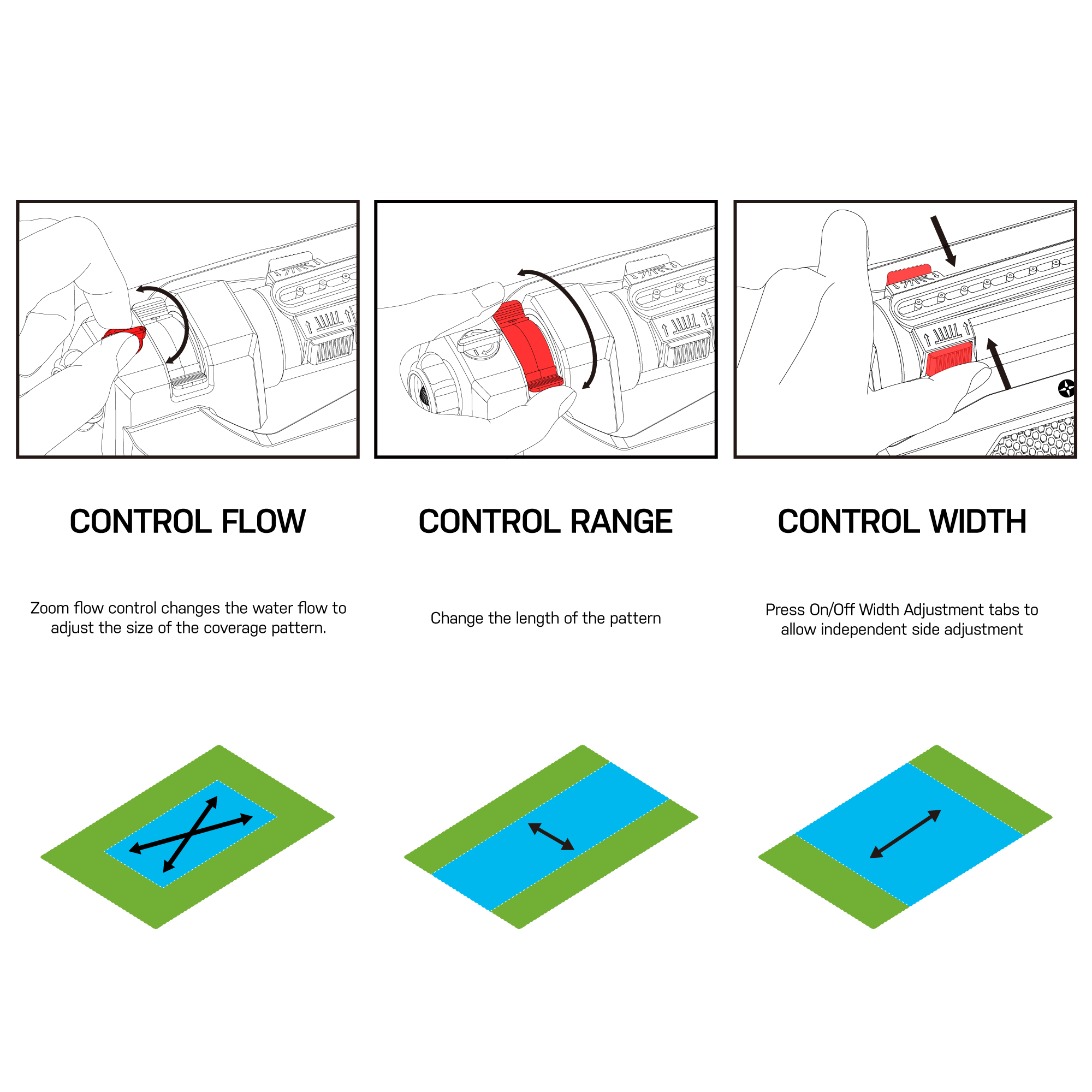
An oscillating sprinkler sprays water through a row of small holes in a back-and-forth motion. It creates a fan-shaped pattern that covers a rectangular area pretty well. That makes it a popular choice for lawns, flower beds, and narrow yards.
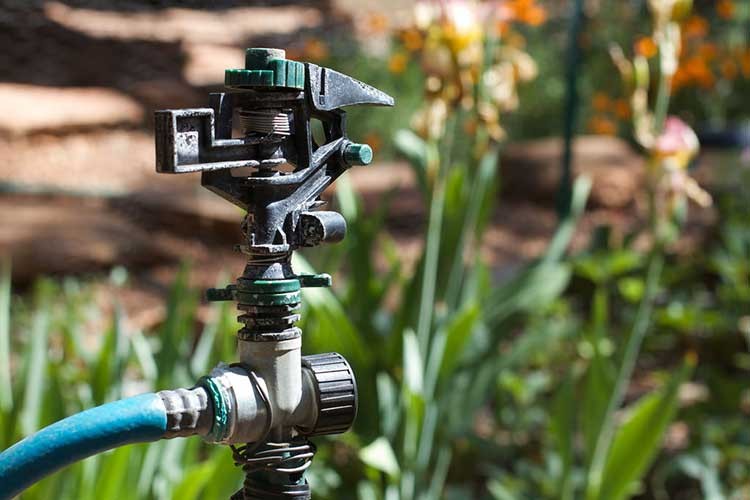
A rotary sprinkler uses rotating streams or nozzles to throw water in circular or partial-circle patterns. It is often better for wider spaces and can handle bigger areas with fewer sprinkler heads. In the oscillating sprinkler vs rotary sprinkler comparison, the biggest difference is coverage shape and how each one handles distance.
Here’s the simple version:
- Oscillating sprinkler: Best for straight-edged, medium-to-small lawns
- Rotary sprinkler: Best for larger lawns and uneven shapes
- Oscillating sprinkler: Usually easier to set up and move
- Rotary sprinkler: Often more efficient for bigger watering jobs
When I first compared them on my own yard, I made the mistake of using an oscillating sprinkler on a long, wide lawn. The middle looked great, but the far edges stayed dry. A rotary sprinkler solved that fast because it threw water farther and covered more ground with less effort.
How an Oscillating Sprinkler Works
An oscillating sprinkler moves side to side while sending water through small openings. The spray lands in a soft curtain, which is gentle on grass and delicate plants. This makes it a nice fit when you want even watering without pounding the soil.
It works best when the yard is flat and the water pressure is steady. If the pressure is too low, the spray may not reach the full width. If the pressure is too high, the water can mist and drift away, which wastes water.
Common strengths of an oscillating sprinkler include:
- Gentle spray for grass and seedlings
- Good coverage for rectangular spaces
- Easy setup with basic hose connection
- Affordable price point
Common limits include:
- Less effective on slopes
- Narrow coverage shape
- Can lose efficiency in windy conditions
- Usually not ideal for very large lawns
For small suburban yards, I’ve found the oscillating sprinkler to be the “set it and forget it” option. It’s simple, and that simplicity is its biggest strength.
How a Rotary Sprinkler Works
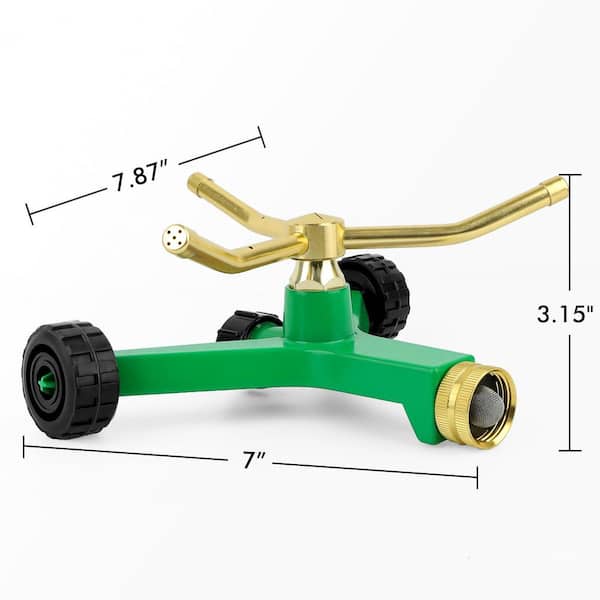
A rotary sprinkler sprays water in moving streams that spin or rotate. Some models cover full circles, while others cover part of a circle or let you adjust the arc. The water usually travels farther than an oscillating sprinkler, which is why rotary models are so common in larger lawns.
Rotary sprinklers often deliver water more slowly and in larger droplets. That helps reduce runoff, especially on slopes or compacted soil. Many irrigation experts favor this style for efficiency because slow application gives the soil time to absorb water.
Typical benefits of a rotary sprinkler include:
- Longer throw distance
- Better fit for large or irregular lawns
- Less runoff on sloped areas
- Strong performance in professional irrigation systems
Typical drawbacks include:
- More setup complexity
- Can cost more than basic oscillating models
- May be overkill for small yards
- Some models need careful adjustment for even coverage
I learned this the hard way on a patchy side yard that sloped downhill. The oscillating sprinkler caused water to pool near the bottom, while a rotary sprinkler spread it more evenly and gave the soil time to drink it in.
Oscillating Sprinkler vs Rotary Sprinkler: Key Differences
The oscillating sprinkler vs rotary sprinkler decision becomes much easier when you compare them side by side. Each one shines in different conditions, and neither is perfect for every lawn.
Coverage shape
- Oscillating sprinkler: Best for rectangular areas
- Rotary sprinkler: Better for circles, arcs, and irregular shapes
Watering distance
- Oscillating sprinkler: Shorter reach
- Rotary sprinkler: Longer reach
Water use efficiency
- Oscillating sprinkler: Can waste more water in wind or overspray
- Rotary sprinkler: Often more efficient on large or sloped yards
Best lawn size
- Oscillating sprinkler: Small to medium lawns
- Rotary sprinkler: Medium to large lawns
Setup and use
- Oscillating sprinkler: Simple and beginner-friendly
- Rotary sprinkler: May need more adjustment, especially in irrigation systems
Cost
- Oscillating sprinkler: Usually cheaper
- Rotary sprinkler: Often more expensive, especially for high-quality models
If you want the shortest answer in the oscillating sprinkler vs rotary sprinkler debate, think of it this way: oscillating is like a paint roller for a straight wall, while rotary is like a nozzle that reaches corners and curves better.
Which Sprinkler Uses Water More Efficiently?
Water efficiency matters more now than ever. According to irrigation guidance from universities and water agencies, the best sprinkler is the one that matches your lawn shape and soil type while avoiding runoff and overspray. In practice, rotary sprinklers often win for efficiency on larger or uneven areas because they apply water more slowly.
That said, an oscillating sprinkler can still be efficient if your yard is flat, your pressure is right, and the spray stays within the lawn. If wind is strong or the spray pattern is too fine, you may lose a lot of water to drift. In the oscillating sprinkler vs rotary sprinkler comparison, efficiency depends less on the label and more on fit.
A few water-saving tips:
- Water early in the morning
- Avoid watering during windy hours
- Match sprinkler type to lawn shape
- Check for dry spots and overlap
- Use a rain gauge or shallow cups to measure output
I’ve seen people buy a “better” sprinkler and still waste water because they never tested coverage. A few cups placed across the lawn can tell you more than the box ever will.
Best Uses for an Oscillating Sprinkler
An oscillating sprinkler is a smart choice when your yard is simple and fairly flat. It is especially handy for square or rectangular spaces where even side-to-side coverage matters. It also works well for new grass, seed, and tender plants because the spray is gentle.
Best uses include:
- Small front lawns
- Rectangular backyards
- Vegetable beds with straight rows
- Seeded areas that need soft watering
- Temporary watering jobs
This sprinkler type is often the easiest option for homeowners who want quick setup without digging into irrigation systems. In my experience, it’s the model I grab first for a small patch of turf that needs daily watering during hot spells.
Best Uses for a Rotary Sprinkler
A rotary sprinkler is usually the better choice for larger lawns or areas with curves, slopes, or mixed shapes. It throws water farther and often does a better job covering space evenly when the yard is not a perfect rectangle. That makes it a strong option for more demanding watering setups.
Best uses include:
- Large lawns
- Side yards with odd shapes
- Sloped areas
- Shrubs and landscape zones
- Permanent irrigation systems
If your yard has a lot of corners or uneven terrain, rotary sprinklers can save you from constant repositioning. I’ve found that they cut down on the “did I miss that spot?” problem that often happens with oscillating sprinklers.
Factors to Consider Before Choosing
Choosing between oscillating sprinkler vs rotary sprinkler gets easier when you look at your actual yard conditions. The right match depends on more than price or popularity.
Here are the main factors to think about:
- Lawn size: Bigger lawns often favor rotary models
- Lawn shape: Straight edges favor oscillating sprinklers
- Water pressure: Low pressure can hurt coverage on some models
- Soil type: Clay soil needs slower watering to avoid runoff
- Slope: Rotary sprinklers often handle slopes better
- Wind: Fine spray drifts more easily
- Plant type: Gentle spray is better for seedlings and delicate beds
One practical mistake I see often is choosing a sprinkler based only on yard size. Shape matters just as much. A small but oddly shaped yard may still benefit from a rotary sprinkler if the coverage pattern fits better.
Cost, Maintenance, and Durability
Oscillating sprinklers usually cost less upfront. They are simple, and that simplicity can make them easy to replace if they wear out. Rotary sprinklers may cost more, but many are built for longer-term use, especially in fixed irrigation systems.
Maintenance is also different:
- Oscillating sprinkler: Clean holes or nozzles when mineral buildup appears
- Rotary sprinkler: Check moving parts, seals, and nozzle alignment
- Both: Store indoors during freezing weather to prevent damage
If you live in a place with hard water, both types can clog over time. I’ve had better luck with regular rinsing and seasonal cleaning than with waiting until the sprinkler stops working.
Which One Is Better for Your Lawn?
There is no single winner in the oscillating sprinkler vs rotary sprinkler matchup. The better choice depends on how your lawn is built and how much effort you want to put into watering.
Choose an oscillating sprinkler if:
- Your lawn is small or medium
- Your yard is mostly flat
- You want simple setup
- You need gentle spray for grass or seedlings
Choose a rotary sprinkler if:
- Your lawn is large
- Your yard has curves or slopes
- You want better reach
- You care about water efficiency on bigger spaces
For many homeowners, the real answer is not one or the other forever. Some people keep both and use the oscillating sprinkler for seedlings and the rotary sprinkler for the main lawn.

Frequently Asked Questions
Which is better, an oscillating sprinkler or a rotary sprinkler?
It depends on your yard. An oscillating sprinkler is usually better for flat, rectangular lawns, while a rotary sprinkler works better for larger or uneven areas.
Do rotary sprinklers use less water?
Often, yes, especially on large or sloped lawns. They usually apply water more slowly, which can reduce runoff and improve absorption.
Are oscillating sprinklers good for new grass seed?
Yes, they are often a good choice because they produce a gentle spray. Just make sure the coverage is even and the soil stays moist, not soaked.
Can I use a rotary sprinkler on a small lawn?
You can, but it may be more than you need. On small lawns, an oscillating sprinkler is often simpler and easier to manage.
Which sprinkler is better for windy conditions?
A rotary sprinkler may perform better because it uses larger droplets and a more controlled pattern. Oscillating sprinklers can lose more water to drift in the wind.
How do I know which sprinkler fits my yard best?
Look at your lawn shape, size, slope, and water pressure. If you have a straight-edged flat yard, go with an oscillating sprinkler; if your yard is larger or more uneven, rotary is often the smarter pick.
Conclusion
The oscillating sprinkler vs rotary sprinkler choice comes down to fit, not hype. Oscillating sprinklers are simple, gentle, and great for smaller flat lawns, while rotary sprinklers are stronger choices for larger, irregular, or sloped spaces. If you match the sprinkler to your yard, you can save water, reduce dry spots, and make watering feel much less like a chore.
If you’re still unsure, start with the shape of your lawn and test coverage with a few cups or cans. That small step can save a lot of frustration later. Explore your options, compare your yard’s needs, and choose the sprinkler that gives your grass the most even drink.