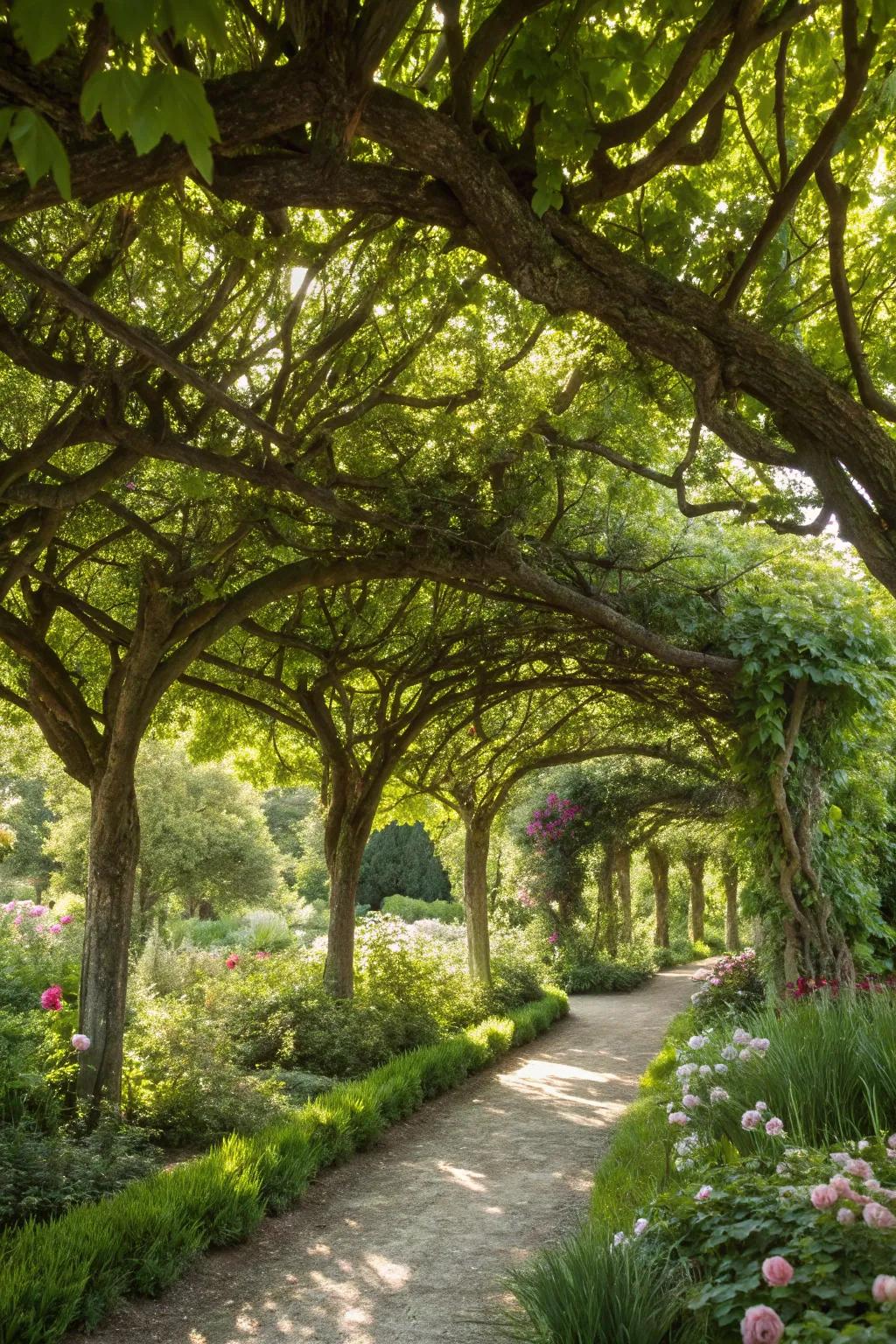
Garden tree canopy planning means choosing and placing trees so their mature crowns provide the right mix of shade, sunlight, privacy, and wildlife habitat without crowding buildings, paths, or other plants. Start with a site map, study the sun, check mature tree sizes, and plan for both crowns and roots.
Across the United States, gardens face very different growing conditions. A sunny yard in Texas may need strong afternoon shade, while a garden in Minnesota may need more summer sun and open space for winter light. Coastal gardens, dry western yards, and humid southern landscapes also have different soil and weather needs. Tree placement must match the local site.
A good tree canopy is like a natural roof over a garden. It can cool a patio, protect soil, frame a view, and give birds a place to live. But too much shade can limit flowers, fruit, and vegetables. The goal is not to cover every open space. It is to place each tree where its mature shape will serve the garden well.
Start with the trees that already grow on the property. Then map the areas that need shade and the places that must stay sunny. Check mature height, crown width, soil, drainage, and nearby utilities before choosing new trees. This simple order can prevent years of poor growth and costly changes.
Source: lightandlayer.com
1. Understand What Garden Tree Canopy Planning Means
A tree canopy is the upper layer of branches and leaves that covers the space around a tree. The crown is the full branch and foliage structure. Its size, shape, and density affect how much light reaches the garden below.
Garden tree canopy planning looks at how these crowns will grow and relate to the rest of the landscape. It includes the space above the ground, the shade that moves across the yard, and the roots that spread through the soil.
A young tree may look small and leave plenty of open space. Years later, its branches may reach over a patio, cover a flower bed, or meet the crown of another tree. Planning for this future growth helps the garden stay useful and healthy.
Crown spread
This is the expected width of the tree’s crown at maturity. It helps you estimate how much horizontal space the tree will need.
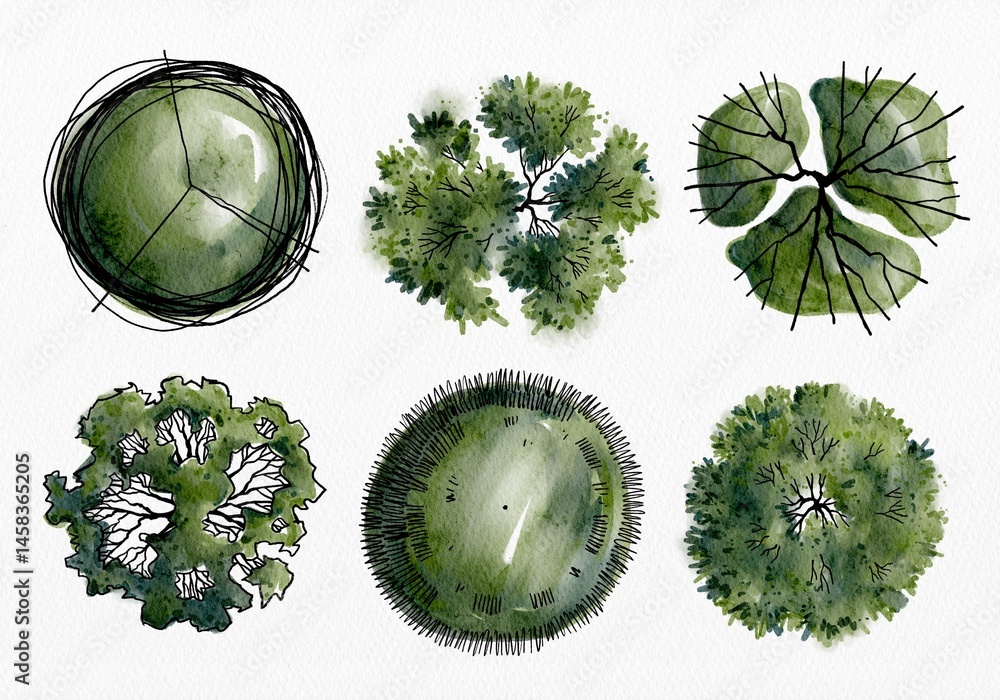
Canopy footprint
This is the area covered by the crown when viewed from above. It is useful for drawing a garden plan and estimating future canopy overlap.
Dripline
This is the ground area near the outer edge of the crown, where rain may drip from the leaves. It can help guide mulch placement and garden bed design.
Canopy density
This describes how thick the leaves and branches are. A dense crown usually blocks more light than an open crown.
Set Clear Goals Before Choosing Trees
Each tree should have a clear job. One tree may shade a seating area, while another may frame a view or provide food and shelter for birds. A third may protect a sunny wall from late-day heat.
Write down the main purpose for every planned tree. This keeps the design focused and makes it easier to choose a tree with the right size and shape.
Shade
Cool patios, outdoor seating areas, play spaces, and parts of the home.
Wildlife
Provide nesting sites, shelter, flowers, seeds, and fruit for local wildlife.
Privacy
Use suitable evergreen or mixed trees to screen views without blocking important sight lines.
Garden structure
Create a natural ceiling, frame a path, or make a large open yard feel more enclosed.
2. Map Your Garden Before Selecting Trees
A site map is the best starting point for a useful canopy plan. It shows where trees can grow and where their crowns may cause problems later. A rough drawing is enough for the first review.
Walk around the property and record the fixed features. Measure the house, fences, paths, patios, driveways, and garden beds. Mark large existing trees and note their size and condition.
Add a north arrow to the map. This helps you understand the direction of sunlight and how shadows may move across the garden. Use one scale throughout the drawing so tree sizes can be compared with the yard.
Mississippi State University Extension recommends creating a measured base plan that includes property lines, buildings, utilities, existing vegetation, and compass directions. This type of map is useful because it puts planting decisions in the context of the whole property.
Source: stock.adobe.com
Property limits
Mark property lines, fences, neighboring buildings, and any shared planting areas.
Buildings and structures
Record walls, windows, doors, roof edges, decks, sheds, and outdoor seating areas.
Hard surfaces
Mark sidewalks, driveways, patios, retaining walls, and paved play areas.
Existing plants
Show mature trees, shrubs, hedges, and large garden beds that will affect the new canopy.
Utilities
Mark visible power lines, utility poles, meters, and known underground service routes.
Water and soil
Note low areas, slopes, wet spots, drainage paths, and places where soil stays dry.
Study Sunlight at Different Times
Do not plan a tree based on one look at the garden. Sunlight changes throughout the day. A spot that is sunny in the morning may be shaded by a house or tree in the afternoon.
Check the garden in the morning, around midday, and in the late afternoon. Repeat the check during different seasons when possible. Record where direct sunlight reaches the ground and where existing trees cast shadows.
A simple shade map can prevent a common mistake: planting a tree that blocks the very sunlight needed by a vegetable bed or flower border.
Morning
Record sunlight from the east and note areas that become shaded later.
Midday
Check which open areas receive strong direct light and which remain under shade.
Late afternoon
Find hot areas near west-facing walls, patios, and paved surfaces that may benefit from shade.
Seasonal changes
Check how leaf growth and the changing sun angle affect the garden during spring, summer, fall, and winter.
Check the Soil and Growing Conditions
Soil conditions affect both tree health and future canopy growth. Sandy soil may dry quickly, while heavy clay may hold too much water. Compacted soil can limit root growth and reduce the movement of air and water.
Check how fast water drains after rain. Look for signs of standing water, hard ground, erosion, and damaged roots. A soil test can also help you understand soil pH and nutrient levels.
Do not assume that every part of the yard has the same soil. Construction, old paths, buried fill, and drainage work can create very different conditions within a small space.
Drainage
Choose trees that can handle the amount of moisture at the planting site.
Soil texture
Consider whether the soil is sandy, silty, clay-rich, or a mix.
Compaction
Avoid planting large trees in soil that has been heavily packed by vehicles or construction.
Rooting space
Check whether the tree will have enough open soil for healthy root growth.
3. Plan Tree Shade for Each Season
Good canopy design places shade where it is useful and keeps sunlight where plants need it. The best tree location depends on the direction of the sun, the height of nearby buildings, and the purpose of the garden space.
A tree on the west side of a home may help block strong afternoon sun. A tree on the east side may provide morning shade. The best position changes with the local climate, the building layout, and the tree’s mature height.
University of Maryland Extension identifies west-side shade as useful for reducing afternoon heat in its regional home energy guidance. This is a helpful design principle, but exact placement should be checked for each property and climate.
West-facing areas
Consider shade trees near patios and walls that receive strong afternoon sun.
East-facing areas
Use trees to reduce morning glare and heat where this improves outdoor comfort.
South-facing areas
Consider how deciduous trees may provide summer shade while allowing more winter sunlight after leaf fall.
North-facing areas
Check whether the space already has limited light before adding trees with dense crowns.
Choose Between Deciduous and Evergreen Trees
Deciduous trees lose their leaves during part of the year. They can create useful summer shade while allowing more sunlight through their branches in winter.
Evergreen trees keep their foliage for most or all of the year. They can provide year-round screening and help block cold winds in suitable locations. Their dense crowns may also block sunlight when the garden needs it.
A mixed canopy can offer a better balance than planting only one type of tree. The right mix depends on the local climate and the goals of the garden.
Deciduous canopy
Useful for seasonal shade, changing garden light, and some forms of passive solar design.
Evergreen canopy
Useful for year-round screening, shelter, and wind protection.
Mixed canopy
Combines different crown forms and leaf habits to create varied shade and seasonal interest.
Keep Enough Sun for Food and Flower Gardens
Many vegetables and flowering plants need direct sunlight to grow and bloom well. A large tree placed too close to these beds may reduce the light they receive as its crown grows.
Map sunny planting areas before adding shade trees. Keep crops with high light needs in suitable open areas, and use shade-tolerant plants where light levels are lower.
Remember that the shade line will move. A tree may cast a long shadow in the morning or evening even when the ground beneath it receives some midday sun.
Vegetable beds
Check the sunlight needs of each crop before placing a new tree nearby.
Flower beds
Match flowering plants to the future light level, not the current light level.
Outdoor seating
Place trees so useful shade reaches the seating area during the hours it is most often used.
4. Choose Trees by Their Mature Canopy Size
The mature size of a tree should guide every planting decision. A small nursery tree can grow into a large canopy that needs far more space than the original planting spot suggests.
Check the expected mature height and spread for the exact species or cultivar. Use a reliable regional tree guide or ask a local Cooperative Extension office. Nursery labels can help, but growing conditions may change the final size.
Do not choose a tree only because it grows fast. A fast-growing tree may need more room, more frequent care, or more pruning. A slower-growing tree that fits the site may provide a better long-term result.
Mature height
Check whether the tree can grow safely below nearby wires and without blocking important views.
Mature spread
Use the expected crown width to estimate the space needed around the trunk.
Crown shape
Consider whether the tree has a broad, rounded, upright, narrow, or spreading crown.
Leaf density
Check how much light may pass through the crown during the growing season.
Growth habit
Look at the branching pattern and whether the tree naturally grows into the shape you want.
Match Tree Species to Local Conditions
A tree that grows well in one state may struggle in another. Temperature, rainfall, soil, wind, pests, and local growing conditions all affect tree health.
Start with trees native to your region when suitable choices are available. Native trees can support local wildlife and are often adapted to regional soil and weather patterns. Avoid known invasive trees.
Also consider future weather stress. A tree may face more heat, drought, heavy rain, or pest pressure as local conditions change. Regional extension guides can help narrow the choices.
Local climate
Check cold tolerance, heat tolerance, and the expected range of seasonal weather.
Water needs
Match the tree to normal rainfall and the amount of irrigation available.
Native value
Consider trees that support local birds, insects, and other wildlife.
Pest resistance
Avoid relying on one tree species across the whole garden.
5. Calculate Canopy Space and Tree Spacing
A simple crown measurement can make a garden plan much easier to read. If a tree has an expected mature spread of 30 feet, its approximate crown radius is 15 feet. Draw a circle with a 15-foot radius around the planned trunk location.
This circle represents an estimated canopy footprint. It helps show how much space the tree may cover and where its crown may meet nearby trees or buildings.
Real crowns are not perfect circles. Some trees have wide branches on one side, while others grow in narrow or irregular forms. Use the circle as a planning guide, then adjust it to match the tree’s natural shape.
Canopy overlap is not always a problem. In a woodland-style garden, overlapping crowns may be part of the design. In a small formal garden, more open space between crowns may help preserve sunlight and air movement.
Measure the expected crown
Find the mature spread from a reliable source and divide it by two to estimate the crown radius.
Draw the footprint
Mark the trunk position and draw the expected crown area on the scaled garden map.
Check nearby trees
Look for unwanted crowding and decide whether planned crown overlap serves the garden.
Check structures
Look at roof edges, walls, windows, paths, and outdoor equipment before fixing the tree location.
Allow for growth
Use the mature size rather than the size of the tree when planted.
Use a Simple Canopy Area Calculation
For a roughly round crown, you can estimate its vertical footprint with a basic area formula. Multiply 3.14 by the crown radius squared. This gives an approximate area in square feet when the radius is measured in feet.
For example, a tree with a 30-foot crown spread has a 15-foot radius. The estimated footprint is about 706 square feet. This is a planning estimate, not a measure of the shade that will fall on the ground at a specific time.
The actual shade area changes as the sun moves. It also depends on crown density, tree height, branch shape, and nearby buildings. Use a shade map alongside the canopy area calculation.
Hypothetical example
Mature crown spread: 30 feet. Estimated radius: 15 feet. Approximate circular footprint: 3.14 multiplied by 15 multiplied by 15, or about 706 square feet.
Important limit
The calculation does not account for irregular branches, gaps in foliage, changing sun angles, or overlapping shadows.
Plan Space Between Trees
Tree spacing depends on mature crown width, natural form, root space, and the desired garden style. Trees planted too close may compete for light and growing space. Their branches may also become crowded as they mature.
If you want a natural woodland look, some crown overlap may be welcome. If you want separate specimen trees, allow more open space between their mature crowns.
Do not use one fixed spacing rule for every species. Check the expected size and growth pattern of each tree before setting its final position.
Open garden design
Allow more room for each crown to show its natural shape.
Woodland design
Use planned overlap to create a connected upper layer while protecting the health of each tree.
Small garden
Choose fewer trees with suitable mature sizes instead of squeezing large trees into limited space.
6. Protect Roots, Buildings, and Utility Lines
A tree needs room below the ground as well as above it. Its roots spread through the soil in search of water, air, and nutrients. The root area may extend well beyond the visible crown.
This means a canopy map is not a root map. Do not assume that the ground outside the dripline is free of roots. Large roots can be harmed by digging, trenching, paving, soil removal, and heavy soil compaction.
The International Society of Arboriculture explains that the critical root zone is important for tree health and stability. Its guidance recommends professional planning when construction may affect established trees.
Check both overhead and underground utilities before planting. In the United States, call 811 or use the relevant state 811 service before digging. This helps locate covered public utility lines. Private irrigation lines and other site features may need separate checks.
Source: treeland.ca
Building clearance
Use mature crown spread to estimate the space needed between the trunk and nearby walls. Follow local and species-specific advice rather than relying on one universal distance.
Overhead wires
Do not place large trees beneath power lines. Choose a tree whose mature height and crown fit the approved planting space.
Underground utilities
Locate service lines before digging. Never assume a line is buried deeper than the planting hole.
Paths and driveways
Allow enough space for the trunk, roots, and future crown. Consider suitable smaller trees where space is limited.
Existing roots
Avoid cutting large roots or changing soil levels near established trees without professional advice.
Protect Existing Trees During Garden Changes
Existing mature trees may be the most valuable part of a garden. They already provide shade, habitat, and a strong landscape structure. Protecting them is often better than removing them and planting new trees.
Keep heavy equipment, stored materials, and repeated foot traffic away from important root areas. Avoid adding thick layers of soil around trunks. Do not dig deep planting holes beneath large established crowns.
If a project needs a new path, patio, drainage system, or retaining wall near a mature tree, ask an ISA Certified Arborist to assess the site. An arborist can help identify a tree protection zone and suggest safer design changes.
Avoid soil compaction
Keep vehicles and heavy equipment away from the root area.
Protect the trunk
Prevent mower, trimmer, and construction damage to the bark.
Keep natural drainage
Avoid major changes to soil height and water flow around established roots.
Get expert help
Use a qualified arborist when roots may be cut or when construction may affect tree stability.
7. Design Garden Layers Beneath the Tree Canopy
A healthy garden does not need to stop at the tree trunk. The space below the crown can support shrubs, groundcovers, ferns, and other plants that fit the available light and soil conditions.
The key is to match the lower planting layer to the amount of sunlight that reaches it. Dense tree crowns may create deep shade. Open crowns may allow enough light for a wider range of plants.
Do not treat every shaded space as the same. Some areas receive bright filtered light, while others remain dark for most of the day. Watch the site before choosing plants.
Shrub layer
Use suitable shade-tolerant shrubs to add structure below taller tree crowns.
Choose flowering plants that match the light and moisture conditions beneath the tree.
Groundcover layer
Use suitable low-growing plants to cover open soil and reduce the need for mowing.
Natural leaf layer
Where appropriate, allow fallen leaves to remain as a natural soil cover rather than removing every leaf.
Plant Carefully Beneath Mature Trees
Planting beneath an established tree can be difficult because its roots already occupy much of the available soil. Digging many large holes may damage roots and disturb the tree.
Use small planting spaces where possible. Choose plants that can grow in the existing soil and light conditions. Avoid raising the ground level around the trunk or burying the root flare.
If the soil is dry beneath a mature crown, choose plants that can handle dry shade rather than adding frequent heavy watering without checking the tree’s needs.
Dry shade
Choose plants that tolerate limited moisture and competition from tree roots.
Moist shade
Use plants suited to damp soil while checking that the site does not remain waterlogged.
Filtered light
Consider woodland-style perennials and suitable flowering groundcovers.
Deep shade
Use plants that tolerate very low light and avoid expecting strong flowering from sun-loving species.
Use Mulch Without Harming the Tree
Mulch helps reduce water loss and protects soil from sudden temperature changes. It can also reduce weeds and protect the ground from mower damage.
Spread a suitable layer over the soil, but keep it away from the trunk. Do not pile mulch against the bark. Thick mulch mounds can hold excess moisture against the trunk and hide problems.
Purdue Extension recommends a mulch layer around the tree while keeping the trunk clear. Follow local advice on mulch depth and material.
Use a wide area
Cover suitable soil around the tree rather than making a small ring beside the trunk.
Keep bark clear
Leave a gap around the trunk so mulch does not rest against the bark.
Avoid deep layers
Do not add more mulch each year without checking the depth of the old layer.
8. Plant and Establish New Canopy Trees
A good canopy plan still needs correct planting and early care. A tree with the right species and location can struggle if it is planted too deep, has damaged roots, or does not receive enough water.
Before planting, inspect the root ball and find the root flare. The root flare is the point where the trunk begins to widen into the main roots. It should remain visible at the finished soil level.
Dig a broad hole that allows the roots to spread. Do not dig it deeper than the root ball needs. Follow reliable planting guidance for the tree type and local soil conditions.
Inspect the tree
Look for healthy branches, a sound trunk, a visible root flare, and roots without severe circling or damage.
Prepare the hole
Make the hole wide enough for root growth while keeping the final planting depth correct.
Position the tree
Set the root flare at the proper soil level and keep the trunk straight.
Backfill with suitable soil
Use the existing soil unless a qualified local recommendation calls for a different approach.
Water well
Water slowly enough for moisture to reach the root ball and surrounding soil.
Apply mulch
Use a suitable mulch layer while keeping the trunk and root flare clear.
Manage Water During Establishment
New trees need regular attention while their roots grow into the surrounding soil. The amount of water depends on the species, tree size, soil, rainfall, and weather.
Check soil moisture instead of following a fixed watering schedule. Dry soil around the root ball may mean the tree needs water. Soil that remains wet for long periods may point to poor drainage or too much irrigation.
Watch for wilted leaves, scorched edges, and weak new growth. These signs may indicate stress, but they can also have other causes. Check the soil and site before changing the watering plan.
Check the root ball
Make sure the original root ball does not dry out while the surrounding soil remains wet.
Adjust for weather
Increase attention during hot, dry, or windy periods and reduce watering when the soil stays wet.
Avoid overwatering
Do not keep the root zone saturated. Healthy roots need both water and oxygen.
Prune for Structure, Not Just Shape
Young trees need time to develop a strong branch structure. Remove broken or damaged growth when needed, but avoid heavy pruning just to make a new tree look smaller.
Do not top a tree to control its height. Topping removes large parts of the crown and can lead to weak regrowth and future problems. Choose a tree that fits the available space instead.
For large branches, high work, or trees near power lines, use a qualified tree care professional. Never climb or prune near energized utility wires.
Remove hazards
Address broken, dead, or clearly unsafe branches with suitable professional help.
Keep natural form
Avoid cutting the crown into a shape that the tree cannot maintain.
Use trained help
Ask an arborist to handle complex pruning and large canopy changes.
9. Review the Canopy as the Garden Grows
A tree canopy plan is not finished when the tree is planted. The crown changes over time, and the garden below it changes too. Review the space each year and adjust the planting plan when needed.
Check whether the tree provides the shade you expected. Look at the garden beds, paths, and seating areas. Notice whether branches have started to block windows or touch nearby structures.
Also check the tree’s health. Look for dead branches, cracks, unusual leaning, damaged bark, and signs of root problems. A tree that changes suddenly after a storm may need a professional inspection.
Keep records of planting dates, tree names, watering, pruning, and any signs of stress. These notes make it easier to spot changes and plan future care.
Review crown growth
Compare the current canopy with the original plan and check for crowding.
Check light levels
Review the sunlight available to vegetable beds, flower borders, and lawn areas.
Inspect branches
Look for dead, broken, hanging, or cracked branches.
Review root conditions
Check for soil compaction, recent excavation, exposed roots, and changes in drainage.
Update the garden plan
Move or replace lower plants if the canopy creates a different light level than expected.
10. Common Garden Tree Canopy Planning Mistakes
Many canopy problems begin with a small planning mistake. A tree may look suitable at planting time, but its mature crown can create problems years later. Checking size, light, and root space early is much easier than correcting a poor location.
Use the following checks before buying a tree or changing an established garden. They can help prevent poor growth, unnecessary pruning, and damage to existing landscape features.
Choosing trees by nursery size
A small tree may grow into a very large crown. Check its mature spread and height before choosing the planting site.
Planting too close to buildings
Crowns can reach roofs, windows, and walls. Use the mature size and local spacing guidance to set a safe position.
Ignoring moving shade
A single midday check does not show the full daily shade pattern. Observe the garden at different times.
Using one tree species everywhere
A pest or disease can affect many trees of the same species. Use a suitable mix of trees where space allows.
Planting beneath trees without checking roots
Large planting holes and deep digging can harm established roots. Use low-disturbance methods and suitable plants.
Ignoring overhead wires
A tall tree beneath power lines may need repeated pruning and may create a serious safety risk.
Changing soil levels around trunks
Adding soil or deep mulch around the trunk can harm the root flare and reduce tree health.
Pruning to fix a poor location
Repeated heavy pruning cannot make every tree suitable for a space that is too small. Select the right tree before planting.
11. A Simple Example of Planning a Garden Tree Canopy
Consider a hypothetical American backyard with a patio on the west side, a vegetable bed near the south fence, and a small lawn in the center. The homeowner wants afternoon shade but does not want to block sunlight from the vegetable bed.
The first step is to draw the house, patio, fence, lawn, and garden beds on a scaled map. The homeowner then checks sunlight in the morning, at midday, and in the late afternoon. The west side receives strong afternoon sun, while the vegetable bed needs to remain open.
Next, the homeowner looks for a suitable deciduous tree with a mature crown spread of about 36 feet. The estimated crown radius is 18 feet. An 18-foot radius circle is drawn around the proposed trunk position.
The homeowner then checks whether the crown footprint fits the yard. The tree must also have enough root space and safe clearance from the house, utilities, and paths. The final position is adjusted to direct useful shade toward the patio while limiting unwanted shade over the vegetable bed.
This example shows why tree placement should come before plant selection. The same tree may work well in one part of the yard but create problems only a few feet away. Local growing conditions and the actual crown shape must guide the final choice.
Main goal
Provide late-day shade over the patio.
Secondary goal
Keep enough sunlight for the vegetable garden.
Tree size
Use the estimated 36-foot mature spread to draw the crown footprint.
Site checks
Check building clearance, roots, utilities, soil, and future branch growth.
Final review
Compare the planned canopy with the daily and seasonal shade map before planting.
12. Research Findings and Important Planning Gaps
Research for this guide was checked on November 16, 2026, with the United States as the target market. The reviewed material included Mississippi State University Extension’s Home Landscape Design, Purdue Extension’s Tree Installation: Process and Practices, University of Connecticut Extension Forestry’s Plant a Tree, and University of Maryland Extension’s Planting Trees in Our Changing Climate.
These guides cover site mapping, mature tree size, soil conditions, species selection, shade placement, utilities, and planting care. International Society of Arboriculture guidance also explains root protection and the need for professional help when construction may affect established trees.
The main practical improvement in this guide is the connection between a scaled site plan, mature crown footprints, moving shadows, and garden layers below the canopy. These steps help readers turn general tree selection advice into a workable garden layout.
Question: When will shade reach the patio or garden bed?
Basis: INFERRED NEXT NEED. Reviewed coverage: SHALLOW. Several guides discuss tree placement and sun exposure, but a simple daily shade-mapping process adds practical value. Priority: High. Answered in the seasonal shade section.
Question: How much space will mature crowns occupy?
Basis: INFERRED NEXT NEED. Reviewed coverage: SHALLOW. Mature spread is discussed in the reviewed guides, but a simple crown-footprint calculation makes the information easier to apply. Priority: High. Answered in the canopy spacing section.
Question: Can plants grow under an existing tree?
Basis: INFERRED NEXT NEED. Reviewed coverage: SHALLOW. The sources discuss root disturbance and site conditions, while practical understory choices help complete the garden design. Priority: High. Answered in the garden layer section.
Question: How can roots be protected during garden changes?
Basis: INFERRED NEXT NEED. Reviewed coverage: ANSWERED for major construction risks but SHALLOW for small garden projects. A clear explanation of digging, soil changes, and professional assessment helps reduce harm. Priority: High. Answered in the root protection section.
Frequently Asked Questions
Q
How far apart should trees be planted in a garden?
There is no single spacing distance for all trees. Start with the expected mature crown spread, then consider root space, tree shape, soil, and the look you want. Trees in a woodland design may have overlapping crowns, while specimen trees usually need more open space.
Q
How do I know where to plant a shade tree?
First, decide which area needs shade and at what time of day. Map the sun in the morning, at midday, and in the afternoon. Then consider the tree’s mature height, crown spread, seasonal leaf growth, and distance from nearby structures.
Q
Can I plant flowers and vegetables beneath a tree canopy?
Yes, if the plants can handle the available light, soil, and moisture. Some plants tolerate partial or deep shade, while many vegetables and flowering plants need more direct sun. Avoid deep digging and major soil changes near established tree roots.
Q
Should a garden have both evergreen and deciduous trees?
A mix can provide useful seasonal balance. Deciduous trees offer summer shade and allow more winter sunlight through their branches. Evergreens can provide year-round screening and wind protection. Choose species that fit the local climate and available space.
Q
When should I hire an arborist for canopy planning?
Contact an ISA Certified Arborist when you need to assess a large or damaged tree, change soil levels near mature roots, cut large roots, plan construction near an established tree, or manage branches near buildings and power lines. Use a qualified professional for work that involves climbing or dangerous branches.
✦ Wrapping Up
Conclusion
Garden tree canopy planning is about making room for the future. A tree should fit the garden when it is fully grown, not just when it leaves the nursery. Its crown, shade, roots, and seasonal changes all affect the plants and spaces around it.
Start with a site map and study the sun. Choose trees that match local soil and climate, draw their expected mature crowns, and check nearby buildings and utilities. Protect existing trees and give new ones the care they need to become strong.
A well-planned canopy can make a garden cooler, more useful, and richer in wildlife. It can also create a natural sense of shelter without taking away every sunny space. Careful planning now helps the whole garden grow together.
💡 Key Takeaway
Draw a scaled map of your garden today. Mark existing trees, buildings, utilities, sunny areas, and places that need shade. Then add the mature crown footprints of possible trees before choosing where to plant.