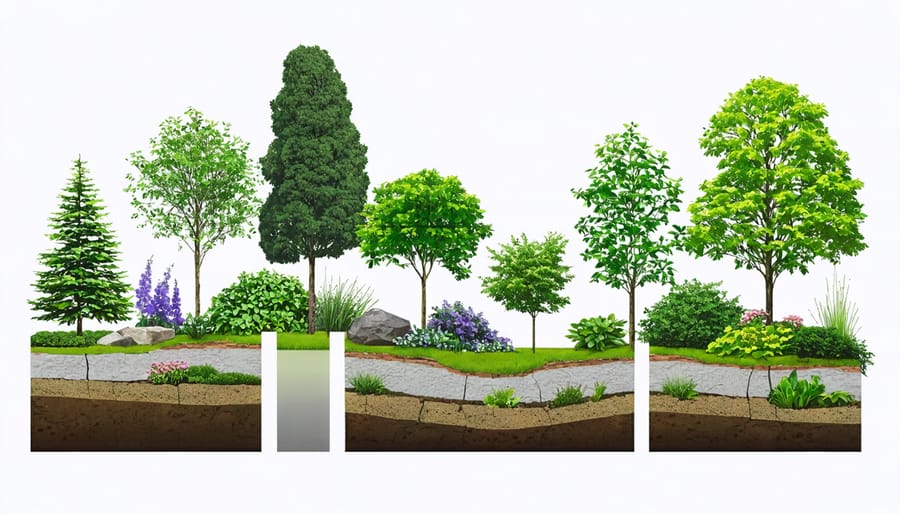
Garden shrub layer planning means choosing and placing shrubs at different heights to create a healthy, useful, and attractive middle layer between trees and low plants. Start with your site conditions, select shrubs that fit your region, and space them for their mature size.
In American gardens, shrubs help connect trees, lawns, flower beds, and outdoor living spaces. They can frame a front porch, screen a busy road, or add shade along a fence. They also give birds and small wildlife places to rest and hide. A well-planned shrub layer makes these spaces feel more natural and complete.
Good planning starts before you buy plants. Check the sun, soil, water, and space in your yard. Then choose shrubs that can grow well in those conditions. Think about their height, width, shape, and care needs. A good plan should look balanced as the plants grow, not just on planting day.
Source: pinterest.com
What Is Garden Shrub Layer Planning?
Garden shrub layer planning is the process of designing the woody plants that grow between the tree canopy and the ground layer. This part of a garden adds height, depth, cover, and structure. It can include small shrubs, medium shrubs, and taller woody plants.
A shrub layer is not just a row of bushes. It is a group of plants that work together. Some provide a green backdrop. Others add flowers, fruit, fall color, or winter form. The goal is to make each plant serve a clear role.
In habitat garden design, the shrub layer often sits above low plants and below the taller tree layer. One UF/IFAS habitat guide uses a height range of about 3 to 12 feet for this layer. This is a useful example, not a fixed rule for every garden. Local plant size and site needs should guide your plan.
Source: garden.eco
Visual structure
Shrubs fill the space between tall trees and low plants. This helps the garden feel full without relying on a wall of tall plants.
Privacy and screening
Tall shrubs can screen views, mark garden edges, and soften fences. Their mature height should match the level of privacy you need.
Wildlife cover
Shrubs offer places to rest, nest, hide, and find food. Flowers, seeds, and fruit can also support local wildlife.
Seasonal interest
Flowers, fruit, leaf color, bark, and evergreen foliage can keep the garden interesting through the year.
How the Shrub Layer Connects Other Garden Layers
A layered garden has several plant levels. Tall trees form the upper canopy. Smaller trees and large shrubs fill the space below. Low shrubs, grasses, flowers, and groundcovers grow near the soil.
These levels should work as one planting. A tall shrub can sit near a small tree. A low shrub can grow near a path. Groundcovers can fill open soil below them. This creates a gradual change in height instead of a sharp jump.
Upper layer
Trees and large woody plants give shade and height.
Middle layer
Medium and tall shrubs add cover, flowers, fruit, and visual depth.
Lower layer
Small shrubs, grasses, flowers, and groundcovers protect and cover the soil.
Study Your Garden Before Choosing Shrubs
The first step is to study the place where the shrubs will grow. A plant may look great at a nursery but fail in the wrong spot. Your soil, light, water, and local climate all affect its growth.
Walk around your yard at different times of day. Look at the areas near walls, fences, trees, and paths. Note where water collects after rain. Also check where the soil dries out fast. These small details can help you avoid poor plant choices.
Draw a simple map of the planting area. Mark the house, trees, fences, paths, drains, utility lines, and other fixed features. Add the sunny and shady areas. This map will help you plan the size and place of each shrub.
Source: bluestem.ca
Sunlight
Record how many hours of direct sun each area gets. Full sun often means six or more hours, while full shade means very little direct sun. Check the exact light needs of each shrub.
Soil type
Check if the soil is sandy, loamy, or clay-based. Sandy soil drains fast. Clay soil often holds more water. Choose plants that suit the soil you have.
Drainage
Look for puddles that remain after rain. Some shrubs need well-drained soil, while others can grow in moist areas. Do not assume that all shrubs need the same amount of water.
Wind and heat
Open lawns, walls, driveways, and paved areas can create hot or windy spots. Choose shrubs that can handle the exposure.
Available space
Measure the planting bed and nearby paths. Include room for the mature width of each shrub, not only the space it takes up in its pot.
Check Soil and Drainage
A soil test can show the soil pH and nutrient levels. It can help you decide if the soil needs any changes. Contact your county Extension office for local soil testing advice.
Do not add large amounts of fertilizer or compost without a clear need. Some shrubs grow well in lean soil. Others need more organic matter. The right choice depends on the plant and the site.
If water stays in the soil for a long time, select shrubs that tolerate wet conditions or find a better planting spot. Adding a plant that needs dry soil to a wet site can lead to root problems.
Dry sites
Look for shrubs suited to dry soil and low water needs.
Moist sites
Choose plants that can handle steady moisture without root stress.
Compacted sites
Check whether roots can enter the soil. Heavy foot traffic and construction can make soil hard and limit root growth.
Understand Your Local Climate
Use the USDA Plant Hardiness Zone Map as one part of plant selection. It helps show the average cold winter conditions in an area. It does not tell you everything about summer heat, rainfall, humidity, or soil.
A shrub that survives winter may still struggle in a hot, wet, or dry site. Check regional plant guides and local Extension advice. These sources can help you find plants suited to your part of the United States.
Cold winters
Check the plant’s cold hardiness and its need for winter protection.
Hot summers
Check heat tolerance and the need for shade or extra water.
Coastal areas
Check tolerance to salt, wind, and sandy soil.
Set Clear Roles for Each Shrub
Each shrub should have a clear job in the garden. Some plants may serve more than one purpose. For example, a flowering shrub can add color and feed insects. An evergreen shrub can give privacy and keep the garden green in winter.
Start by listing what you need from the planting area. You may want a screen, a soft border, a wildlife patch, or a frame around a front door. The job will help set the right height, shape, and plant type.
Avoid choosing shrubs only because they look nice in a photo. A plant that grows too large can block a window. A low plant may not give enough privacy. The best choice is one that fits both the design and the space.
Use taller shrubs behind low plants or along a fence. They help create a green backdrop and can screen unwanted views.
Middle-height shrubs
Use these plants to connect the tall and low parts of the garden. They can add flowers, leaf color, and seasonal interest.
Low shrubs
Place small shrubs near the front of a bed or along a path. Check their spread so they do not block access.
Accent shrubs
Use a shrub with a special shape, flower, or leaf color to draw the eye to a useful spot.
Wildlife shrubs
Choose plants that offer local food and cover. Consider flowers, berries, seeds, and dense branches.
Use Height Bands as a Planning Tool
A simple height plan can help you arrange the bed. The ranges below are design guides, not strict plant groups. Always check the full mature size of the species you choose.
Low shrubs can help form a clear edge. Medium shrubs can fill the center. Taller shrubs can form the back of the bed or screen a view. Use a few plants with a different form to keep the layout from looking like a row of boxes.
Low shrubs: about 1 to 3 feet
These plants work well near bed edges, open paths, and low borders.
Medium shrubs: about 3 to 6 feet
These plants can form the main body of the shrub layer.
Tall shrubs: about 6 to 10 feet or more
These plants can create privacy and a strong background where space allows.
Choose Shrubs That Fit Your Region
Choose shrubs that can grow well in your local climate and soil. Native plants are often a useful starting point. They have a natural link to the local environment and can support wildlife that uses those plants.
A plant native to one part of the United States may not be native to another. Even a plant sold as a native species may come from a distant region. Look for plants suited to your local area or ecoregion when possible.
Use local native plant lists from state Extension offices, native plant groups, or public garden programs. Check the scientific name before buying. Common names can refer to more than one plant, so the scientific name helps avoid mix-ups.
Non-native shrubs are not all harmful. Some can grow well without causing problems. However, check your state and local invasive plant lists before planting. A plant that spreads in one region may be less of a concern in another.
Source: garden.eco
Native value
Look for local shrubs that provide flowers, fruit, seeds, or cover for wildlife.
Growth habit
Check if the plant spreads by seed, runners, or root shoots. Fast-spreading plants may need more control.
Disease risk
Use a mix of suitable shrub types. A garden with only one kind of shrub may be more exposed to a pest or disease that affects that plant.
Plant diversity
Mix plant forms and seasonal traits while keeping the overall design calm and clear.
Plan for Flowers, Fruit, and Winter Cover
A shrub layer can offer value in more than one season. Some shrubs bloom in spring. Others flower in summer or produce fruit in fall. Evergreen shrubs can keep some cover in winter.
Try to spread the seasonal features across the bed. Do not place every flowering shrub in one small area. A balanced mix can give the garden a steady flow of color and food.
Spring
Use shrubs with early flowers or fresh leaf growth.
Summer
Add shrubs with summer blooms, dense leaves, or shade.
Fall
Look for fruit, seed, and leaf color that add interest.
Winter
Use suitable evergreens, strong branch forms, and plants with lasting fruit.
Avoid Choosing Plants by Hardiness Zone Alone
The hardiness zone is only one part of plant selection. It does not show if a shrub can handle a wet clay bed or a dry slope. It also does not show if the plant can handle strong summer heat.
Compare the plant’s light, water, soil, and heat needs with your site map. If a plant needs more water than you can provide, choose another shrub. This simple step can save time and reduce plant loss.
Check the whole plant profile
Review mature height, spread, light, soil, water, and growth habit.
Check local plant rules
Review state and local guidance on invasive or restricted plants.
Plan Shrub Spacing for Mature Growth
Shrub spacing should match the mature width of each plant. Do not space shrubs only by how large they look in a nursery pot. A small shrub can grow much wider over time.
Measure from the center of one plant to the center of the next. This is called center-to-center spacing. If a shrub grows about 4 feet wide, a spacing near 4 feet can allow the plants to meet at their edges when mature.
This is a starting point, not a rule for every design. A formal hedge may need closer spacing, while a natural garden may need more open space. The plant species, growth habit, airflow, and pruning plan all matter.
Do not crowd shrubs to make the garden look full right away. Overcrowding can lead to poor airflow, uneven growth, and more pruning. It can also make it harder to reach plants for care.
Source: bluestem.ca
Read the mature width
Use the expected spread listed for the exact shrub or cultivar you plan to buy.
Allow airflow
Leave enough room for air to move around the plants. This helps reduce crowding and makes care easier.
Leave access space
Keep room near paths, gates, meters, drains, and outdoor equipment.
Plan near buildings
Leave space for mature growth, air movement, windows, doors, and home repairs. Check local guidance for the right setback.
A Simple Shrub Spacing Example
Suppose you want to plant a group of shrubs that will each grow about 4 feet wide. A center-to-center distance of about 4 feet can allow their outer edges to meet at maturity.
If you place five shrubs in one line at that spacing, the first and last plant centers will be about 16 feet apart. The plants will form a connected row as they grow. This is a hypothetical layout, not a spacing rule for all shrubs.
If the plants need more room or have a wide, natural form, increase the distance. If you want a dense hedge, check the spacing guide for that exact species and accept that closer planting may need more care.
For a natural border
Use mature spread as a starting point and allow each plant to keep its natural shape.
For a hedge
Use the plant’s hedge spacing guidance and consider how much pruning the hedge will need.
For a mixed bed
Space each shrub by its own mature width. Do not use one fixed distance for every plant.
Use Staggered Groups Instead of Long Rows
A staggered layout can make a shrub bed look more natural. Place some shrubs slightly forward or back instead of keeping every plant on one straight line. This can add depth and help link the shrub layer to low plants.
Keep the groups connected in a clear way. Repeat a few shrub types across the bed rather than using a new species in every spot. Repetition helps the design feel calm and joined.
Use small groups
Plant similar shrubs in groups where their mature sizes allow.
Vary the shape
Mix rounded, upright, and spreading forms when the site allows.
Avoid crowded gaps
Leave enough room for plants to grow without forcing them into each other.
Arrange the Shrub Layer With Other Plants
A good shrub layer should blend with the plants around it. The best layout often has a soft change in height from the back of the bed to the front. Still, avoid making every plant form a straight line or a fixed row.
In a bed viewed from one side, taller shrubs often work near the back. Medium shrubs can sit in the center. Low shrubs and groundcovers can form the front edge. In an island bed, taller plants may work near the center, with lower plants around the outside.
Think about the view from the house, porch, path, and street. A shrub that looks good from one angle may block a view from another. Set the plants in their pots before digging to check the layout.
The shrub layer should not block every tree trunk or cover all open space. A few clear views can make the garden feel open. The goal is a balanced mix of cover and space.
Source: pinterest.com
Link the tree layer
Use shrubs that can grow under the light and root conditions created by nearby trees.
Link the ground layer
Use low shrubs and groundcovers to cover open soil and soften the edge of taller plants.
Keep paths clear
Do not let mature branches block walkways, doors, or views around corners.
Repeat key plants
Repeat a few forms or species across the bed to create a clear visual pattern.
Balance Evergreen and Deciduous Shrubs
Evergreen shrubs keep their leaves through the year. Deciduous shrubs lose their leaves in fall or winter. Both types can add value to a garden.
Evergreens give the bed a steady base. Deciduous shrubs can add flowers, fruit, and fall color. A mix can keep the design from looking bare in winter while still allowing seasonal change.
Evergreen shrubs
Use them for year-round cover and a steady green shape.
Deciduous shrubs
Use them for seasonal flowers, fruit, leaf color, and open winter forms.
Keep Wildlife Needs in Mind
Wildlife-friendly shrub beds need more than flowers. Birds and other animals may use branches for cover, fruit for food, and leaf litter for shelter. Different plant forms can support different needs.
Use shrubs that offer food at different times of year. Keep some natural leaf litter where it is safe and suitable. Avoid treating every fallen leaf or twig as waste.
Food
Choose suitable shrubs that offer nectar, fruit, seeds, or other local food sources.
Shelter
Use dense shrubs and mixed plant heights to create safe cover.
Connected spaces
Link planted areas where possible so small wildlife can move between cover patches.
Create a Practical Shrub Planting Plan
Turn your design idea into a simple planting plan before you buy shrubs. A clear plan helps you check plant numbers, spacing, cost, and access. It also makes it easier to plant in stages.
Start with the largest shrubs. Mark their mature spread on your map. Then add medium and low shrubs around them. This method helps you avoid placing a small plant where a large shrub will later take over.
Use circles to show each plant’s mature width. Add the plant name and expected height beside each circle. Mark the distance between plant centers. Leave open space for paths and future care.
If the whole bed cannot be planted at once, divide the work into phases. Begin with the main structure plants. Add smaller shrubs and groundcovers later. This can spread the cost and reduce damage to plants that are already growing.
Source: garden.eco
Step 1: Set the goal
Write down whether the bed needs privacy, shade, wildlife cover, a border, or visual interest.
Step 2: Map the site
Draw the bed and mark the house, trees, paths, utilities, sun, and wet areas.
Step 3: Choose the main shrubs
Select the tallest plants first. Check their mature size and site needs.
Step 4: Add medium and low shrubs
Fill the design with plants that connect the height levels.
Step 5: Check the spacing
Compare the plant centers with the mature width of each shrub.
Step 6: Review the plan
Check views, paths, windows, utility access, and future pruning needs.
Example: A Small Mixed Shrub Bed
Imagine a planting bed that is 10 feet deep and 18 feet long. The owner wants a green screen at the back, flowers in the middle, and a low edge near the path. This is a sample layout, not a plan for a specific climate or region.
The back row could use three shrubs with a mature width near 5 feet. Their centers could be about 5 feet apart. The middle area could use smaller shrubs with a mature width near 3 feet, set in a staggered pattern.
A few low shrubs could frame the front edge. The owner would then check the light, water, and soil needs of each plant. If the mature spread does not fit, the owner should change the plant choice or enlarge the bed.
Back of bed
Use suitable tall shrubs for the main screen and structure.
Middle of bed
Use medium shrubs with different forms or bloom times.
Front of bed
Use low shrubs or groundcovers that will not block the path.
Plant and Establish Shrubs the Right Way
Good planning must continue during planting. A shrub can struggle if it is planted too deep, watered poorly, or placed in compacted soil. Follow the planting guide for the exact species and growing conditions.
In much of the United States, spring and fall can be useful planting seasons. The best time depends on local weather, soil, and plant type. Avoid planting when severe heat or drought makes it hard to keep the root ball moist.
Before digging, call 811 in the United States to have underground public utility lines marked. Check the marked lines before you dig. Also identify private lines, irrigation pipes, and other buried features that may not be covered by the public marking service.
Source: bluestem.ca
Prepare the bed
Remove weeds and clear unwanted debris. Loosen compacted soil where needed. Do not damage the roots of nearby trees.
Dig a wide hole
Make the hole wider than the root ball, but do not dig it too deep. Follow the planting guidance for the shrub.
Check the root flare
Keep the point where the main roots meet the stem at or slightly above the final soil level.
Backfill with care
Use suitable backfill soil. Do not bury the stems or cover the root ball with a thick layer of soil.
Water the root zone
Water after planting so the root ball and nearby soil are moist. Adjust later watering to rainfall, soil, and plant needs.
Apply mulch
Use a suitable mulch layer to slow water loss and limit weeds. Keep mulch away from the stems.
Support the First Year of Growth
New shrubs need time to grow roots into the soil around them. During this period, check the root ball often. It can dry out even when the soil near the plant looks moist.
Water deeply enough to wet the root zone, but do not keep the soil soaked. The right amount and timing depend on soil type, weather, plant size, and the species.
Watch for fresh growth and firm stems. These can be signs that a shrub is settling in. Wilting, leaf loss, or dry soil may mean the plant needs attention.
Check soil moisture
Feel the soil near the root ball before watering. Do not follow a fixed schedule without checking conditions.
Keep mulch in place
Check that mulch has not washed away or piled against the stems.
Limit extra fertilizer
Do not feed shrubs without a clear need. Use soil test results and local guidance.
Common Shrub Layer Planning Mistakes
Many shrub problems begin during the design stage. A plant may look healthy at first but become crowded as it grows. Others may fail because the soil or light does not suit them.
Check the whole planting area before making changes. A weak shrub may have a water, soil, root, or pest problem. Do not assume that more water or fertilizer will solve every issue.
Planting too close
Shrubs may crowd each other and need frequent pruning. Check mature spread and adjust the spacing before planting.
Choosing by flower color alone
A shrub may have the right color but the wrong size or water needs. Check its full plant profile.
Using only one species
A single-species bed may be more exposed to a pest or disease that affects that plant. Use a suitable mix of shrubs.
Ignoring winter form
A bed may lose most of its structure when deciduous plants drop their leaves. Add suitable evergreen plants or shrubs with strong winter form.
Blocking windows and paths
Large shrubs can cover windows or narrow paths. Plan for mature size and future access.
Planting invasive shrubs
Some plants spread beyond the garden and harm local habitats. Check local invasive plant guidance before buying.
Pruning to fix poor placement
Repeated heavy pruning may hide a poor plant choice. Replace the shrub with a better fit when practical.
Troubleshooting Weak or Unhealthy Shrubs
Start by looking at the leaves, stems, and soil. Check the plant for pests or signs of disease. Then review its water and light conditions.
Make one change at a time when possible. This helps you see what is helping. If the plant has serious dieback, damaged roots, or signs of a spreading disease, contact a local Extension office or qualified plant health professional.
Yellow leaves
Possible causes include poor drainage, low nutrients, root stress, or natural seasonal change. Check soil moisture and plant needs before adding fertilizer.
Brown leaf edges
Dry soil, heat, wind, salt, or root damage may be involved. Check the site and recent weather.
Few flowers
The shrub may need more light, the right pruning time, or more time to mature. Check when that species forms flower buds.
Weak or uneven growth
Crowding, shade, compacted soil, or poor drainage may limit growth. Check the roots and the space around the shrub.
Repeated wilting
Check the root ball and surrounding soil. Both very dry and very wet soil can cause stress.
Know When to Replace a Shrub
A shrub may not be worth keeping if it is too large for the site or needs constant pruning. It may also be a poor fit if it cannot handle the soil or water conditions.
Before removing it, check whether a simple change can solve the problem. If the location itself is wrong, choose a smaller or more suitable species. A good replacement should fit the space at maturity.
Replace poor site matches
Use a plant suited to the actual light, soil, and water conditions.
Replace unsafe plants
Seek local advice if a plant has harmful thorns, toxic parts, or an invasive growth habit.
Research Review and Next-Question Gap Map
The research review for this guide was carried out on November 16, 2026. The market was the United States. The main search themes were garden shrub layer planning, shrub spacing, layered garden design, native shrub selection, and habitat garden planning.
Five useful Extension resources were inspected. These included Planting and Establishing Shrubs from UF/IFAS, Designing a Habitat Garden from UF/IFAS, Shrubs: Functions, Planting, and Maintenance from Virginia Tech, Landscape Designs with Native Plants from the University of Maryland Extension, and Selecting Landscape Shrubs with Special Comments on Invasive and Native Plants from Mississippi State University Extension.
The reviewed pages cover plant size, site conditions, spacing, wildlife value, native plants, and care. Some explain one part of the task in detail but do not give a single step-by-step plan for the whole shrub layer. This guide brings those parts together with a site map method, a spacing example, a sample bed layout, and a troubleshooting path.
The questions below are inferred next needs based on the planting task. They are not claims about search volume or verified live search demand. No Search Console data, customer support records, or live People Also Ask sample was supplied for this review.
Question: How far apart should garden shrubs be planted?
Reader stage: Before planting. Basis: Inferred next need from the spacing task. Competitor coverage: Answered by Virginia Tech and UF/IFAS, but exact spacing depends on plant size and use. Reader benefit: A center-to-center example makes spacing easier to plan. Evidence: Mature spread guidance from Extension resources. Priority: High. Placement: Shrub spacing section.
Question: Which shrubs grow well under trees?
Reader stage: Plant selection. Basis: Inferred next need from shade and site assessment. Competitor coverage: Shallow across the reviewed general guides because local tree shade and root competition vary. Reader benefit: Helps prevent poor plant choices. Evidence: Light and soil matching guidance from Extension resources. Priority: High. Placement: Site assessment and regional selection sections.
Question: Can a small yard have a useful shrub layer?
Reader stage: Early design. Basis: Inferred next need from space planning. Competitor coverage: Shallow because broad landscape examples may not explain a small-bed layout. Reader benefit: Shows how to use height and spread without overcrowding. Evidence: Mature-size and layered planting guidance. Priority: Medium. Placement: Practical planting plan section.
Question: How can shrubs support local wildlife?
Reader stage: Plant selection and design. Basis: Inferred next need from habitat planting goals. Competitor coverage: Answered by UF/IFAS habitat guidance, but the connection between shrub groups and seasonal food can use more practical detail. Reader benefit: Helps readers select plants for food and cover. Evidence: Habitat layering and seasonal resource guidance. Priority: Medium. Placement: Regional selection and garden layering sections.
Question: Why are newly planted shrubs losing leaves?
Reader stage: After planting. Basis: Inferred next need from establishment care. Competitor coverage: Shallow across the reviewed design pages. Reader benefit: Gives readers a safe order for basic checks. Evidence: Shrub planting and watering guidance from Extension resources. Priority: High. Placement: Troubleshooting section.
Research Sources and Coverage
UF/IFAS, Planting and Establishing Shrubs: https://gardeningsolutions.ifas.ufl.edu/care/planting/planting-shrubs/ . The page covers mature size, site fit, grouping, planting depth, mulch, and establishment. Its main value is practical planting advice.
UF/IFAS, Designing a Habitat Garden: https://gardeningsolutions.ifas.ufl.edu/design/gardening-with-wildlife/designing-a-habitat-garden/ . The page explains vertical habitat layers, plant groups, wildlife cover, and seasonal resources. It gives a useful ecological view of shrub placement.
Virginia Tech, Shrubs: Functions, Planting, and Maintenance: https://www.vt.edu/content/pubs_ext_vt_edu/en/426/426-701/426-701.html . The page covers shrub roles, mature size, site conditions, spacing, watering, and pruning. It provides a broad guide to shrub care.
University of Maryland Extension, Landscape Designs with Native Plants: https://www.extension.umd.edu/resource/landscape-designs-native-plants . The page gives sample planting plans, plant categories, light needs, soil moisture, and native plant examples. Its plant lists are regional and should not be treated as national recommendations.
Mississippi State University Extension, Selecting Landscape Shrubs with Special Comments on Invasive and Native Plants: https://www.accessibility.extension.msstate.edu/publications/selecting-landscape-shrubs-special-comments-invasive-and-native-plants . The page covers shrub function, height, width, light, climate, soil, form, texture, and plant risks. Its species advice is specific to the region and needs local checking.
Evidence type
The main evidence is published university Extension guidance. The article uses this material as documented guidance and analysis, not as first-hand testing.
Research limit
No site-specific soil test, local plant list, or live plant inventory was supplied. Final plant choices must be checked for the reader’s state and site.
Editorial improvement
The guide combines site assessment, mature-size spacing, layered layout, phased planting, and troubleshooting in one practical sequence.
Frequently Asked Questions
Q
How many shrub layers should a garden have?
There is no fixed number for every garden. A simple bed may have low and medium shrubs. A larger habitat garden may include low, medium, and tall shrubs below trees. Use the number of layers that fits the space, light, and plant needs.
Q
Should shrubs be planted in rows or groups?
Both layouts can work. Straight rows suit formal hedges and borders. Groups and staggered patterns often look more natural and can create better cover for wildlife. Choose the layout that fits the garden’s main purpose.
Q
Can shrubs grow under large trees?
Yes, if the shrubs can handle the shade and root conditions. Look for plants suited to the light, soil, and moisture below the tree. Avoid digging deeply near large tree roots, and do not cover the root zone with excess soil.
Q
Are native shrubs always the best choice?
Native shrubs are often a strong choice for local wildlife and regional conditions. However, they must still fit the soil, light, and space. Check the local native range and invasive plant lists before buying. A native plant that grows poorly in the wrong spot is still a poor match.
Q
How long does it take for a shrub layer to fill in?
The time depends on the shrub species, plant size, climate, and growing conditions. Some shrubs fill out faster than others. Plan for mature size and give plants room to grow. Do not crowd them just to make the bed look full in the first season.
✦ Wrapping Up
Conclusion
Good garden shrub layer planning starts with the site, not the plant shop. Study the light, soil, water, and space first. Then choose shrubs that fit the local climate and the job you want them to do.
Use a mix of heights, shapes, and seasonal features. Space plants for mature growth. Connect the shrub layer to trees and groundcovers, and leave room for safe care. A well-planned bed can add beauty, cover, and wildlife value for many years.
💡 Key Takeaway
Before buying shrubs, draw a simple map of your garden. Mark the sun, shade, soil, water, paths, and fixed features. Choose suitable shrubs by mature size, place them on the map, and check the spacing before you plant.