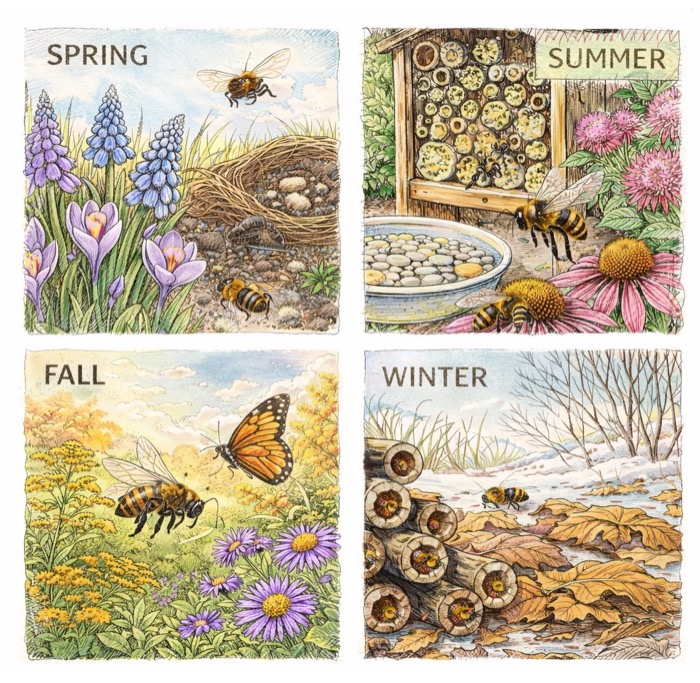
Garden pollinator season planning means choosing local plants that bloom at different times. Aim for flowers from early spring through late fall. Add plants for pollinator young, safe places to nest, and shelter for winter. This gives bees, butterflies, moths, and other pollinators food across the growing season.
Across the United States, pollinator gardens face very different growing seasons. A garden in Maine may still have cold soil when flowers begin to bloom in Florida. A yard in Colorado may face dry winds, while a garden in the Pacific Northwest may have long periods of rain. These local changes affect when flowers open and when pollinators need food.
A good garden plan does not depend on one large wave of summer flowers. It builds a steady flow of blooms from one part of the year to the next. Early flowers help pollinators that emerge after winter. Summer flowers feed active bees and butterflies. Late flowers help insects prepare for cold weather and support some migrating species.
The best way to plan is to study your local plants, note their bloom times, and fill the gaps between them. Choose native plants that fit your soil, sun, and water supply. Also think about where pollinators will lay eggs, build nests, and spend the winter. Published guidance from the USDA Natural Resources Conservation Service, the U.S. Fish and Wildlife Service, the Xerces Society, and university extension programs supports this whole-season approach.
Source: thecelticfarm.com
What Is Garden Pollinator Season Planning?
Garden pollinator season planning is the process of matching flower bloom times with the needs of local pollinators. It helps you decide what to plant and when each plant will offer food. The goal is to keep pollen and nectar available during the months when pollinators are active.
A garden with many flowers in June may still have little value in March or October. Some bees emerge early in spring. Others become active later in the year. Butterflies, moths, flies, beetles, and hummingbirds also use flowers at different times.
This means a pollinator garden needs more than a colorful flower bed. It needs a planned mix of plants that bloom in a steady order. It should also provide places for insects to feed, nest, lay eggs, and rest.
Bloom sequence
The order in which different plants flower during the year. A good sequence has few or no long gaps in food.
Nectar
A sweet liquid found in many flowers. It gives energy to bees, butterflies, moths, and other flower visitors.
Pollen
A fine powder made by flowers. Many bees collect it as a source of food for their young.
Host plants
Plants that caterpillars and other young insects need for food and growth.
Pollinator habitat
The food, water, shelter, and nesting space that help pollinators live and grow.
Why Does Bloom Timing Matter?
Flowers are not all open at the same time. A plant may bloom for only a few weeks. When that bloom ends, the insects that use it need another food source. If no other flowers are ready, they must search farther for food.
A steady bloom sequence makes food easier to find. It can also support insects that have short adult lives or must collect food while raising young. Spring flowers are useful to emerging bees, while late flowers can help new bumble bee queens build energy before winter.
Early food
Supports pollinators that become active after winter.
Summer food
Supports active adults and insects that are raising young.
Late food
Helps late-season insects and some migrating pollinators.
Start With Your Local Pollinator Season
Start by learning when plants bloom in your own area. A national planting calendar can give you ideas, but it should not be your final guide. Weather, soil, elevation, rainfall, and local plant ranges can change bloom times by weeks.
The USDA plant hardiness zone map is useful for checking winter cold. However, it does not tell you the exact bloom date of a plant. It also does not show every local soil or rainfall difference. Use it with local native plant lists and advice from your county extension office.
Look for plants that grow naturally in your state or local region. Check their Latin names as well as their common names. Common names can refer to several different plants, and this can lead to mistakes when you buy seeds or young plants.
It also helps to watch nearby natural spaces. Visit a local park, meadow, woodland edge, or nature reserve during different parts of the year. Note which native flowers are open and which insects visit them. These simple checks can help you build a garden that fits the local pollinator season.
Check local native plant lists
Use your state native plant society, local botanical garden, or university extension service to find suitable species.
Check soil and sunlight
Find out if your garden has sandy, clay, moist, or dry soil. Record how many hours of direct sun each area receives.
Check water needs
Choose plants that can grow with the rain and water supply your garden can provide.
Check local plant ranges
Make sure a plant is native to your area or a suitable nearby region. A plant native to one part of the United States may not suit another.
Check plant treatments
Ask sellers whether plants have been treated with systemic insecticides or other products that may harm pollinators.
Why Hardiness Zones Are Not Enough
Hardiness zones mainly describe the average lowest winter temperature. They help you judge whether a plant may survive winter. They do not tell you when the first bee will emerge or when a flower will open.
For example, a sunny south-facing bed may warm up before a shaded bed nearby. A garden at high elevation may have a shorter growing season than a lowland garden in the same state. Local rainfall can also change when plants grow and bloom.
Use local bloom records when possible. If you cannot find them, ask a native plant nursery or extension office for a bloom range that fits your area.
Use zones for cold tolerance
Check whether a plant can survive the winter conditions in your garden.
Use local bloom records for timing
Check when the same species flowers in nearby gardens or natural areas.
Build a Bloom Sequence From Spring to Fall
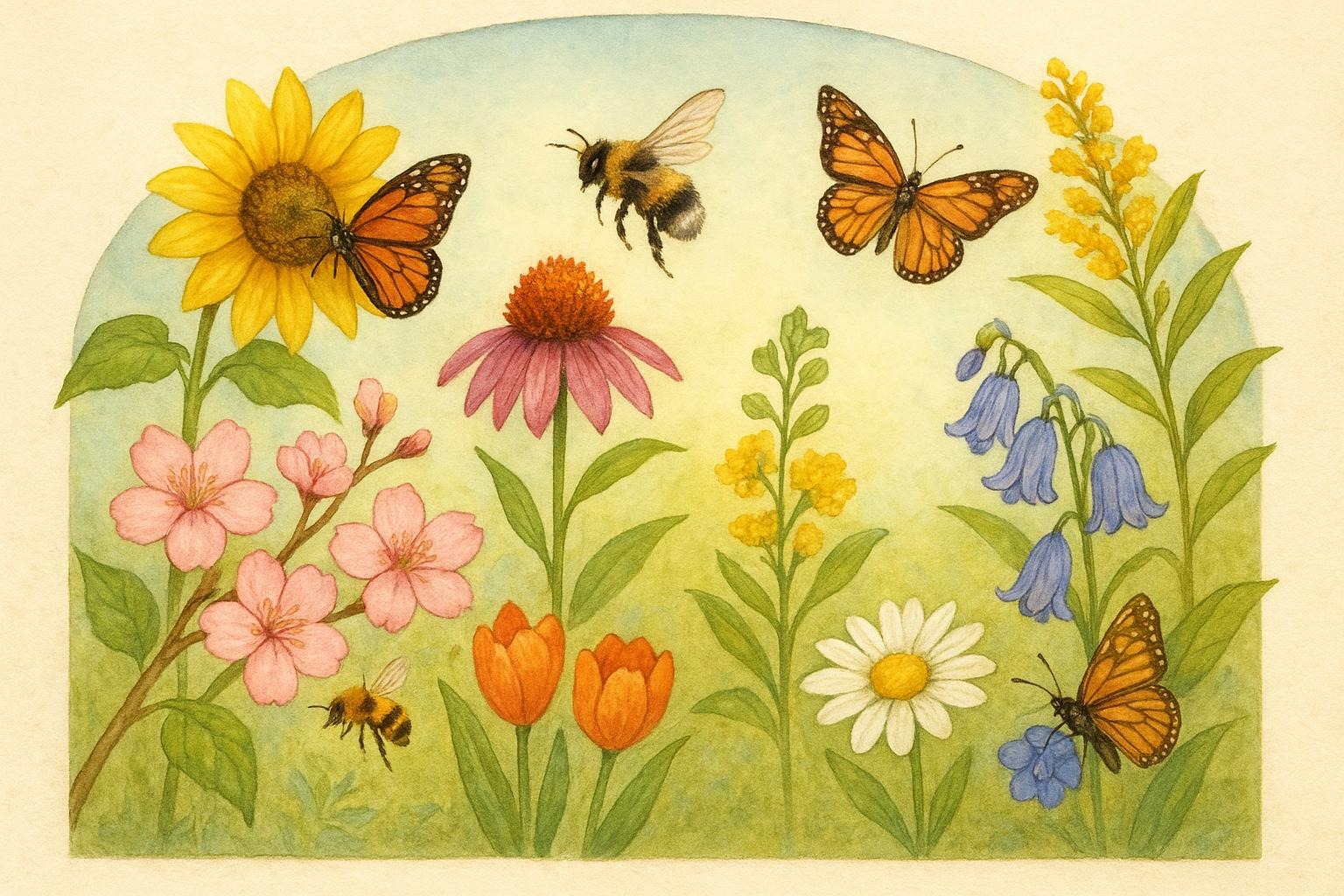
Divide the growing season into early spring, late spring, summer, and late summer to fall. Then choose plants for each period. The exact months will change by region, so use these groups as a planning guide rather than a fixed national calendar.
Try to have more than one useful plant in bloom during each part of the season. This gives pollinators more choice and reduces the risk of a food gap when one plant blooms early or late. Use native species with different flower shapes and sizes.
Trees and shrubs can play a key role in the early season. They may produce many flowers before smaller garden plants begin to bloom. Native perennials can then carry the bloom sequence through summer and fall.
Source: botanicalmood.com
Early spring
Look for local willows, serviceberries, redbuds, native plums, spring phlox, and other early native flowers where they grow naturally.
Late spring
Consider native penstemons, wild lupines, mountain laurel, native blueberries, and other plants suited to your local soil and climate.
Summer
Use suitable native milkweeds, bee balm, mountain mint, coneflowers, blanketflowers, and native sunflowers.
Late summer and fall
Look for native asters, goldenrods, late sunflowers, blazing stars, and rabbitbrush where these species fit the region.
Plan for Early Spring Flowers
Early spring can be a hard time for pollinators. Many garden beds still look bare, but some insects are already active. Early flowers help provide food when few other sources are open.
Flowering trees and shrubs are useful here. In suitable parts of the eastern United States, native willows, serviceberries, redbuds, and wild plums can help fill early gaps. In parts of the West, native manzanitas and other early flowering shrubs may be useful.
Do not plant a species just because it appears on a national list. Check that it belongs in your local area and can grow in your site conditions.
Give shrubs enough space
Allow room for their full size so they can grow and flower well.
Keep early blooms visible
Place small spring flowers where they receive suitable light and are easy to watch.
Keep Summer Flowers From Becoming a Short Peak
Summer often brings the largest wave of flowers. However, many gardens bloom heavily for a short time and then slow down. To avoid this, choose plants with different flowering periods.
Native coneflowers, bee balm, mountain mint, milkweeds, and sunflowers can help fill summer spaces in regions where they are suitable. Some species flower earlier than others, so check local bloom records before planting.
Include flowers with different forms. Some insects visit open, flat flowers, while others use small tube-shaped flowers. A mix can support a wider range of pollinators.
Use different flower forms
Include open flowers, clusters of small flowers, and tubular blooms.
Plant more than one species
Do not depend on one plant to feed every kind of pollinator.
Give Fall Flowers a Clear Place in the Plan
Fall flowers are often left out of garden plans. This can create a serious food gap near the end of the growing season. Some insects remain active well into autumn, and some need food before winter.
Native asters and goldenrods are useful late-season plants in many parts of the country. Rabbitbrush is another option in suitable western areas. Choose local species that can grow in your soil and rainfall conditions.
Do not remove every flower as soon as the garden begins to fade. Allow healthy flowers to finish their bloom cycle. Some can also form seeds that support birds and help the plants spread naturally.
Keep late blooms in the plan
Reserve garden space for plants that flower near the end of the local growing season.
Avoid early cleanup
Leave useful flowers and seed heads in place when safe and suitable.
Make a Garden Pollinator Bloom Calendar
A bloom calendar turns your plant list into a useful plan. It shows what should flower, when it should flower, and where a gap may occur. You can make one in a notebook, a spreadsheet, or a simple wall chart.
List each plant by its Latin name and common name. Add its expected first bloom, main bloom, and last bloom. Also record its light, soil, and water needs. This makes it easier to see whether two plants depend on the same growing conditions.
Do not plan around one exact flowering date. A plant may open early during a warm spring and later during a cool one. Use a range of weeks and update it after you see what happens in your garden.
Source: backyardwildlifeguide.com
Plant name
Record the common and Latin names so you can identify the exact species.
Bloom window
Record the expected start, peak, and end of flowering.
Site needs
Note sunlight, soil type, drainage, and water needs.
Pollinator use
Record which bees, butterflies, flies, moths, or birds visit the plant when observed.
Food gap
Mark any period when very few useful flowers are open.
Example of a Seasonal Bloom Plan
The following example shows how to divide a temperate garden into broad bloom periods. It is a planning model, not a universal plant calendar. Each plant must be checked against its local native range and growing needs.
Early spring
Use suitable native trees, shrubs, violets, and early woodland flowers.
Late spring
Add native phlox, penstemon, lupines, and other local spring perennials.
Early to mid-summer
Use suitable bee balm, milkweed, coneflowers, mountain mint, and other summer flowers.
Late summer
Include native sunflowers, blazing stars, and plants that continue flowering as summer fades.
Fall
Keep native asters, goldenrods, and other local late flowers in bloom.
Use Overlapping Bloom Times
A strong calendar has some overlap between plants. For example, one spring flower may still be open when the first summer flowers begin. This creates a bridge between the two seasons.
Overlapping blooms also help when weather changes the normal flowering time. If one plant opens late, another may still provide food. This makes the garden less dependent on a single species.
Avoid single-week food gaps
Add plants with different bloom windows when your calendar shows a period with little flower cover.
Repeat useful plants
Use several plants of a valuable species where space allows. This creates a larger patch of flowers.
Spread flower groups
Place flower groups in more than one part of the garden when possible.
Choose Plants for More Than Adult Pollinators
Flowers feed adult pollinators, but many insects need other plants to complete their life cycles. A butterfly may drink nectar from one flower but lay its eggs on a very different plant. The young caterpillars may only be able to eat certain leaves.
This is why host plants matter. For example, monarch caterpillars need milkweed plants. Other butterflies and moths use their own host plants. A garden with nectar flowers but no suitable host plants may attract adults without supporting their young.
Bees also need places to build nests. Many native bees nest in the soil, while others use hollow or pithy stems and natural spaces in wood. A good garden leaves room for these needs.
Butterfly host plants
Choose host plants that support the local butterfly and moth species you want to help.
Ground-nesting space
Keep a few small areas of suitable bare soil for native bees that nest underground.
Plant stems
Leave some healthy hollow or pithy stems standing through winter.
Leaf litter
Keep some leaf cover in safe garden areas. It can shelter insects during cold months.
Natural wood
Retain suitable dead wood or brush in a safe place where local wildlife can use it.
Support Bees That Nest in the Ground
Many native bees do not live in large hives. They make small nests in the soil. Some use open ground, while others prefer soil with a certain texture and drainage.
Avoid covering every open patch with thick mulch or landscape fabric. Leave a few small areas of safe, dry soil where ground-nesting bees may build nests. Do not dig or disturb areas where active nests are present.
The goal is to keep useful nesting space without creating an erosion problem or leaving soil exposed where it is not suitable.
Keep a small soil patch
Choose a sunny or lightly shaded area with soil that drains well, based on local bee needs.
Avoid frequent digging
Watch for nesting activity before turning soil or changing the garden bed.
Leave Winter Shelter for Insects
A clean garden is not always a healthy garden for wildlife. Some insects spend winter in fallen leaves, stems, or other plant parts. Removing all this material in fall can destroy shelter that they need.
Leave healthy stems and some leaf litter until spring when local insects have had time to emerge. You can remove diseased plants or invasive seed heads when needed. Keep dry plant material away from buildings and follow local fire safety rules.
Natural nesting spaces are often more useful than decorative insect shelters. If you use a bee hotel, it needs proper cleaning and care. A neglected structure can become a place where pests and disease build up.
Delay full cleanup
Wait until spring warmth and local insect activity before cutting back all healthy stems.
Keep useful leaves
Leave some leaves under shrubs and in garden beds where they do not create a safety or plant health problem.
Plan Planting Time and Seasonal Garden Care
Planting time depends on your region, plant type, and local weather. Fall planting works well for many native perennials and seeds in areas with suitable rainfall and winter conditions. It gives some plants time to form roots before the next growing season.
Spring planting can be a better choice in places with very wet winters, harsh freeze and thaw cycles, or dry fall conditions. Check the needs of each species before sowing. Some native seeds need a cold, moist period before they will grow.
Seeds often cost less than nursery plants, but they may take longer to form flowers. Some perennials need more than one growing season to reach a strong size. Young plants can give faster results, but they still need proper care while their roots settle.
Fall planting
Consider it for suitable native seeds and plants in regions where fall soil and weather support root growth.
Spring planting
Use it when local weather or plant needs make fall planting less suitable.
Seed planting
Check seed depth, dormancy, cold treatment, and sowing time before planting.
Nursery plants
Choose healthy plants with clear species labels and known growing needs.
First-year care
Water new plants as needed and remove weeds that compete for space and light.
Prepare the Garden Before Planting
Start with the site. Remove invasive plants and decide how much of the lawn or garden bed you want to change. If you are replacing turf, use a method that suits the soil and nearby trees. Avoid damaging tree roots or active wildlife nests.
Do not add large amounts of fertilizer without a soil or plant need. Many native plants grow well in the soils where they evolved. Too much added plant food can cause weak growth or make some plants less suitable for the site.
Group plants with similar needs. Put dry-soil plants together and keep moisture-loving plants in areas where water is more available. This makes care easier and helps prevent plant loss.
Map the garden
Mark sunny, shady, dry, and wet areas before choosing plants.
Remove invasive plants
Use safe control methods that do not harm nearby native plants or pollinators.
Group by growing needs
Place plants with similar light, water, and soil needs together.
Care for Plants During Their First Year
New plants often need more care than established plants. Their roots may not yet reach deep soil water. Check the soil before watering and give water when the plant needs it.
Containers dry out faster than garden beds. Check them more often during hot or windy weather. Use pots with drainage holes and choose plants that can handle the size and depth of the container.
Weed the garden as needed, but learn to identify native seedlings first. Some useful plants may look like weeds when they are small. Keep labels or a planting map so you know what should grow in each space.
Check soil moisture
Water based on soil conditions and plant needs rather than a fixed daily schedule.
Protect young plants
Use suitable mulch to hold moisture, but leave access to bare soil for ground-nesting bees.
Watch for growth
Record which plants survive, flower, or need a better site.
Track Bloom Gaps and Fix Garden Problems
A pollinator garden needs regular checks. Even a good plant list may not work as planned once the plants grow. Some flowers may bloom earlier than expected, while others may fail to flower at all.
Walk through the garden at different times of the growing season. Look for open flowers, signs of pollinator visits, and areas with very little activity. Check again after a change in weather, since heat, rain, and drought can affect bloom time.
Keep a simple record of what you see. Write down the date, plant name, bloom stage, and any pollinators you observe. After a full season, you will have a better picture of how your garden works.
Source: pinterest.com
Record first bloom
Note the first date when a plant opens its flowers.
Record peak bloom
Note when the plant has the largest number of open flowers.
Record last bloom
Note when flowering ends for the year.
Record insect visits
Note which pollinators visit and what time of day you see them.
Compare seasons
Use records from more than one year to see whether the same gaps return.
Common Bloom Problems and Their Causes
A missing flower can have several causes. The plant may be too young, the soil may be too wet, or the site may not receive enough light. Before replacing it, check its growing needs and compare them with the garden conditions.
Problem: No early spring flowers
Possible cause: The garden depends on summer perennials. Action: Add suitable native flowering trees, shrubs, and early spring plants.
Problem: Few flowers in midsummer
Possible cause: Most plants have a short spring bloom or have finished flowering. Action: Add suitable native plants with later summer bloom times.
Problem: No flowers in fall
Possible cause: The garden lacks late-season species. Action: Add local asters, goldenrods, or other native plants that flower late.
Problem: Plants grow leaves but do not flower
Possible cause: Too much shade, excess fertilizer, plant age, or poor site conditions. Action: Check light, soil, plant age, and species needs.
Problem: Few pollinator visits
Possible cause: The flowers are new, the planting is too small, or the garden lacks the right food and nesting resources. Action: Add local native species, improve plant groups, and allow time for the habitat to develop.
Problem: Plants fail during dry weather
Possible cause: The selected species need more water than the site can provide. Action: Replace unsuitable plants with local drought-tolerant species or improve water management.
How to Know When the Plan Is Working
Look for flowers across several parts of the growing season. You should see a mix of plants opening at different times, rather than one short burst of color.
You may also notice different kinds of insects using the garden. Bees may collect pollen, butterflies may drink nectar, and some insects may use leaves or stems as shelter. A lack of visits on one day does not mean the garden has failed. Pollinator activity changes with weather, time of day, and species life cycles.
A working garden also has signs of new growth, healthy plants, and useful habitat. Keep your records and use them to make small changes each year.
Success sign
Several kinds of plants flower at different times.
Success sign
Pollinators visit more than one kind of flower.
Success sign
Host plants, nesting areas, and winter shelter remain available.
Success sign
Plants survive and grow in the conditions of the site.
Protect Pollinators During Every Season
A bloom calendar works best when the garden is safe for the insects that use it. A wide range of flowers cannot make up for poor habitat care. Protect nesting places, reduce harmful chemical use, and keep useful plant cover in the garden.
Pesticides can harm pollinators directly. Some products can also affect their movement, feeding, or nesting. Systemic insecticides are a concern because the active ingredients can move into plant tissues and may reach pollen and nectar.
The safest garden plan is to avoid routine insecticide use. Start with plant health, hand removal, barriers, and other suitable nonchemical steps. If a pest problem needs treatment, identify the pest first and use the least harmful method that works.
Avoid routine insecticide use
Do not spray flowers as a normal part of garden care.
Ask about nursery treatments
Check whether plants have been treated with systemic insecticides, including neonicotinoids.
Use careful pest control
Identify the pest and consider nonchemical methods before using a pesticide.
Keep water safe
Offer a shallow water source with stones or other safe landing spots. Clean and refill it often.
Protect nesting areas
Avoid digging, mowing, or cutting plants in places where pollinators may be nesting or sheltering.
Use Integrated Pest Management
Integrated pest management, or IPM, means using several methods to keep pests under control. It starts with watching plants and finding out what is causing damage. Not every insect on a leaf is a pest, and many insects help control other insects.
Remove a small number of harmful pests by hand when safe. Use barriers or other controls when they suit the problem. Keep plants healthy and avoid adding chemicals without a clear reason.
If a pesticide is truly needed, read the full label and follow all safety directions and local rules. Do not assume that a product is safe for bees just because it is sold for home gardens. For complex problems, ask your local extension office or a qualified pest control professional.
Identify first
Find the pest and learn whether it is causing real harm.
Choose a targeted method
Use the least harmful effective control method for the pest and site.
Protect open flowers
Avoid pesticide use on blooming plants when pollinators may be present.
Keep the Garden Useful in Winter
Winter is part of pollinator season planning, even when flowers are no longer open. Many insects spend cold months in soil, leaf litter, stems, or other natural spaces. These places help them survive until warmer weather returns.
Leave some healthy stems and leaves in place. Keep bare soil areas open where they support ground-nesting bees. Remove harmful invasive plants and diseased material when needed, but avoid clearing every part of the garden at once.
In mild parts of the United States, some native plants may flower during winter. If your area has winter-active pollinators, local native plant lists can help you find suitable choices. Do not expect a winter bloom in every region.
Keep some plant stems
Leave suitable stems standing through winter and cut them back later when local conditions allow.
Retain some leaf cover
Keep leaves in safe garden areas to provide shelter.
Avoid full winter cleanup
Remove only material that creates a clear plant health, invasive species, or safety problem.
Create a Simple Yearly Pollinator Garden Plan
A simple yearly plan helps you turn your bloom records into useful action. You do not need to change the whole garden every season. Small changes can improve the bloom sequence and make the garden easier to care for.
Start with the gaps you found in your calendar. If early spring has very few flowers, add suitable early plants. If late summer is weak, choose native plants that bloom later. If your flowers are healthy but few insects visit, review your plant diversity, host plants, nesting space, and pesticide use.
Review the garden after each growing season. Keep the plants that grow well and offer useful habitat. Move or replace plants that do not suit the site. A pollinator garden improves over time as you learn how local weather and plants work together.
Winter planning
Review last year’s bloom notes, check local plant lists, and plan new seeds or plants.
Spring review
Watch early flowers, check winter shelter, and note the first pollinator visits.
Summer care
Water new plants when needed, manage weeds, and check for gaps between blooms.
Fall review
Record late flowers, collect useful plant data, and leave safe winter habitat.
Annual improvement
Add plants only where the calendar shows a real gap or a clear habitat need.
A Practical Planning Checklist
Use this checklist before buying seeds or plants. It helps you avoid buying flowers that look attractive but do not fit your garden or its pollinator needs.
Check the region
Confirm that each plant is native or suitable for your local area.
Check the bloom period
Find the expected start and end of flowering.
Check the site
Match each plant to the garden’s sun, soil, drainage, and water supply.
Check plant quality
Look for healthy plants and ask about pesticide treatments.
Check habitat value
Include nectar plants, pollen sources, host plants, and nesting areas.
Check the full season
Make sure the garden has early, middle, and late flowering plants.
Check future care
Allow room for mature plant size and plan how you will water, weed, and maintain the garden.
The Best Next Step
You can start with a small bed, a few containers, or a larger yard. The size matters less than choosing plants that fit the site and bloom at different times. Start with one clear food gap instead of trying to build a complete habitat in one weekend.
Write down the plants you already have and when they flower. Then find the earliest and latest periods with little or no bloom. Choose a few local native plants to fill those gaps and add them when the planting season is right for your area.
Start small
Choose one garden area and build a clear bloom sequence before expanding.
Watch and learn
Keep notes on bloom dates and pollinator visits.
Improve each year
Use your records to guide the next planting choice.
Frequently Asked Questions
Q
Do pollinator plants need to bloom all year?
No. Most plants bloom for only part of the year. The goal is to use several plants with different bloom times so food is available across the local growing season. In cold regions, pollinators may spend winter in a resting or sheltered stage. In mild regions, some species may remain active longer.
Q
When is the best time to start a pollinator garden?
The best time depends on your climate and the plants you choose. Fall can work well for many native seeds and perennials. Spring may be better in areas with harsh winters or dry fall weather. Check local planting advice and the needs of each plant before sowing.
Q
How many plant species should a pollinator garden have?
There is no single number that works for every garden. Aim for a useful mix of native plants with different bloom times, flower forms, and habitat roles. Where space allows, plant several individuals of the same species together. Also include host plants and natural nesting areas.
Q
Why are pollinators not visiting my garden?
Your plants may still be young, the flowers may not be open at the time you look, or the garden may lack the plant types that local pollinators need. Pesticide exposure, poor site conditions, and a lack of nesting space may also play a part. Check the plant choices, bloom calendar, and habitat before making major changes. Allow new plants time to grow.
Q
Should I cut back pollinator plants in the fall?
Avoid cutting back every plant in fall. Some native insects use plant stems and leaf litter for winter shelter. Leave healthy stems and some leaves in safe areas until spring conditions allow cleanup. You can still remove invasive plants, diseased material, or dry growth that creates a clear safety risk.
✦ Wrapping Up
Conclusion
Garden pollinator season planning is about more than planting flowers. It means creating a steady flow of food and safe habitat throughout the year. Choose plants that suit your local area, overlap their bloom times, and include host plants and natural nesting spaces.
Keep a record of what flowers and when. Watch which pollinators visit and where food gaps appear. Then make small changes each year. A garden that grows with the needs of local wildlife can become a useful place for pollinators in every part of the growing season.
💡 Key Takeaway
Make a list of your current garden plants and record their bloom periods. Find the earliest and latest gaps in the year. Choose suitable native plants to fill those gaps, then add host plants, nesting space, and winter shelter. Review the results after each growing season.