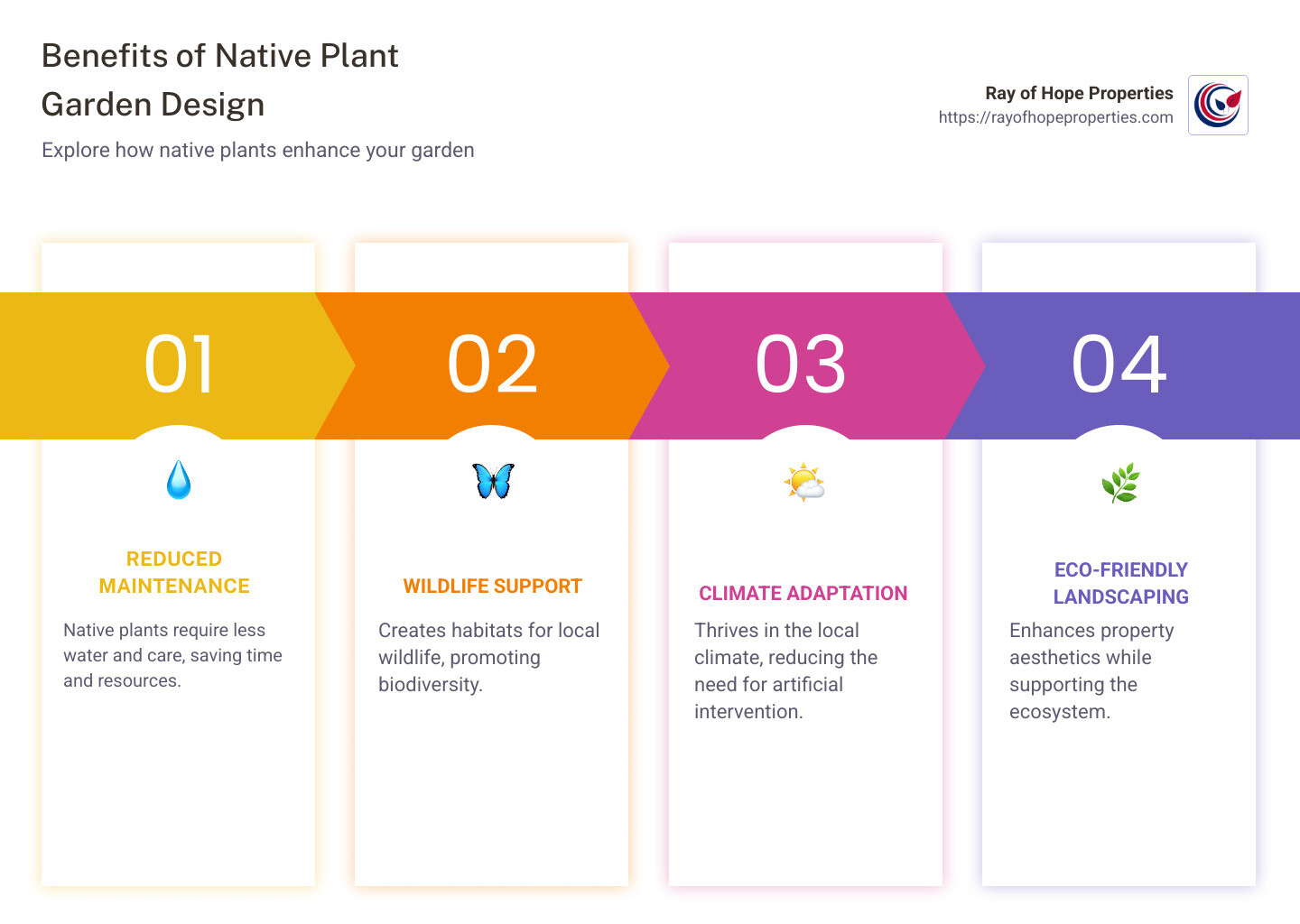
Choose native plants that naturally belong to your local U.S. ecoregion, match your garden’s soil, sunlight, and water conditions, and provide useful food and shelter for local wildlife. Favor locally sourced straight species, plant a diverse mix, and consider mature size before buying.
Across the United States, native plants play an important role in healthy gardens and natural habitats. A gardener in Florida faces different growing conditions from one in Colorado, Maine, California, or Texas. Soil, rainfall, heat, winter cold, and local wildlife all affect which plants will grow well. This is why choosing a plant simply because it is labeled native is not enough.
Garden native plant selection principles start with one simple idea: choose the right plant for the right place. Look beyond flower color and plant size. Check where a species naturally grows, what soil and water it needs, how much sun it can handle, and which insects or animals use it. A plant that matches these needs has a better chance of growing well with fewer extra inputs.
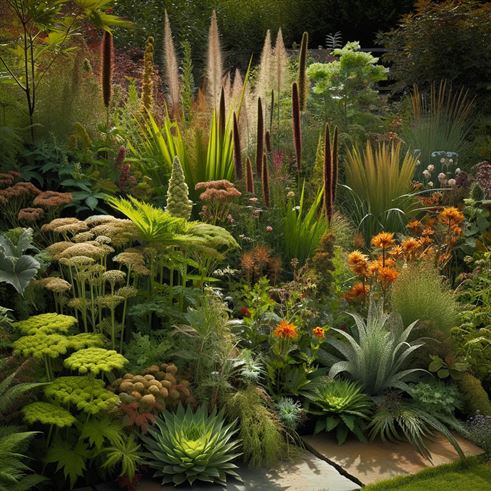
A native garden does not need to look wild or untidy. It can have clear paths, neat borders, shade trees, colorful flowers, and useful ground cover. The key is to use plants that fit the local environment while creating a garden that works for people and wildlife. A thoughtful plan can also reduce the need for frequent watering, heavy soil changes, and repeated plant replacement.
Source: gardeningsage.com
1. Understand What Makes a Plant Native
A native plant is a species that developed naturally in a particular geographic region or ecosystem without being introduced there by people. It has a long relationship with the local climate, soil, water, insects, birds, and other living things. These relationships help explain why native plants can play an important role in local biodiversity.
The word native needs a location to have a clear meaning. A plant may be native to the United States but not to every state, county, or habitat. A species from a Florida wetland, for example, is not automatically a suitable native choice for a dry Colorado garden. Its natural growing range matters just as much as its name.
Ecoregions offer a useful way to understand these differences. The U.S. Environmental Protection Agency divides the country into ecological regions based on features such as climate, geology, landforms, soils, and natural communities. Level III and Level IV maps can help gardeners narrow down the area from which to select plants. NC State Extension also recommends using local ecoregions when defining native plant choices. [Source: NC State Extension and U.S. EPA.] 【turn754927view0】【turn422246view0】
Source: rayofhopeproperties.com
Native species
Plants that occur naturally in a defined geographic area and have developed with its environmental conditions.
Local ecotype
A population of a native species with genetic traits shaped by conditions in a particular part of its natural range.
Naturalized plant
A plant introduced from another region that now grows and reproduces without regular human help.
Invasive plant
A nonnative plant that spreads and causes harm to natural habitats, agriculture, or other valued resources.
Cultivar
A plant selected or bred for certain traits, such as flower color, size, or growth habit.
Use Ecoregions Instead of State Names Alone
State boundaries do not always match natural plant ranges. One state may contain coastal wetlands, dry plains, mountain forests, and rich river valleys. Each area can support a different group of native plants. A list of plants native to the state may therefore include species that are poorly suited to your exact garden.
Begin by finding your property on an EPA ecoregion map. Then check state and local native plant lists for species that naturally occur in that region. County-level plant records can provide another useful layer of detail. This approach helps narrow your choices before you spend money at a nursery.
Check the Level III region
Use this broader map to identify the main ecological region around your property.
Check the Level IV region
Use this more detailed classification when you need a closer match to local landforms and habitats.
Verify natural distribution
Confirm that the plant naturally occurs in your region rather than relying on a general native label.
Do Not Confuse Wildflowers With Native Plants
A wildflower label does not prove that a seed mix contains local native species. Some mixes contain plants from other states or countries. Others include naturalized species that grow freely but did not develop in the region. Read the scientific names and check each species before planting.
Avoid seed mixes that do not list their full contents. A mix with many attractive flowers may still contain unsuitable or invasive plants. NC State Extension explains that naturalized plants and native plants are different groups, even when both grow without human care. 【turn754927view0】
Read the full plant name
Use the scientific name to identify the exact species.
Check the natural range
Compare the species with local flora records and regional native plant lists.
2. Match Native Plants to Your Garden Conditions
A plant can be native to your region and still fail in the wrong part of your yard. Natural habitats vary from dry slopes to wet lowlands, and plants adapt to these different conditions. Your garden may also have compacted soil, added fill, poor drainage, or strong heat from nearby buildings.
Before selecting plants, study the site. Watch how sunlight moves across it. Check how quickly water drains after rain. Look at the soil, nearby trees, slopes, walls, and paved areas. These details help you choose species that can live in the conditions already present rather than forcing the site to suit a plant.
Virginia Tech Extension stresses that residential sites often have disturbed soils and sharp changes in growing conditions over short distances. A native species that grows well in a nearby natural habitat may struggle in a yard with compacted soil or altered drainage. 【turn754927view2】
Source: candenativelandscape.com
Sunlight
Record the hours of direct sunlight. Separate full-sun, partial-sun, partial-shade, and shade areas. Buildings and mature trees can change these patterns.
Soil texture
Check whether the soil is sandy, silty, clay-rich, or loamy. Soil texture affects water movement, air spaces, and root growth.
Soil drainage
Notice whether water drains quickly, remains for several hours, or stays near the surface after rain.
Soil pH
Use a soil test to check acidity or alkalinity. Some plants tolerate a broad range, while others need a narrower range.
Moisture
Identify dry, average, moist, and seasonally wet areas. Match the natural moisture pattern to the needs of each species.
Wind and heat
Look for exposed corners, hot walls, roof runoff, and areas affected by road salt or reflected heat.
Measure Sunlight Before Choosing Plants
Watch each planting area at different times of day. A sunny area in the morning may become shaded by a house or tree in the afternoon. A spot that receives strong afternoon sun may also be hotter and drier than one with the same total light earlier in the day.
As a general garden guide, full sun often means six or more hours of direct light. Partial sun may mean four to six hours, partial shade about two to four hours, and shade less than two hours. These labels can vary between plant references, so compare the actual growing instructions for each species. 【turn772634view1】
Sunny areas
Consider locally native plants from open prairies, meadows, savannas, or other sunny habitats.
Shaded areas
Look for species naturally found beneath trees, in woodland edges, or in other shaded habitats.
Mixed-light areas
Select plants that tolerate the actual pattern of morning and afternoon light.
Choose Plants That Fit the Natural Soil
Do not assume that adding compost or fertilizer will solve every soil problem. Too much organic matter, fertilizer, or drainage work can change the conditions in ways that harm plants adapted to the original soil. Some native plants naturally grow in nutrient-poor ground and may perform poorly in heavily enriched soil.
A soil test is a useful starting point when pH or nutrient levels are unclear. Also check for compacted ground. If water collects in a low area, consider plants that tolerate wet conditions instead of trying to turn the entire area into a dry planting bed.
Dry sandy soil
Look for regional species from naturally dry, open habitats with well-drained ground.
Heavy clay soil
Select plants that tolerate slow drainage and the physical limits of clay.
Wet soil
Choose species naturally found in wet meadows, stream edges, or other local wet habitats.
Compacted soil
Address serious compaction where needed, then select plants that can establish under the remaining site conditions.
Account for Mature Plant Size
Check the expected mature height and spread before buying. A small nursery plant can become a large shrub or tree. Planting too close to walls, paths, fences, and utility lines can lead to damage or repeated pruning.
Use the plant’s natural form to guide placement. Put taller plants where they will not block paths or windows. Give spreading plants enough room, and avoid crowding species that need good air movement.
Height
Consider the plant’s mature height and how it will affect views, shade, and nearby plants.
Spread
Allow enough room for roots, branches, and natural growth.
Growth habit
Check whether the plant forms clumps, spreads by runners, climbs, or grows as a compact shrub.
3. Select Plants That Support Local Wildlife
A native garden can do more than look attractive. It can provide food, shelter, nesting material, and places for local wildlife to complete important parts of their life cycles. The best plant choices depend on which animals live in or move through your region.
Flowers offer nectar and pollen to many insects. Leaves provide food for caterpillars and other plant-eating insects. Seeds, berries, and fruits feed birds and other wildlife. Dense branches and plant stems offer shelter and nesting material. Different plant types serve different roles.
Some insects depend on a narrow group of host plants. Monarch butterflies, for example, need suitable native milkweed species for their caterpillars. Other insects use different plant groups. A garden with several native species can provide more kinds of resources than a bed with only one flowering plant.
Source: johnfrenchlandscapes.com.au
Host plants
Include native species that support the feeding and development of local butterfly and moth caterpillars.
Nectar and pollen
Choose flowering plants that serve local bees, butterflies, moths, flies, and other pollinators.
Seeds and fruit
Use native grasses, flowering plants, shrubs, and trees that provide seasonal food.
Shelter and nesting
Include different plant heights and forms that offer cover, nesting material, and protected spaces.
Keystone plants
Research local plant groups known to support many native insects and other wildlife.
Build a Garden Around More Than Flowers
A garden made only of bright flowers may offer nectar but still lack other resources. Add trees, shrubs, grasses, sedges, and ground-cover plants where they fit the site. These different layers create a more complete habitat.
Trees and shrubs can offer nesting sites and seasonal fruit. Native grasses and sedges can provide cover and seeds. Flowering perennials can supply nectar and pollen. Some stems also offer nesting spaces for insects when left standing through the appropriate season.
Tree layer
Choose suitable local trees for shade, structure, flowers, seeds, and habitat.
Shrub layer
Use native shrubs for cover, flowers, fruit, and nesting opportunities.
Ground layer
Add native grasses, sedges, and low-growing plants to cover soil and support smaller wildlife.
Plan for Food Throughout the Year
Do not choose every plant based on its summer flowers. Early spring and late fall can be periods when fewer food sources are available. Select a range of locally native plants with different flowering and fruiting times.
Include early bloomers, midseason flowers, and late-season species. Add plants that produce seeds or fruit at useful times. Evergreen species can also provide cover during months when deciduous plants have lost their leaves.
Early season
Include locally native plants that provide resources when insects first become active.
Middle season
Use a varied mix of flowers and host plants to support wildlife through warmer months.
Late season
Add native plants that provide late flowers, seeds, or fruit.
Winter
Consider evergreen cover, seed heads, and suitable standing stems.
Give Specialist Wildlife the Right Plants
Some insects can use many different flowers, while specialist insects depend on a small group of host plants. This is one reason that local plant selection matters. A plant that attracts a generalist pollinator may not meet the needs of every native insect.
The National Wildlife Federation provides native plant resources organized by ecoregion and a plant finder based on ZIP code. These tools can help identify native host plants and species that support local butterflies, moths, and other wildlife. 【turn754927view3】
Check local host plants
Look for plants that support the caterpillars of butterflies and moths found in your area.
Avoid one-species planting
Use a range of native plant families and growth forms to support more wildlife.
4. Favor Plant Diversity and Natural Plant Communities
A diverse native garden is usually more useful than a large bed filled with one species. Different plants support different insects and wildlife. They also have different root systems, growth habits, flowering periods, and responses to weather.
In nature, plants often grow in communities that share similar soil, light, water, and climate conditions. A woodland floor has a different plant mix from a prairie or a wet meadow. You can use this idea when planning a garden by grouping species that naturally grow under similar conditions.
Plant diversity also helps reduce the risk of losing the entire garden to one pest, disease, or weather event. If one species struggles, other suitable plants may continue to grow. This does not make a garden immune to damage, but it creates a broader and more varied planting.
Source: illustrarch.com
Use several native species
Select a suitable range of species rather than filling the entire garden with one popular flower.
Group plants by habitat
Keep dry-site plants together and place moisture-loving species in suitable wet areas.
Mix plant forms
Combine trees, shrubs, grasses, sedges, and flowering perennials where space allows.
Avoid a single flowering season
Use plants that flower, fruit, or produce seeds at different times.
Create Small Habitat Zones
You do not need a large property to create different habitat zones. A sunny border, a shaded corner, and a moist low spot may each support a different group of native plants. Treat each area as a small planting community.
For example, a dry sunny border could use plants from local open habitats. A shaded area beneath trees could use suitable woodland species. A low area that holds water after rain could support plants from local wet habitats. The exact species should come from your own region.
Sunny border
Group plants that tolerate direct sun and the site’s natural soil moisture.
Woodland corner
Use species adapted to the shade, leaf litter, and moisture found in local woodland habitats.
Rain garden or wet area
Choose plants that tolerate the actual period of wetness and drainage at the site.
Open lawn edge
Use native ground covers or low-growing plants that suit the available light and foot traffic.
Balance Beauty With Ecological Value
Color and texture still matter. A native garden should work with your design goals. Choose different flower shapes, leaf textures, heights, and growth forms while keeping local habitat value in mind.
Avoid selecting plants only because they have the brightest flowers or the most unusual leaves. A less showy straight species may provide useful food or shelter that an ornamental selection does not. A good design combines visual interest with real ecological functions.
Flower color
Use a range of colors that fits the garden without limiting the selection to ornamental traits.
Leaf texture
Mix fine, broad, and narrow foliage for visual interest and different plant forms.
Plant structure
Combine upright, spreading, clumping, and woody plants where suitable.
5. Choose Between Straight Species and Native Cultivars
A straight species is a plant that retains the basic traits found in its naturally occurring wild form. A cultivar is a selected or bred form that has been kept for a certain trait, such as a compact shape, unusual flower color, or different leaf color. Native cultivars are sometimes called nativars.
For a garden focused on local biodiversity, straight native species are a useful first choice. Locally sourced plants can also help maintain regional genetic diversity. However, native cultivars are not all the same. Some retain many useful traits, while others have changes that may reduce their value to certain insects or wildlife.
The National Extension Native Plant Initiative explains that double flowers, altered leaf color, unusual flower shapes, and sterility can affect a plant’s ecological value. Some minimally changed cultivars may still support pollinators well. The effect depends on the plant, the trait, and the wildlife using it. 【turn422246view1】
Source: completegardening.com
Straight species
A good starting choice when your main goal is to support local ecological relationships and preserve natural plant traits.
Local ecotype
A strong option when the plant comes from a suitable local population and the source is known.
Minimally changed cultivar
May be useful when a particular size or growth habit is needed, provided its ecological traits remain suitable.
Heavily altered cultivar
Needs closer review, especially when flower form, leaf color, pollen, nectar, or seed production has changed.
Look at the Traits Behind the Cultivar Name
A cultivar name usually appears after the scientific species name and is written in single quotation marks. For example, a plant label may show a species name followed by a named selection. The extra name tells you that the plant was selected for particular traits.
Ask what makes the cultivar different from the wild form. A compact plant with a similar flower structure may have fewer ecological concerns than one with double flowers, unusual leaf color, or no seed production. Check reliable plant records before deciding.
Double flowers
Extra petals may replace parts that produce pollen or nectar and can make food less accessible to some pollinators.
Sterile selections
A plant that cannot produce seeds may provide fewer resources for wildlife that eats its seeds or fruit.
Altered leaf color
Purple or highly modified foliage may change how leaf-feeding insects use the plant.
Changed flowering time
A different bloom period may affect whether a plant provides food when local insects need it.
What Does Research Say About Native Cultivars?
A 2025 study by researchers from Oregon State University examined native plants and their cultivars in a garden experiment in Corvallis, Oregon. The team observed pollinator activity over three years. Across 78 plant-pair comparisons, wild-type native plants received greater visitation in 37.2 percent of comparisons, cultivars received greater visitation in 7.7 percent, and the remaining comparisons showed no difference.
The researchers also recorded greater observed pollinator richness on native plants in most comparisons and found that specialist bees were collected more often from wild-type plants. Some minimally developed cultivars still performed well. These findings support giving priority to wild-type natives, but the study was conducted in the Pacific Northwest and does not prove that every cultivar performs poorly in every U.S. region. 【turn422246view2】
Best general approach
Use straight native species as the main foundation of a wildlife-focused garden.
When a cultivar may fit
Consider a carefully selected cultivar when space, availability, or a specific design need makes it useful.
When to be more selective
For ecological restoration, local seed production, or conservation work, follow the relevant regional guidance and favor appropriate local genetic material.
6. Buy Native Plants From Responsible Sources
The source of a plant matters almost as much as its species name. A plant may be native to your region, but its seed or cutting may come from a distant part of its natural range. Local provenance can be useful because populations may have traits shaped by nearby climate, soils, and seasonal patterns.
Ask the nursery where the plant material was collected or propagated. A seller who specializes in regional native plants may have better information about the source. Look for clear scientific names, growing details, and honest information about whether the plant is a straight species or cultivar.
Virginia Tech Extension discusses local ecotypes and gives a 100- to 200-mile range as one useful sourcing guideline. This is not a universal rule for every species or region. Some plants have broad natural ranges, while others are adapted to very specific habitats. Local guidance should determine the most suitable source distance. 【turn754927view2】
Check the scientific name
Confirm the genus and species before relying on a common name or nursery label.
Ask about provenance
Find out where the seed or propagation material came from and whether it is from your ecoregion.
Choose responsible nurseries
Look for sellers that grow or obtain native plants through legal, sustainable propagation.
Check seed mix contents
Avoid mixes that do not list the species, origin, and relevant seed information.
Avoid wild collection
Do not dig up plants or collect seeds from protected areas or natural populations without proper permission and authorization.
Questions to Ask Before Buying
A few simple questions can help you avoid unsuitable plants. Good sellers should be able to explain what they are selling and provide useful details about its origin and growth needs. If the source is unclear, take time to check the species before buying.
The scientific name is especially useful when common names refer to several different plants. It also makes it easier to compare nursery labels with regional plant databases and extension resources.
Is this species native to my ecoregion?
Ask for the plant’s natural range and check it against local plant records.
Is this a straight species or a cultivar?
Ask whether the plant has been selected or bred for different ornamental traits.
Where was the seed collected?
Request information about the source region, growing location, and propagation method.
Is it suitable for my site?
Confirm the plant’s needs for sun, moisture, soil, and mature space.
Use Reliable Native Plant Resources
Start with the EPA ecoregion maps, the USDA PLANTS Database, your state native plant society, and your local Cooperative Extension office. The National Wildlife Federation’s Native Plant Finder can also help identify plants associated with your ZIP code and ecological region.
For a more detailed list, check local botanical gardens, native plant nurseries, and regional conservation groups. These sources can help you find species that are available in your area and explain how they fit local habitats. Never assume that a national plant list is a complete shopping list for your property. 【turn754927view3】【turn754927view0】
EPA Ecoregion Maps
Use Level III and Level IV maps to identify the ecological region around your property.
USDA PLANTS Database
Check plant names, distribution, and recorded native status.
Local Cooperative Extension
Find regional advice about plant selection, soils, and garden conditions.
Native Plant Societies
Look for local plant lists, nursery events, and regional growing guidance.
7. Follow a Practical Native Plant Selection Process
A simple selection process helps you avoid impulse purchases and makes it easier to compare suitable plants. Start with your garden rather than a nursery display. Write down what each area can support and what you want the planting to do.
Once you have a shortlist, compare each species against the same basic conditions. A plant should pass the important filters before you consider its flower color or decorative value. This keeps the final selection useful, manageable, and suitable for the site.
Step 1: Identify your ecoregion
Use EPA maps and local plant records to identify the natural region around your property.
Step 2: Divide the garden into zones
Mark sunny, shaded, dry, moist, wet, exposed, and protected areas.
Step 3: Set a clear purpose
Decide whether each area needs shade, erosion control, pollinator food, privacy, ground cover, or seasonal interest.
Step 4: Make a regional plant list
Select species that naturally occur in the ecoregion and, when possible, the local habitat.
Step 5: Check growing needs
Compare light, soil, drainage, moisture, temperature tolerance, and mature size.
Ask about local provenance, straight species status, and responsible propagation.
Step 8: Plan spacing and groups
Arrange plants according to mature size, growth habit, and natural habitat needs.
Step 9: Plant and monitor
Provide suitable establishment care and observe how the plants respond to the site.
Use a Simple Plant Comparison Checklist
Compare your shortlisted plants using the same questions. A species that is native to your area but needs permanently wet soil may not fit a dry raised bed. Another species may suit the soil but grow too large for a narrow border.
You can use a simple score of suitable, uncertain, or unsuitable for each factor. Do not let a high score for flower color make up for a serious mismatch in soil moisture or mature size.
Native range
Is the plant naturally found in your ecoregion or a suitable nearby ecological area?
Site match
Does it fit the actual sunlight, drainage, soil, and water conditions?
Space
Can it reach its mature size without crowding nearby plants or structures?
Habitat value
Does it provide food, shelter, or other useful resources for local wildlife?
Plant source
Can you confirm where the plant or seed came from?
Maintenance
Can you provide the watering, pruning, and establishment care it needs?
Example: Selecting Plants for Two Different Garden Areas
Consider a hypothetical U.S. yard with two planting areas. The first area receives long hours of direct sunlight and has sandy, well-drained soil. The second is shaded by mature trees and remains moist after rain.
For the first area, the shortlist should focus on native species from suitable dry, open habitats. For the second area, investigate local woodland plants that tolerate shade and moist soil. Using the same plant in both areas simply because it is native to the state would ignore the main difference between the two sites.
This example does not name universal species because the right choices depend on the property’s actual ecoregion. The same two site conditions can support different plants in the Northeast, Southeast, Southwest, and Pacific Northwest.
Sunny and dry area
Prioritize locally native plants adapted to open, sunny, well-drained habitats.
Shaded and moist area
Prioritize locally native woodland species that tolerate the area’s moisture and light conditions.
8. Avoid Common Native Plant Selection Mistakes
Many native garden problems begin before planting. A species may be correctly labeled but still be unsuitable for the site. Others may be sold as native cultivars without clear information about their altered traits or source.
A good selection plan prevents these problems by checking the plant, the site, and the intended purpose together. It also helps you avoid spending money on plants that need constant correction after installation.
Choosing plants only because they are native to the state
A state can contain several habitats and ecoregions. Check the natural range and growing conditions at a more local level.
Using hardiness zones as the only guide
Cold tolerance does not tell you whether a plant needs dry soil, wet soil, full sun, or shade. Use the zone as one filter among several.
Ignoring drainage
A plant that cannot tolerate standing water may fail in a low spot even if it grows naturally in the same state.
Buying unidentified wildflower mixes
Unknown species may include nonnative or invasive plants. Check the full species list before sowing.
Choosing only showy cultivars
Unusual flower or leaf traits may affect wildlife use. Review the cultivar before buying.
Planting too closely
Ignoring mature spread can lead to crowding, poor airflow, and repeated pruning.
Planting only for summer flowers
A short flowering period can leave gaps in food resources. Include plants that serve wildlife across the seasons.
Expecting immediate low maintenance
New plants still need water, weed control, and sometimes protection from browsing animals.
Collecting plants from the wild
Removing plants can damage natural populations and habitats. Buy legally propagated material instead.
Troubleshooting Plants That Fail to Establish
If a native plant wilts, grows poorly, or dies after planting, check the growing conditions before replacing it. Native status does not guarantee that the plant will tolerate every garden environment. A poor match, planting damage, drought, excess water, or browsing may be the cause.
Start with the least disruptive checks. Look at soil moisture and sunlight. Check whether water collects around the roots. Review the plant label and compare the site with its stated growing needs. Also look for damage from deer, rabbits, insects, or nearby construction.
Change the site or plant choice only after you understand the likely cause. Repeatedly adding fertilizer or water without checking the problem may make conditions worse.
Symptom: Leaves wilt or dry out
Possible causes include dry soil, transplant stress, heat, or root damage. Check moisture at root depth and provide suitable establishment water.
Symptom: Roots remain wet
Possible causes include poor drainage, heavy soil, or excess irrigation. Check water movement and consider a species adapted to the site’s moisture.
Symptom: Plant grows weakly in shade
The species may need more sunlight. Compare the site’s actual light pattern with the plant’s requirements.
Symptom: Leaves have holes or missing sections
Feeding by insects or wildlife may be normal in a native habitat garden. Check for serious damage before taking action.
Symptom: Plant disappears after winter
Some native perennials die back above ground during dormancy. Check the species’ seasonal growth cycle before assuming it has died.
Symptom: Several plants fail in the same area
Look for a shared problem such as compaction, drainage, extreme heat, or unsuitable soil conditions.
9. Care for Native Plants During Establishment
Even well-matched native plants need care while their roots settle into a new garden. Their long-term needs may be lower than those of plants poorly suited to the site, but they are not maintenance-free from the day they are planted.
Water according to the species, soil, weather, and planting method. Newly planted material may need regular watering while roots develop. Check the soil before watering again, because wet soil and dry soil require different responses.
Control weeds before they compete with young plants. Use suitable mulch where it helps retain moisture and limit unwanted growth, but keep it away from plant crowns and trunks. Avoid heavy fertilizer unless a soil test or specific plant need supports its use.
Deer and rabbits may browse young native plants. Temporary protection can help a new planting survive while it becomes established. University of Maryland Extension also notes that native plants are not free from pests or wildlife feeding and that newly planted material may need deer protection. 【turn772634view1】
Water carefully
Provide enough water for root establishment, then adjust based on rainfall, soil moisture, and plant needs.
Control competing weeds
Remove invasive and unwanted plants before they crowd new native seedlings.
Use suitable mulch
Apply mulch where appropriate without burying stems, crowns, or tree trunks.
Limit unnecessary chemicals
Avoid routine pesticide use that could harm beneficial insects and other wildlife.
Protect young plants
Use suitable barriers where deer, rabbits, or other animals cause serious browsing damage.
Observe seasonal growth
Learn the normal flowering, fruiting, dormancy, and regrowth pattern of each species.
How to Know Whether Your Native Garden Is Working
Success does not depend on every plant growing at the same speed. Some species establish quickly, while others need more time. Judge the garden by healthy growth, suitable seasonal development, and the gradual creation of a diverse plant community.
Look for new leaves, strong roots, normal flowering, and steady growth. Watch for visiting insects and birds, but do not expect every species to appear at once. Wildlife use depends on the season, nearby habitat, and the plants available across the wider landscape.
Plant health
Plants show growth that fits their normal seasonal cycle and site requirements.
Stable soil
Ground cover and roots help reduce bare soil and limit erosion.
Seasonal resources
Flowers, seeds, fruits, and shelter are available at different times.
Wildlife activity
The garden provides suitable resources for local insects, birds, and other animals.
Reduced inputs
After establishment, the garden may need less routine irrigation and intervention than a poorly matched planting.
10. Research Scope and Next-Question Gap Map
This guide was prepared for the U.S. home gardening market. Research was checked on November 16, 2026, using searches related to native plant selection, ecoregions, site conditions, local plant sources, and ecological gardening. Four useful public resources were examined: NC State Extension’s native plant handbook, Virginia Tech Extension’s native plant guidance, National Wildlife Federation’s native plant habitat resources, and University of Maryland Extension’s native gardening guidance.
The reviewed resources provide useful coverage of native plant definitions, regional adaptation, site matching, wildlife benefits, and plant sourcing. The main opportunity for a more useful guide is to connect these topics into one practical buying and planting process. The following questions show where readers may need more help. This is a review of the selected pages, not a claim that the topics are absent from all other gardening resources.
Observed question: Is a plant native to my state enough?
Reader stage: Before buying. Basis: Regional native status is discussed in NC State and Virginia Tech Extension resources. Reviewed coverage: ANSWERED, but gardeners still need a property-level method. Benefit: Using ecoregions and local records prevents unsuitable choices. Priority: High. Placement: Native definitions and ecoregions.
Observed question: How local should my plant source be?
Reader stage: Buying and sourcing. Basis: Virginia Tech discusses local ecotypes and a regional sourcing guideline. Reviewed coverage: SHALLOW because suitable distances vary by species and region. Benefit: Gardeners learn what to ask nurseries. Priority: High. Placement: Responsible plant sourcing.
Inferred next need: What if my yard has disturbed or compacted soil?
Reader stage: Site preparation. Basis: Residential soil conditions can differ from nearby natural habitats. Reviewed coverage: SHALLOW because recognizing the issue and choosing the next step are separate tasks. Benefit: Prevents repeated planting failures. Priority: High. Placement: Site assessment and troubleshooting.
Observed question: Are native cultivars always harmful to wildlife?
Reader stage: Comparing plants. Basis: Extension guidance and recent research examine differences among cultivars. Reviewed coverage: ANSWERED, with useful qualifications. Benefit: Readers can judge individual traits rather than treating all cultivars alike. Priority: Medium. Placement: Straight species and cultivars.
Inferred next need: What should I do if a native plant struggles after planting?
Reader stage: After planting. Basis: Establishment watering and browsing are covered in regional extension advice, but a combined symptom-based process is useful. Reviewed coverage: SHALLOW. Benefit: Helps gardeners check moisture, light, drainage, and damage before replacing plants. Priority: High. Placement: Establishment and troubleshooting.
What to Research Next for a Location-Specific Plant List
A national guide can explain the selection method, but it cannot confirm the best species for every property. A location-specific plant list needs the garden’s state, county or ZIP code, ecoregion, site conditions, and planting goals.
The next useful research step is to compare local native plant records with nursery availability. For restoration work or projects involving rare species, consult the relevant local conservation authority or qualified restoration professional before sourcing material.
Regional plant availability
Check local native nurseries and extension plant lists.
Local habitat records
Compare species with nearby woodland, prairie, wetland, coastal, or other natural communities.
Species-specific provenance
Ask about seed collection areas and regional propagation practices.
Frequently Asked Questions
Q
How do I choose native plants for my garden?
Start by identifying your local ecoregion and finding species that naturally grow there. Next, match each plant to the garden’s sunlight, soil, drainage, moisture, and available space. Check mature size, wildlife value, and plant source before buying. This process helps you choose species that fit both the environment and your garden goals.
Q
Are native plants better than nonnative plants?
Locally native plants often provide important habitat and food for wildlife that developed alongside them. They can support specialist insects and local ecological relationships that many introduced plants do not provide. However, a native plant still needs the right site conditions, and not every native species is suitable for every garden. Avoid invasive nonnative plants and prioritize suitable local species.
Q
Should I choose local ecotypes or native cultivars?
Choose a suitable local ecotype when available, especially when your main goal is supporting local biodiversity. Straight native species are another strong choice. Some cultivars can provide useful habitat value, but changes to flowers, leaves, fertility, or flowering time may affect wildlife use. Check the exact cultivar rather than assuming that all selections perform the same way.
Q
Can native plants grow in poor or disturbed soil?
Some native plants tolerate compacted, sandy, clay-rich, or nutrient-poor soil, while others need more specific conditions. First identify the actual soil problem and test pH and nutrients when needed. Then choose species that tolerate the site. Do not assume that every native plant can grow in any soil within its natural state or region.
Q
Do native plants need watering and fertilizer?
New native plants often need regular watering while their roots establish. Afterward, water needs depend on rainfall, soil, species, and local climate. Many suitable native plants need little or no routine fertilizer. Avoid adding fertilizer without a clear need because excessive nutrients can favor weeds or harm plants adapted to naturally low-nutrient soils.
✦ Wrapping Up
Conclusion
Successful native gardening begins with careful plant selection. Identify your local ecoregion, study the conditions in each part of your yard, and choose species that naturally fit those conditions. Consider more than flowers. Look at mature size, root growth, seasonal resources, wildlife relationships, and the source of the plant material.
A diverse garden with suitable native trees, shrubs, grasses, sedges, and flowering plants can support local wildlife while creating an attractive outdoor space. Straight native species and locally sourced plants are useful starting points, but the best choices still depend on your site’s needs. Native cultivars can also have a place when their traits are understood and selected with care.
There is no single native plant list that works for every American garden. A coastal yard, desert garden, mountain property, and suburban lawn have different needs. The strongest approach is to make decisions from local ecological information and then observe how the garden responds over time.
💡 Key Takeaway
Before buying your next plant, identify your EPA ecoregion, map the sunlight and moisture in your garden, and create a shortlist of locally native species. Check their scientific names, mature sizes, wildlife value, and seed or nursery source. Start with a small, diverse planting that fits your site, provide proper establishment care, and expand as you learn which plants thrive.