A garden cart wins for big, steady loads; a wheelbarrow shines for narrow spaces and steep terrain.
I’ve used both tools for years in landscaping and home gardening. This guide breaks down wheelbarrow vs garden cart with clear pros, cons, and real-world tips. You’ll get practical advice to pick the right tool for your yard, driveway, or project, based on load, terrain, maneuverability, storage, and cost.
Quick comparison: wheelbarrow vs garden cart
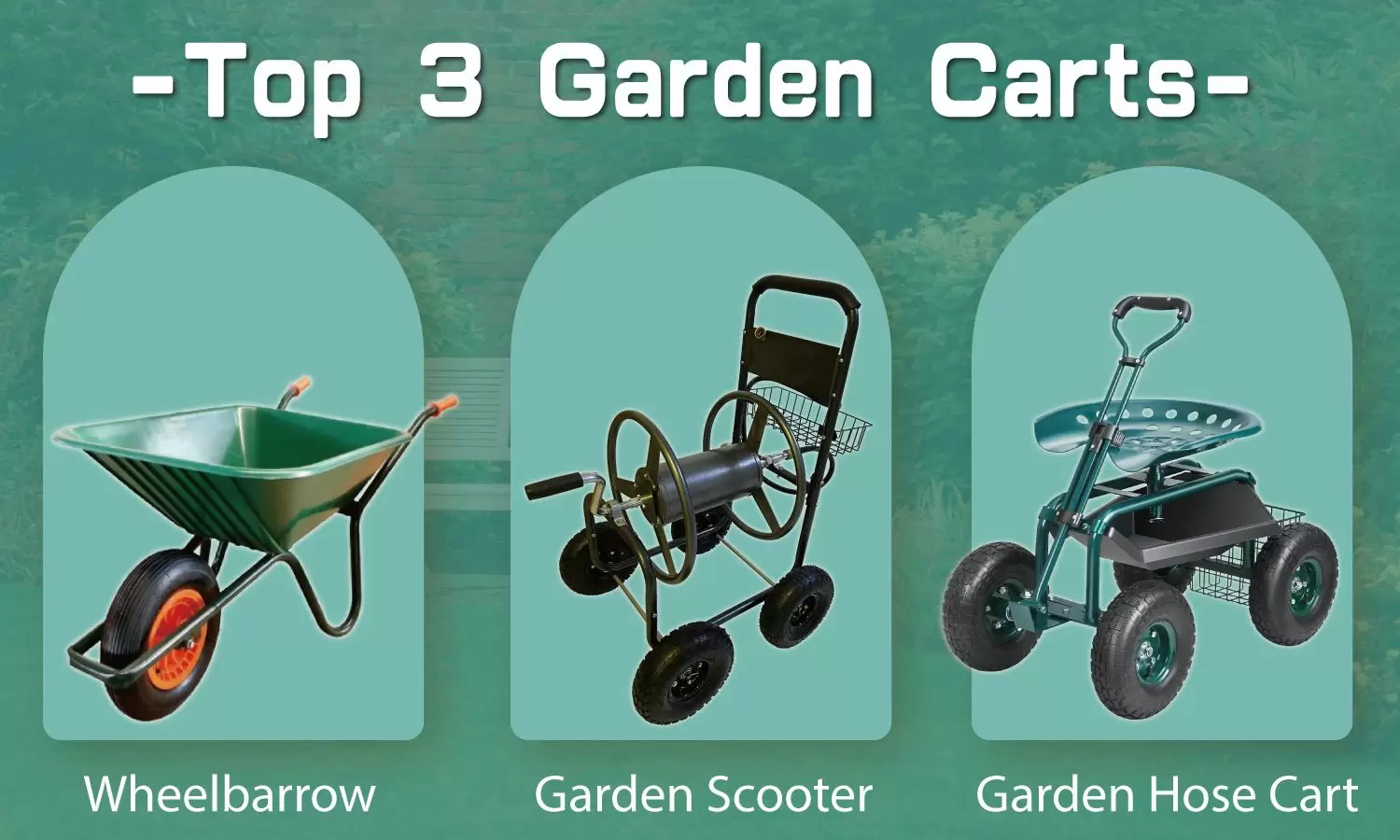
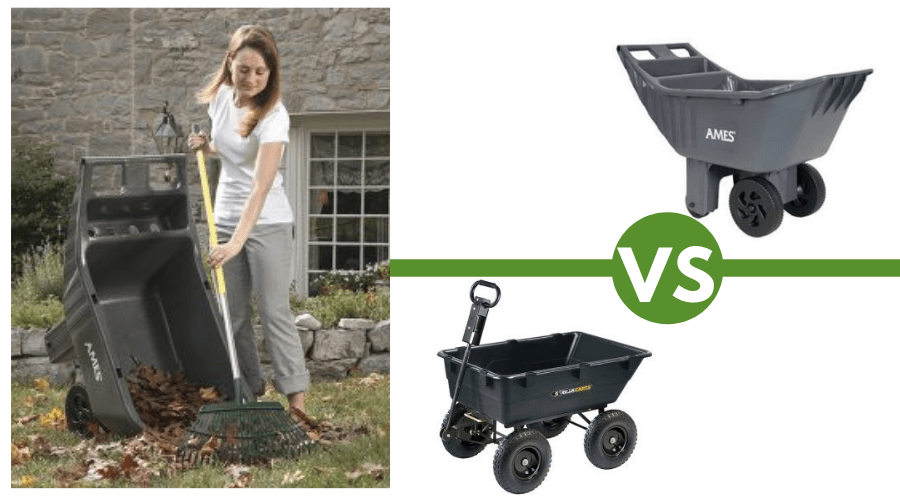
A quick comparison helps you match the tool to the task. A wheelbarrow is a single-wheel carrier with a shallow tub and a forward center of gravity that makes tipping and dumping easy. A garden cart usually has two or four wheels, a flat or deep bed, and pulls or pushes like a wagon. Each design suits different jobs and users.
- Wheelbarrow strengths
- Easy to tip and dump
- Fits through narrow gates and beds
- Better on steep or uneven terrain
- Garden cart strengths
- More stable with heavier loads
- Higher volume and flat beds for bulky items
- Easier to push/pull without balancing

Design and build: anatomy of each tool
Understanding how each tool is built clarifies why they perform differently.
- Wheelbarrow design
- Single wheel in front for pivoting.
- Tub-shaped bed made of steel, plastic, or wood.
- Handles for lifting and steering.
- Often lighter and simpler.
- Garden cart design
- Two or four wheels for balance.
- Flat or box bed; sides sometimes fold down.
- Tow handles, push handle, or hitch option.
- Heavier frame, often steel or heavy plastic.
Materials and wheel type matter. Pneumatic tires cushion jarring loads and help on soft ground. Solid rubber tires resist punctures but make the ride harsher. For the wheelbarrow vs garden cart choice, consider frame material, bed size, and wheel quality.

Performance: load capacity, stability, and terrain
Match performance to your typical tasks.
- Load capacity
- Wheelbarrows usually hold 4–6 cubic feet or 300–400 pounds depending on build.
- Garden carts often carry 8–14 cubic feet or 500–1000+ pounds.
- Stability
- Wheelbarrow: less stable; one wheel requires balance.
- Garden cart: much more stable; less chance of tipping.
- Terrain and maneuverability
- Wheelbarrow: excels on tight beds, steep slopes, and uneven ground.
- Garden cart: best on flat or gently graded surfaces and hard paths.
If you haul heavy bags of soil or pavers, a garden cart reduces strain. If you move plants between beds, a wheelbarrow is faster and easier to steer.
Use cases and task match-up
Pick the tool that fits the job. Here are common scenarios.
- Planting, bed work, and moving mulch
- Use a wheelbarrow for short bursts and tight turns.
- Transporting firewood, rocks, or concrete blocks
- Use a garden cart for heavier, bulkier loads.
- Lawn care and mowing season clean-up
- Garden carts carry clippings, tools, and bulky yard waste.
- Soil mixing and small landscaping jobs
- Wheelbarrows are great for mixing and dumping precise amounts.
A hybrid approach often works best. I keep both tools on hand and choose based on load size and surface.

PAA-style questions (concise answers)
Which handles better on slopes: wheelbarrow or garden cart?
Wheelbarrows handle slopes better because the single wheel and lift-and-tilt motion let you control balance and clearance. Garden carts can be hard to control on steep grades.
Which is better for heavy pavers and stones?
A garden cart is better for heavy pavers thanks to higher capacity and stability, which reduce tipping and shoulder strain. Use a cart with solid, wide wheels for best results.
Can a garden cart replace a wheelbarrow for small gardens?
Not always. Garden carts struggle in narrow beds and tight turns. For small-scale garden work, a wheelbarrow is often more practical.

Choosing for your garden: decision guide
Follow a simple checklist to decide.
- Measure paths and gates
- Ensure the tool fits through your narrowest gate or bed entrance.
- Consider terrain
- Steep or rough ground favors a wheelbarrow. Flat lawns favor a garden cart.
- Estimate load type and frequency
- Heavy, bulky loads and frequent hauling favor a garden cart.
- Light, varied jobs favor a wheelbarrow.
- Think about storage and handling
- Wheelbarrows are easier to store vertically. Garden carts take more space but reduce repeated lifting.
Practical tip from experience: if your yard has more than one hard surface (driveway, patio) and you frequently haul heavy materials, lean toward a garden cart. If you garden in tight beds or on slopes, buy a robust wheelbarrow.

Maintenance, safety, and longevity
A little care extends service life and keeps work safe.
- Maintenance basics
- Check and inflate tires regularly.
- Tighten bolts and inspect welds or joints.
- Clean mud and debris to prevent rust.
- Lubricate wheel bearings if applicable.
- Safety tips
- Avoid overloading beyond recommended weight.
- Lift with your legs, not your back, when using a wheelbarrow.
- Use gloves and protective footwear when handling heavy or sharp loads.
- Secure loose loads in a garden cart to prevent spillage.
I once ignored tire pressure on a garden cart and bent the axle when it hit a hidden rock. Regular checks saved me from costly replacement later.
Personal experience, lessons learned, and practical tips
I’ve used both across landscaping jobs and home projects. Here’s what I’ve learned.
- Buy the best wheel and tire you can afford. A good tire makes both tools far easier to use.
- For the wheelbarrow vs garden cart decision, think seasonally: wheelbarrow for spring planting and bed work, garden cart for fall cleanups and heavy hauling.
- Consider a utility cart with modular sides. They can act like a wheelbarrow bed when needed.
- Avoid cheap thin-metal wheelbarrows; they dent and rust fast. A powder-coated steel or thick plastic tub lasts longer.
One project highlight: building a raised bed used a wheelbarrow for soil mixing and a garden cart to move pallets and stones. The right combo cut the job time by half.
Frequently Asked Questions of wheelbarrow vs garden cart
What is the main difference between a wheelbarrow and a garden cart?
The main difference is wheel configuration and stability. Wheelbarrows have one front wheel and require balancing; garden carts have multiple wheels and offer greater stability for heavy loads.
Which one is easier to use for someone with limited strength?
A garden cart is generally easier for limited strength because it doesn’t require steady lifting and balancing. Choose one with large, smooth-rolling wheels to reduce pushing effort.
Are garden carts better for moving soil than wheelbarrows?
Garden carts carry more soil per trip and reduce lifting, making them more efficient for large soil moves. Wheelbarrows are better for precise placement and smaller volumes.
Can I convert a wheelbarrow into a cart or vice versa?
Conversions are limited; some accessories and adapters exist, but structural differences make true conversion difficult. It’s usually better to buy the tool designed for your main tasks.
How do I pick tires for rough terrain?
Choose pneumatic tires with deep treads for soft or uneven ground and wide, sturdy tires for rocky or root-filled terrain. Solid tires work for puncture resistance on hard surfaces.
Conclusion
Choosing between a wheelbarrow vs garden cart comes down to load size, terrain, and how you work. Use a wheelbarrow for tight spaces, slopes, and small, precise jobs. Choose a garden cart for heavy, bulky hauls and repeated trips on flat ground. Try both if you can, and match the tool to tasks rather than forcing one tool to do everything.
Takeaway: assess your yard, list typical loads, and pick the tool that saves time and strain. If this guide helped, leave a comment about your yard needs or subscribe for more hands-on yard and garden tips.