Garden beneficial insect habitat design combines native flowering plants, nesting areas, natural shelter, and safe water sources. It also limits pesticide exposure. Together, these features help pollinators and natural predators live, feed, and reproduce in your garden.
Across the United States, gardens can support many useful insects. A yard in the humid Southeast has different needs from one in the dry Southwest. Northern gardens also face different growing seasons from those in coastal California. Good habitat design starts with these local conditions.
Beneficial insects do more than visit flowers. Bees and flower flies help pollinate plants. Lady beetles and lacewing larvae eat many garden pests. Small parasitoid wasps help control aphids and caterpillars. Other insects break down plant matter and support healthy soil. Each group needs suitable food, shelter, and space to complete its life cycle.
A good insect habitat does not need to look wild or untidy. You can build one into a flower bed, vegetable garden, yard border, or small patio. The main goal is to provide several useful resources close together. Native plants, bare soil, leaf litter, and safe nesting spaces can turn an ordinary garden into a living habitat.
Guidance from the USDA Natural Resources Conservation Service, Cornell Integrated Pest Management, the Xerces Society, and the University of California Integrated Pest Management Program supports these basic design ideas. Their recommendations also show why flowers alone are not enough. Insects need places to nest, rest, hide, and survive between growing seasons.
Source: suite101.com
What Beneficial Insects Need From a Garden
Beneficial insects need four main things: food, nesting space, shelter, and a safe place to complete their life cycles. A garden that offers only flowers may attract visitors but fail to support them for long. A stronger design provides several resources throughout the year.
The term beneficial insects covers different groups. Some pollinate flowers, while others feed on pests. Some help break down dead plant matter. Their needs are not always the same, so a varied garden works better than a bed filled with one flower type.
Natural enemies are insects that attack or feed on other pests. Lady beetles, green lacewings, hoverfly larvae, predatory bugs, and parasitoid wasps are common examples. Some parasitoid wasps lay eggs in or on pest insects. Their young then develop by using the host as food.
Adult insects and young insects may also need different resources. For example, adult hoverflies visit flowers for nectar and pollen. Their larvae can feed on aphids. A garden must support both life stages if it is to help these insects stay.
Food
Nectar, pollen, suitable host plants, and small prey insects support different feeding needs.
Nesting
Bare soil, hollow stems, dead wood, and natural cavities provide places for insects to lay eggs and raise young.
Shelter
Leaves, grasses, shrubs, logs, and dense plant growth offer cover from wind, heat, and predators.
Winter survival
Undisturbed soil, plant stems, leaf litter, and woody material protect insects during cold or inactive periods.
Low pesticide exposure
Safer pest management helps protect insects that visit flowers or live in garden soil and plants.
Understand the Difference Between Pollinators and Natural Enemies
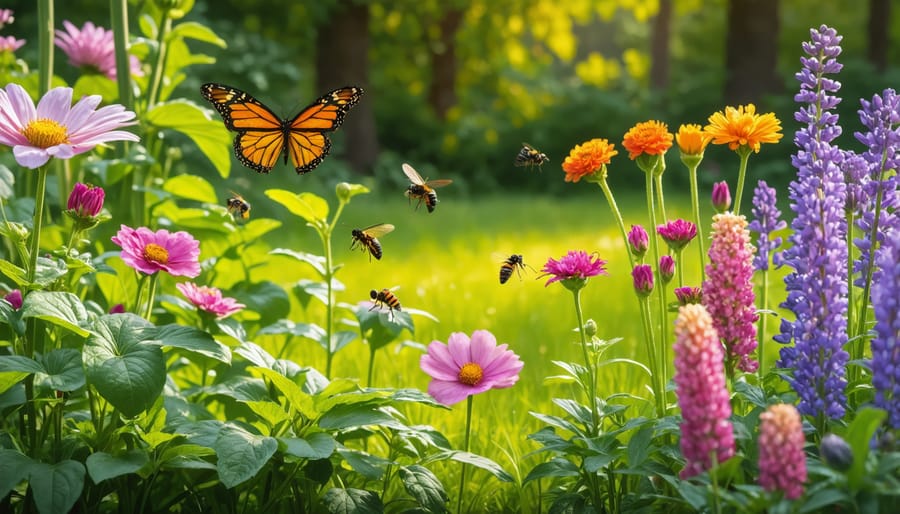
Pollinators move pollen between flowers. Native bees, flower flies, butterflies, and some beetles perform this task. They help many garden plants produce seeds and fruit.
Natural enemies help keep some pest populations in check. Lady beetle larvae eat aphids. Lacewing larvae feed on aphids and other small insects. Tiny parasitoid wasps attack certain pest species. These insects are useful allies, but they do not control every pest.
Some insects belong to both groups during different life stages. Adult flower flies visit flowers, while their larvae may eat aphids. This is why a habitat with flowers, prey, and shelter can support more than one useful function.
Include Other Helpful Garden Arthropods
Spiders are not insects, but they are useful garden predators. They catch flies, small beetles, and other arthropods. Ground beetles and predatory mites also help manage some pest populations. Keeping natural ground cover and avoiding broad disturbance can support these garden allies.
Plan Flowers That Feed Insects From Spring Through Fall
A long flowering season is one of the most useful parts of beneficial insect habitat design. Different insects become active at different times. Early flowers can feed insects after winter, while summer and fall blooms help support later generations.
Do not rely on one large flowering period. A bed that blooms heavily in June but has no flowers in August offers an uneven food supply. Instead, choose several plant species with overlapping bloom times. This creates a steady source of nectar and pollen.
Native plants are often a strong starting point because local insects have developed alongside regional plant communities. Some native bees rely on particular plant groups. Native plants may also need less care when they match local soil and weather conditions.
Plant choices must fit your part of the United States. A species that grows well in the Northeast may struggle in the Southwest. Check local native plant lists from state extension services, native plant societies, or regional conservation groups before buying seeds or plants.
Early-season flowers
Choose suitable native willows, spring wildflowers, and other early blooms that provide food when insects first become active.
Summer flowers
Consider regionally native coneflowers, bee balm, mountain mint, milkweeds, and other plants suited to your site.
Late-season flowers
Native asters and goldenrods can provide valuable late-season flowers in many U.S. regions. Select local species that are not invasive in your area.
Flowering herbs
Allow suitable herbs such as dill, cilantro, and parsley to flower in part of the garden. Their small flowers can attract flower flies and other insects.
Choose Different Flower Shapes
Different insects use different flower shapes. Bees with long tongues can reach nectar in some deep flowers. Small flies, tiny wasps, and beetles often benefit from open flowers with easy access to nectar and pollen.
Flat flower clusters and small, open blooms can be useful additions. Umbel-shaped flowers, native asters, and other accessible blooms may support several insect groups. Include a mix instead of relying on one flower shape.
Open flowers
Provide easy access for many small insects with short mouthparts.
Tubular flowers
Offer nectar to insects with longer mouthparts, including some bees and butterflies.
Clustered flowers
Place many small blooms close together so visiting insects can feed without moving far.
Plant in Groups Without Losing Diversity
Planting several flowers of the same species together can make food easier to find. The USDA NRCS pollinator garden guidance also supports grouping plants for more efficient foraging. However, large single-species beds should not replace plant diversity.
Use several plant groups with different bloom times, heights, and flower forms. This creates a richer food supply and helps the garden remain useful when one species stops flowering.
Add Host Plants for Complete Life Cycles
Some insects need specific plants for their young. Butterflies and moths often lay eggs on host plants that their caterpillars can eat. Native milkweeds, for example, support monarch caterpillars. Other butterfly species depend on different host plants.
Host plants are not the same as nectar plants. Nectar feeds adult insects, while host plants support egg laying and larval growth. A well-planned garden can include both. Expect some leaf damage when caterpillars feed. This is a normal part of a living habitat.
Create Nesting and Winter Shelter
Natural nesting and winter shelter are essential parts of insect habitat. Many beneficial insects spend part of their lives in soil, stems, leaves, or wood. Removing every fallen leaf and cutting every stem in fall can remove these important spaces.
Different insects use different nesting sites. Many native bees nest in the ground. Others use hollow or pithy stems. Some beetles and other insects live in decaying wood or under loose bark. Several beneficial species also spend winter beneath leaves or in plant debris.
A useful design includes a few undisturbed areas. These can be small and simple. You do not need to leave the whole garden unmanaged. Instead, set aside selected spots where natural materials can remain without causing drainage, fire, or safety problems.
Source: pinterest.com
Bare soil
Keep a small patch of stable, well-drained soil free from thick mulch. Some ground-nesting bees need exposed soil to dig their nests.
Hollow stems
Leave suitable upright stems through winter. Some solitary bees and other insects use hollow or pithy plant stems.
Leaf litter
Allow some leaves to remain beneath shrubs and in quiet garden corners. They can protect overwintering insects.
Dead wood
Keep safe logs, branches, and decaying wood in a suitable area. These materials can support beetles and other insects.
Native grasses
Use locally suitable bunchgrasses to create cover and nesting or overwintering spaces.
Provide Ground-Nesting Areas
Many native bees nest in bare or lightly covered soil. Thick mulch, landscape fabric, and frequent digging can make these sites difficult to use. A small patch of exposed soil may be enough to add a useful nesting feature.
Choose a stable area that does not flood often. Avoid placing it where children, pets, or regular foot traffic will disturb nests. Do not dig up occupied nesting sites during the active season.
Choose the right soil
Look for well-drained soil that does not stay waterlogged.
Limit disturbance
Avoid repeated digging, tilling, and heavy foot traffic in the nesting patch.
Keep the area natural
Do not cover the patch with plastic, landscape fabric, or thick mulch.
Leave Some Plant Material Through Winter
Wait until local insects have had time to emerge before removing all old stems. The right cleanup time varies with climate and insect activity. In many areas, leaving stems and leaves through winter and into spring gives insects more time to complete their life cycles.
When you need to cut plants for access or appearance, avoid removing every stem at once. Keep some material in place or move suitable cut stems to a dry, sheltered location. Do not move material that may contain invasive pests or plant diseases.
Use Insect Hotels as Optional Nesting Tools
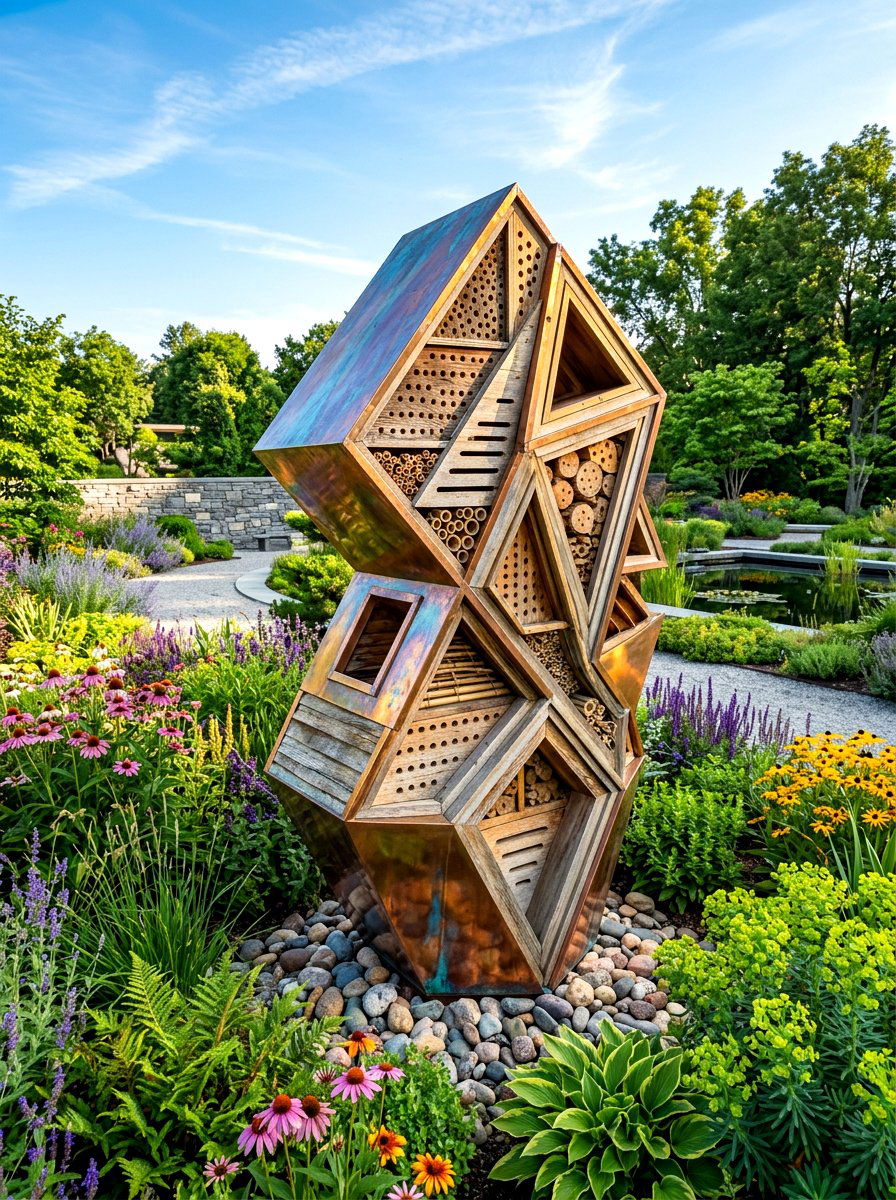
An insect hotel can provide nesting cavities for some insects, but it is not a complete habitat solution. Many beneficial insects never use these structures. Ground-nesting bees, butterflies, beetles, and predatory insects may depend more on soil, plants, leaves, or natural wood.
A decorative insect hotel can look attractive, but its appearance does not prove that it supports useful insects. Structures filled with loose pinecones, bark, and mixed materials may provide little suitable nesting space for the species you hope to support.
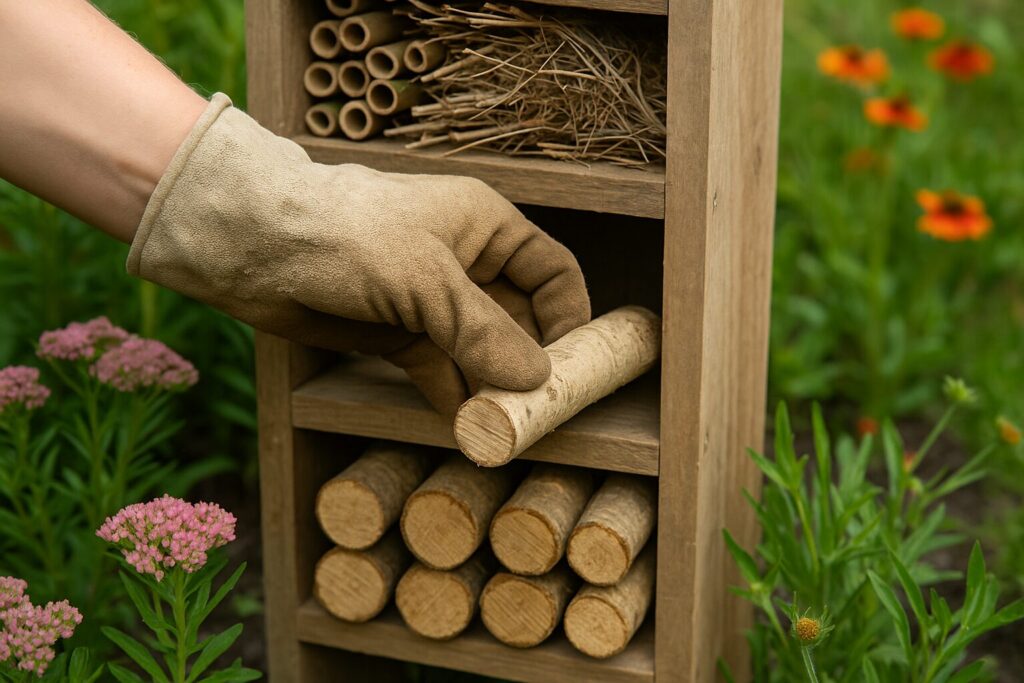
Artificial nesting sites need suitable design and care. Poorly made holes can splinter or hold moisture. Unmaintained nesting materials can also concentrate parasites and disease. Natural nesting areas often support a wider range of species with less maintenance.
Source: suite101.com
Use suitable materials
Choose clean, dry, untreated materials with smooth cavities that follow guidance for the local nesting species.
Provide weather protection
Place the structure where it stays stable and receives suitable shelter from rain and strong wind.
Avoid chemical treatments
Do not use treated wood, paint, or chemical coatings on nesting surfaces.
Plan for maintenance
Use a design that allows suitable nesting materials to be inspected and replaced when needed.
Keep natural habitat
Continue providing bare soil, stems, leaves, and wood even if you install an insect hotel.
Where Should an Insect Hotel Go?
Choose a stable location that receives conditions suited to the intended nesting insects. Keep it away from heavy foot traffic and areas that receive pesticide sprays. Avoid sites where water can collect inside the nesting materials.
Follow regional extension guidance for cavity size, depth, materials, and cleaning. Different bee species use different cavities, so one universal design will not support every species.
How Can You Tell Whether It Is Being Used?
Look for signs of activity without opening occupied nests. Some solitary bees seal nest openings with mud or plant material. Other cavity-nesting insects may use different signs. A sealed opening can suggest nesting activity, but it does not prove that the structure is healthy or that pest control will improve.
Avoid handling or disturbing active nests. If the structure shows mold, wet materials, or heavy damage, review local guidance before attempting maintenance.
Arrange Plants and Shelter as One Habitat
Arrange food, nesting sites, and shelter close enough to form one useful habitat. Insects need to move between these resources. A flower bed at one end of a yard may not help much if nesting areas are far away or exposed to regular pesticide use.
Start by studying your garden. Note where sunlight falls, where water collects, and where wind is strongest. Check nearby shrubs, trees, fences, and buildings. These features can affect both plant growth and insect activity.
Place flowering plants near suitable shelter. Keep a few quiet corners with leaves, stems, and natural ground cover. A border of native grasses and shrubs can provide both food and protection. If you grow vegetables, consider placing flowering habitat near the growing area while keeping it clear of routine chemical sprays.
Do not assume that every insect needs full sun. Some flowers and nesting areas need sun, while others thrive in partial shade. Match each plant and habitat feature to its actual needs. This creates a more stable garden than forcing every species into one sunny bed.
Source: rutheodesigns.com
Use garden edges
Fence lines, borders, and unused corners can hold flowering plants, native grasses, and natural shelter.
Create connected plant layers
Combine flowering ground cover, low plants, shrubs, and suitable taller plants where space allows.
Protect habitat from spray drift
Keep insect habitat away from areas where routine pesticide use may expose insects to spray or treated plants.
Use wind protection
Suitable shrubs and dense plant groups can provide sheltered places for insects to feed and rest.
Match plants to site conditions
Select species according to local rainfall, soil drainage, sun exposure, and seasonal temperature.
Build Different Plant Layers
A layered garden provides more types of shelter than a flat bed. Low flowers can cover soil and offer food. Medium plants can provide stems and leaves. Shrubs can create sheltered spaces and add more flowers or host plants.
Not every garden has room for large trees or shrubs. Even a small bed can combine ground cover, flowering plants, and a few taller stems. The goal is variety, not a fixed height or planting pattern.
Keep Nesting Areas Near Food
Many native bees forage close to their nests, so nearby flowers are useful. Keep some flowers near bare soil patches and other nesting spaces. This reduces the need for insects to travel far between food and shelter.
A connected design also helps natural enemies move through the garden. Flowering plants can feed adults, while nearby shrubs and ground cover provide resting and hiding places.
Design a Small Yard or Container Garden
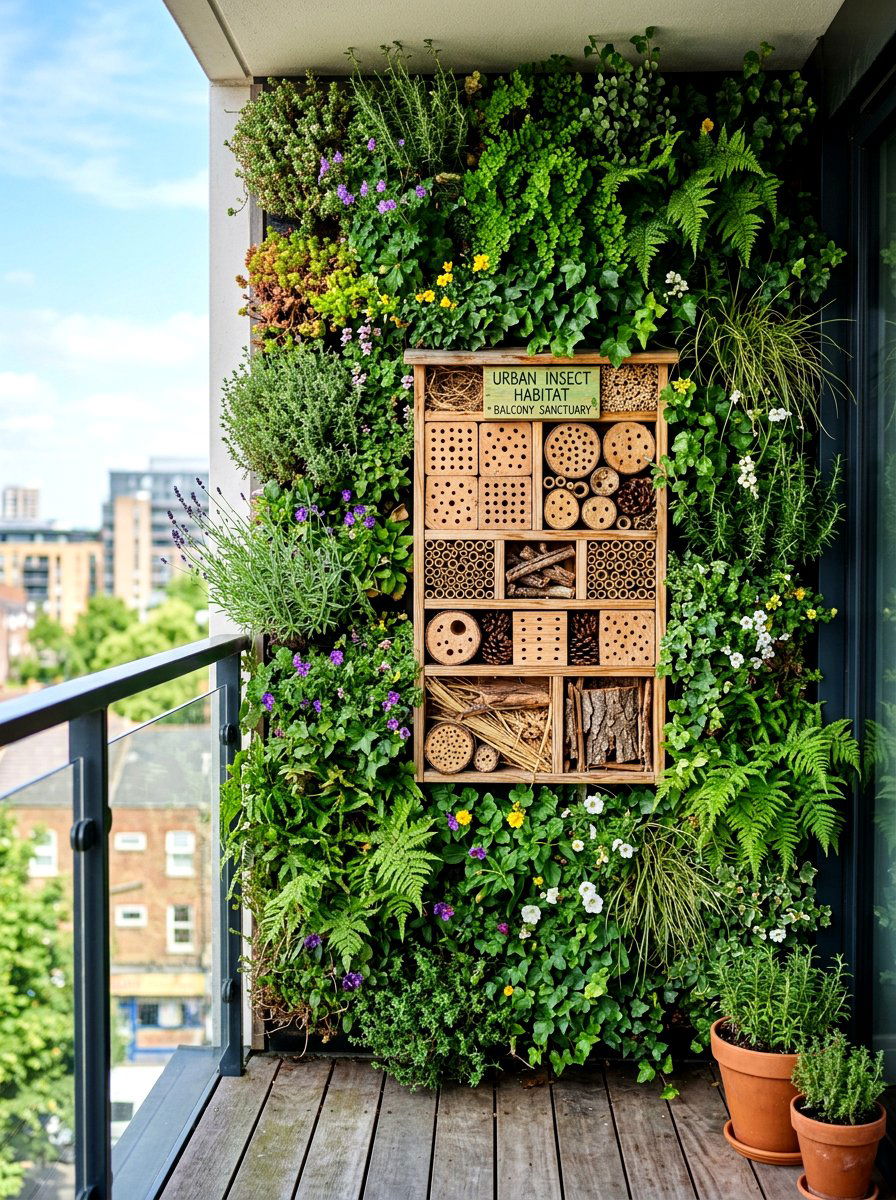
A small yard can support beneficial insects when each part has a clear purpose. You do not need a large wildflower meadow. A few flowering plants, an undisturbed corner, and suitable natural shelter can create useful habitat.
Begin with one area that receives suitable sunlight. Grow several kinds of flowers with different bloom times. Add a small patch of bare soil if the site allows it. Keep some leaves and plant stems in a quiet area through winter.
Containers can help people with patios, balconies, and paved yards. Use several plant species rather than one large pot of a single flower. Choose plants that support local insects and suit the container’s sunlight and water conditions.
However, containers cannot replace every habitat feature. A pot of flowers does not provide the same nesting space as suitable bare soil or natural ground cover. If you have no exposed ground, focus on food plants and natural shelter while looking for other safe nesting opportunities nearby.
Source: tr.pinterest.com
One sunny container group
Grow a mix of locally suitable flowering plants with different bloom times.
One sheltered corner
Keep suitable leaves, stems, or a small piece of natural wood in a safe area.
One flowering border
Use a narrow strip of flowers along a wall, fence, or walkway where plants receive enough light.
One water source
Use a shallow, clean dish with stones or another safe landing surface. Refresh the water often.
A Simple Small-Garden Layout
Imagine a small U.S. backyard with one sunny flower bed, a narrow fence border, and a shaded corner. The flower bed holds several native flowering species that bloom at different times. The fence border contains suitable grasses and low shrubs. The shaded corner keeps a small amount of leaf litter and safe woody material.
A shallow water dish sits near the flowers but does not collect stagnant water. A small area of stable bare soil remains undisturbed. This simple layout provides several resources without taking over the whole yard.
Food area
Plant flowers with overlapping bloom periods and different shapes.
Shelter area
Keep suitable leaves, stems, and woody material in a quiet corner.
Nesting area
Leave a small patch of suitable soil or use other locally appropriate nesting features.
Water area
Provide a shallow source with safe landing places and regular cleaning.
Use Water Without Creating Problems
Some insects use moisture, and certain bees collect water or wet soil for nest building. A shallow dish with stones can offer a place to land. A small area of damp soil may also help some species.
Water sources need regular care. Replace standing water often to reduce mosquito breeding. Clean the dish and remove debris. Never use deep, slippery containers that can trap small insects.
Protect Beneficial Insects With Safer Pest Care
A habitat garden needs careful pest management. Insecticides can harm the insects you are trying to support. Some products affect pollinators directly, while others can harm predators and parasitoids that help manage pests.
Start with integrated pest management, often called IPM. This approach begins with identifying the pest and deciding whether it is causing real harm. A few aphids or chewed leaves do not always require action. Natural enemies may already be feeding on the pest population.
The UC Integrated Pest Management Program recommends encouraging natural enemies with suitable plants and shelter. It also advises careful pesticide selection when other controls are not enough. The U.S. Fish and Wildlife Service warns about pesticide exposure around nesting and feeding areas.
Do not assume that an organic or natural product is harmless to insects. Some products can harm bees, predators, or other non-target species. Read the label and consider the product’s effects before using it. Follow all label directions and local rules.
Source: bluestem.ca
Identify the problem first
Check whether an insect is a pest, a natural enemy, or a harmless visitor before taking action.
Accept minor plant damage
A few damaged leaves may be a normal part of supporting insects and a healthy garden food web.
Use physical controls
Remove small pest groups by hand, prune badly affected plant parts, or use suitable water sprays where safe for the plant.
Avoid broad-spectrum sprays
These products can kill useful insects as well as the pests you want to control.
Protect flowering plants
Avoid exposing blooming plants and active insect habitat to pesticide applications.
Check product labels
Follow the label, protect people and pets, and use a qualified pest professional when a problem needs specialized treatment.
Why Pesticide Drift Matters
Pesticide drift happens when spray moves away from the intended treatment area. It can reach flowers, nesting sites, nearby gardens, and natural vegetation. Even if you do not spray your habitat bed, treatments next door may affect it.
Use suitable separation and vegetative buffers where possible. Communicate with neighbors or service providers about flowering areas and nesting sites. When pesticide use is necessary, follow the product label and applicable pollinator protection instructions.
Do Not Remove Every Pest Insect
Natural enemies need prey to survive. If every aphid and caterpillar disappears, some predators may have less food. A small amount of pest activity can be part of a balanced garden.
This does not mean you should ignore serious plant damage. Watch the plant, identify the pest, and use a suitable control when the damage becomes unacceptable. The goal is to manage harmful outbreaks without removing the whole insect community.
Build, Observe, and Maintain the Habitat
Build the habitat in stages. Start with the conditions you already have, then add the features that are missing. This approach is easier to manage than changing the whole garden at once.
Before planting, check sunlight, soil type, drainage, and water access. Look at nearby plants and note which insects already visit. Remove invasive plants using methods suited to the species and site. Avoid aggressive soil disturbance where beneficial insects may already nest.
Step 1: Study the site
Record sunny and shady areas, soil moisture, drainage, wind exposure, and nearby pesticide risks.
Step 2: Identify local plants
Use regional native plant resources and select flowers that fit the site’s conditions.
Step 3: Plan the bloom calendar
Choose plants that provide overlapping flowers from early spring through fall.
Step 4: Add natural shelter
Keep safe leaf litter, suitable stems, native grasses, and woody material in selected areas.
Step 5: Protect nesting sites
Leave appropriate bare soil and reduce digging, tilling, and heavy mulch in those areas.
Step 6: Reduce chemical exposure
Use IPM, avoid routine insecticide applications, and keep the habitat away from spray drift.
Step 7: Observe and adjust
Watch flowers, insect activity, plant health, and nesting signs. Add or change features based on what the garden needs.
Signs That Your Habitat Is Working
A successful habitat supports different kinds of insect activity over time. You may see bees visiting flowers, hoverflies resting on leaves, lady beetle larvae feeding on aphids, or small wasps visiting open blooms.
Look beyond adult insects. Eggs, larvae, pupae, and signs of nesting can show that insects are using the space for more than a short visit. Keep a simple garden record with the date, plant, insect group, and activity you observe.
Do not judge success only by the number of pests you see. A healthy habitat may still contain aphids, caterpillars, and other plant feeders. The useful sign is a varied insect community and a garden that can support natural interactions.
Regular flower visits
Different insects visit flowers during several parts of the growing season.
Natural enemy activity
You notice lady beetles, lacewing larvae, hoverfly larvae, or other predators around suitable prey.
Nesting signs
Some stems, soil patches, or suitable cavities show signs of insect use.
Seasonal continuity
The garden continues to offer flowers and shelter as the weather and growing season change.
Troubleshooting Common Habitat Problems
If few insects visit, first check whether the plants are flowering at the right time. A garden may have many plants but little usable food during early spring or late summer. Add suitable species that fill those gaps.
If plants grow poorly, check soil moisture, drainage, sunlight, and plant selection. A plant that does not suit the site will not provide reliable habitat. Replace unsuitable plants with local species that fit the actual conditions.
If nesting areas remain unused, check whether they are disturbed, waterlogged, heavily mulched, or exposed to regular pesticide use. Not every insect will use every nesting feature, so allow time and provide more than one natural option.
If pest damage increases, identify the pest before treating it. Check for natural enemies and review irrigation, plant stress, and excessive fertilizer. If control is needed, use the least disruptive suitable method and protect nearby beneficial insects.
Few flower visitors
Possible causes include limited bloom time, unsuitable flower shapes, poor plant health, or pesticide exposure.
Poor plant growth
Check whether the plant matches the soil, drainage, light, and water conditions.
No visible nesting activity
Review soil disturbance, mulch depth, moisture, and site safety. Some insects may also use nearby nesting areas.
Rising pest damage
Identify the pest, check for predators, and use IPM before considering a pesticide.
Mold or damage in an insect hotel
Review its location and materials. Follow local guidance for safe maintenance rather than disturbing active nests.
Important Design Choices and Common Mistakes
The best design depends on the garden’s climate, soil, available space, and insect community. A useful plan does not need every possible feature. It needs the right combination of resources for the site.
A common mistake is choosing plants only because they look attractive. Some highly cultivated flowers may offer little accessible pollen or nectar. Others may not suit local insects or weather. Check the plant’s actual value and local growing needs before buying it.
Another mistake is making the garden too tidy. Removing every leaf, cutting every stem, and covering all soil with mulch can remove nesting and winter shelter. Keep selected areas natural while maintaining clear paths and safe spaces.
Avoid invasive plants, excessive fertilizing, and constant soil disturbance. These practices can reduce plant diversity or create conditions that favor some pest insects. A varied, locally suitable garden is usually easier to support over time.
Planting only one flower type
A single flowering species may leave gaps in the food supply and support fewer insect groups.
Using plants without checking local suitability
A plant may be invasive, poorly adapted, or less useful to local insects.
Removing all fallen leaves
This can remove shelter for insects that spend winter in leaf litter.
Covering every soil patch
Thick mulch and landscape fabric can prevent some ground-nesting bees from using the soil.
Installing an insect hotel instead of natural habitat
Artificial structures support only certain nesting insects and cannot replace food, ground cover, and natural shelter.
Using pesticides on a fixed schedule
Routine spraying can harm natural enemies and pollinators even when pest levels do not require treatment.
Expecting instant pest control
Natural enemies need suitable food, shelter, and time to establish. Habitat does not guarantee that pest damage will disappear.
Match the Design to Your Region
The United States contains many climate and ecological regions. A plant that is native to one state may not be native to another. Even within one state, soil and rainfall can change which species grow well.
Use regional plant lists rather than copying a garden plan from another climate. Check whether a plant is native to your area and whether it is suitable for your soil and available space. Also check for local invasive plant warnings.
Balance Habitat With Household Safety
Natural habitat should not create unsafe conditions. Keep dead branches away from buildings and paths where they could fall. Avoid placing nesting materials near doors or areas where people must walk. Manage water sources so they do not become stagnant.
In areas with wildfire risk, follow local fire guidance about dry leaves, brush, and woody debris. You can still support insects with carefully placed habitat patches that do not conflict with defensible-space needs.
Next Questions to Consider After Planting
Habitat design is only the first step. Once the garden is planted, homeowners need to know how to judge its progress, manage seasonal cleanup, and protect insects during pest treatment. These decisions help turn a new planting into a lasting habitat.
A review of four U.S. guidance sources informed this guide: Cornell IPM’s steps for creating beneficial insect habitat, the UC IPM guide to natural enemies, the USDA NRCS Pollinator Gardens Design Guide, and the Xerces Society’s habitat planning guidance. The sources cover site selection, flowers, nesting resources, natural enemies, and pesticide concerns. Their strongest shared message is that habitat requires more than flowers.
The practical addition here is a joined-up garden plan that connects food, nesting, shelter, water, seasonal care, and pest management. The following gap map separates useful next questions from topics that the reviewed guidance already addresses. These are inferred reader needs, not verified search-volume or People Also Ask findings.
Research scope: The source review was conducted on November 16, 2026, for the U.S. gardening market. The search focused on beneficial insect habitat design, native flowers, natural enemies, nesting, and overwintering. No field trial or first-hand garden test was conducted for this article.
Question: How can I tell whether my habitat is working?
Reader stage: After planting. Basis: Inferred next need. Reviewed coverage: SHALLOW across the step-by-step guidance. Benefit: Helps gardeners assess flower visits, nesting signs, and natural enemy activity. Evidence: Cornell IPM, UC IPM, and USDA NRCS guidance. Priority: High. Placement: Habitat monitoring section.
Question: When should I remove old stems and leaves?
Reader stage: Seasonal maintenance. Basis: Inferred next need. Reviewed coverage: SHALLOW in the inspected garden design pages. Benefit: Helps prevent the loss of overwintering habitat. Evidence: Xerces Society nesting and overwintering guidance and U.S. Fish and Wildlife Service recommendations. Priority: High. Placement: Nesting and winter shelter section.
Question: Are insect hotels enough to support beneficial insects?
Reader stage: Habitat setup. Basis: Inferred next need. Reviewed coverage: ANSWERED in Xerces Society nesting guidance but less detailed in general garden setup instructions. Benefit: Prevents overreliance on decorative structures. Evidence: Natural nesting and overwintering habitat guidance. Priority: High. Placement: Insect hotel section.
Question: How can I manage pests without harming useful insects?
Reader stage: Ongoing garden care. Basis: Inferred next need. Reviewed coverage: ANSWERED by UC IPM and U.S. Fish and Wildlife Service guidance. Benefit: Helps gardeners choose lower-risk pest controls. Evidence: Integrated pest management and pollinator protection recommendations. Priority: High. Placement: Safer pest care section.
Question: Can a small patio support beneficial insects?
Reader stage: Before planting. Basis: Inferred next need. Reviewed coverage: SHALLOW in the inspected large-scale habitat guidance. Benefit: Gives apartment and small-yard gardeners practical options while explaining the limits of containers. Evidence: Habitat resource principles applied to a smaller site. Priority: Medium. Placement: Small-yard and container section.
Which Follow-Up Topics Deserve Separate Guides?
Some questions need more detail than a general habitat guide can provide. A regional native plant list needs local climate and ecological information. A guide to identifying beneficial insect larvae also needs clear images and reliable species identification.
Useful neighboring topics include regional flowering calendars, native bee nesting requirements, safe seasonal garden cleanup, and identifying common natural enemies. Each topic has a different reader task and should have its own focused explanation rather than repeating this guide.
Regional native flower selection
A separate guide should list plants by U.S. region, soil, sunlight, and bloom period.
Beneficial insect identification
A visual guide should compare adults and larvae so gardeners do not mistake useful insects for pests.
Seasonal habitat maintenance
A practical calendar should explain when to leave stems, manage leaves, and inspect nesting spaces.
Frequently Asked Questions
Q
What is the most important feature of a beneficial insect garden?
A steady supply of food is a good starting point, but flowers alone are not enough. The strongest design also provides nesting sites, shelter, and protection from pesticides. Combine several resources that suit local insects and climate.
Q
Which plants attract the most beneficial insects?
There is no single best plant for every region or insect group. Native asters, goldenrods, mountain mints, bee balms, and other locally suitable flowering plants can support useful insects in many areas. Choose plants with different bloom times and flower shapes, and check local native plant guidance before planting.
Q
Do beneficial insects eliminate garden pests?
No. Natural predators and parasitoids can help reduce some pest populations, but they do not eliminate every pest. Results depend on the insect species, garden conditions, available prey, and pesticide exposure. Use beneficial insects as one part of integrated pest management.
Q
Are insect hotels necessary for a healthy insect garden?
No. Many beneficial insects use natural soil, plant stems, leaf litter, and dead wood instead of artificial structures. Insect hotels can support certain cavity-nesting species when designed and maintained properly. They should never replace natural nesting and shelter.
Q
When should I clean up my insect-friendly garden?
Avoid removing all stems and leaves in fall. Many insects use these materials for shelter or winter survival. Leave suitable plant material in place through winter and into spring when practical. The right cleanup time depends on your local climate, insect activity, plant health, and fire safety needs.
✦ Wrapping Up
Conclusion
Garden beneficial insect habitat design works best when it supports the full life cycle of useful insects. Flowers provide food, while bare soil, stems, leaves, and woody material provide nesting and shelter. Water, plant diversity, and safe pest care complete the design.
You do not need a large garden to make a useful change. Start with locally suitable flowering plants and one undisturbed habitat area. Add other features as space and conditions allow. Watch which insects visit and adjust the design as the garden grows.
The most useful garden is not one that removes every pest or looks perfect every day. It is one that supports a varied community of insects while keeping plants, people, and wildlife safe. Small changes can create better habitat when they are planned and maintained with care.
💡 Key Takeaway
Start by choosing three locally suitable flowering plants with different bloom periods. Add one safe nesting or shelter area, leave some natural material through winter, and avoid routine insecticide use. Observe insect activity through the growing season and improve the habitat based on what you see.