Raised beds speed growth and soil control; in-ground beds cost less and suit larger plantings.
I’ve worked as a gardener and writer for over a decade, testing raised bed vs ground methods across small city plots and rural vegetable patches. This guide compares both approaches in clear, practical terms. You’ll get evidence-based pros and cons, build and maintenance tips, plant recommendations, and real-life lessons from my gardens so you can choose the best system for your space and goals.
Compare at a glance: raised bed vs ground
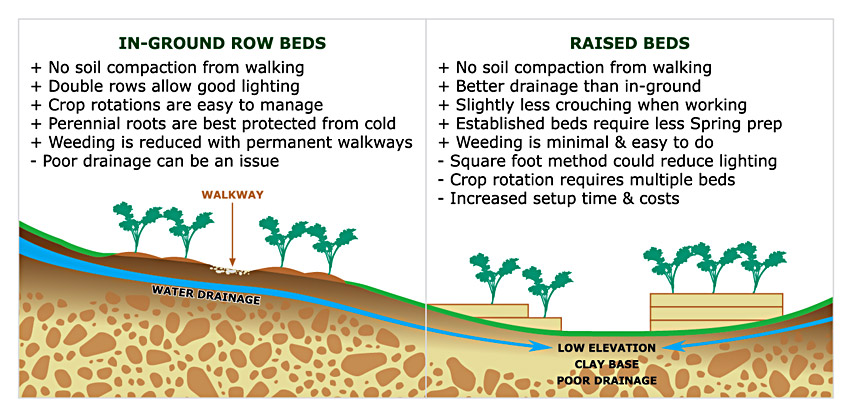
Raised bed vs ground each solve common gardening problems but in different ways. Raised beds give fast drainage, warmer soil, and tight soil control. Ground or in-ground beds let you keep existing soil and scale easily. Choose raised bed if you need quick results, better soil structure, or siting above poor native soil. Choose ground if you want low cost, deep root space, or minimal construction.
Key quick points
- Raised beds improve soil warmth, drainage, and root access.
- Ground beds save money and work for large plantings.
- Raised bed vs ground both can be organic, productive, and low-maintenance with good planning.
- Your climate, soil quality, budget, and mobility needs decide the winner.
Benefits of raised beds
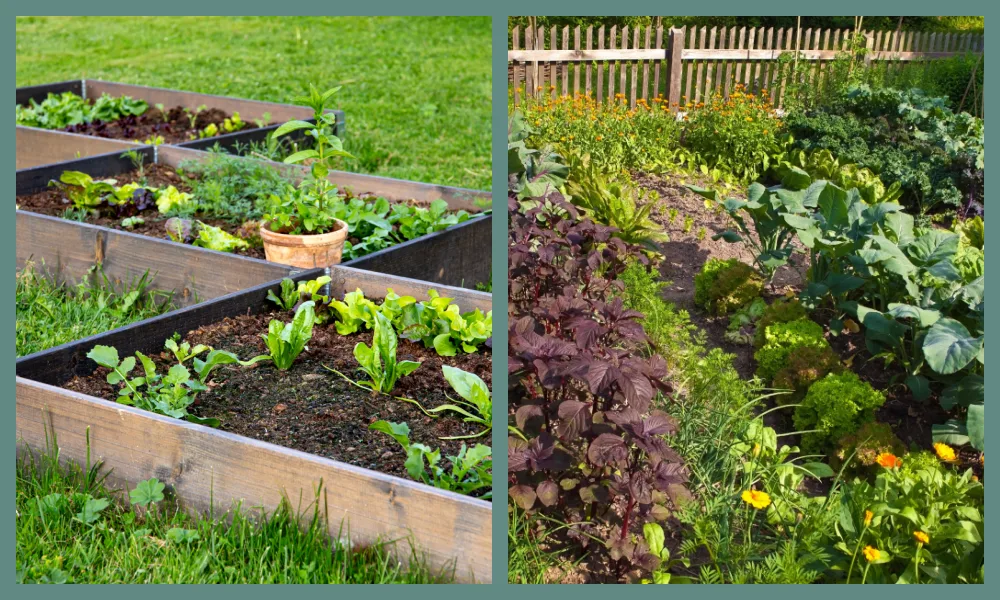
Raised bed vs ground favors raised beds when you need control. Raised beds give these benefits:
- Faster soil warming in spring, so earlier planting.
- Better drainage for wet climates or heavy clay soils.
- Easier soil amendments and custom soil mixes.
- Less bending for planting and harvesting, reducing strain.
- Fewer soil compaction issues because you avoid walking on beds.
- Better separation from poor native soil and some root pests.
Practical examples
- I started tomatoes in raised beds two weeks earlier than neighbors in the ground. The result was earlier harvests and fewer waterlogged roots.
- Raised beds let me blend compost, loam, and mineral amendments tailored to crops.

Benefits of ground (in-ground) gardening
Ground beds shine in other ways. For many gardeners, this is the simplest, cheapest route.
- Lower upfront cost with no lumber or built frames.
- More soil volume for deep-rooted crops like carrots, parsnips, and fruit trees.
- Better long-term soil building when you add compost and green manures.
- Natural soil ecosystems help beneficial microbes and fungi thrive.
Practical examples
- On a large property, I used in-ground beds for pumpkins and squash. They spread and rooted freely with excellent yields.
- When soil is already rich, ground beds often outperform small raised beds for perennial crops.
Drawbacks and limitations
Both systems come with trade-offs. Knowing the limits helps you plan.
Raised bed limitations
- Higher upfront cost for materials and soil.
- Soil in small beds can dry faster and need more frequent watering.
- Some builders use treated wood or materials that may leach chemicals if chosen poorly.
Ground bed limitations
- Poor native soil needs major amendment, which is slow and heavy work.
- Drainage problems and compaction can limit plant health.
- Early spring soil warms slowly, delaying planting.
When comparing raised bed vs ground, weigh these costs and benefits against your needs and resources.
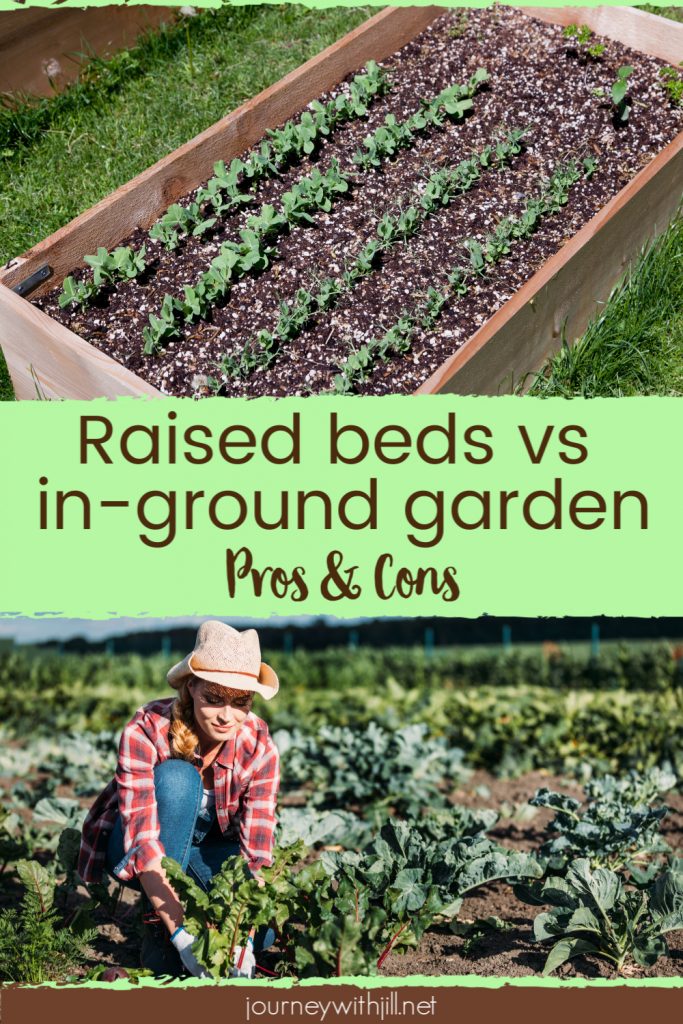
Soil, drainage, and microclimate
Soil and microclimate drive success in either system. Consider these factors:
- Drainage: raised beds drain faster; ground beds can be improved with raised rows or organic matter.
- Soil warmth: raised beds warm earlier, giving a longer growing window.
- Soil life: ground soil often has established microbial networks; raised beds build theirs over time.
- pH and fertility: both systems need testing and amendments to match crop needs.
Simple soil checklist
- Test soil pH and nutrients in both systems.
- Add compost and organic material to increase soil life.
- Use mulches to retain moisture in raised beds.
- Consider a layer of weed barrier under raised beds if weeds are severe.

Cost, time, and maintenance
Budget and time affect the raised bed vs ground decision.
Cost factors
– Raised bed costs include frame materials, quality topsoil, and possible irrigation.
- Ground beds cost mostly labor and compost, with minimal material expense.
Time and maintenance
- Raised beds need more frequent watering in hot weather.
- Ground beds need more initial soil work if soil is poor.
- Both benefit from regular compost additions and cover crops for soil health.
Estimate example
- Small DIY raised bed (4×4 feet) built with untreated lumber and filled with a quality mix may cost a moderate amount but yields intensive harvests.
- Ground bed conversion requires more hours hauling compost if soil is compacted, but the monetary outlay is lower.
Which plants do best in raised bed vs ground
Plant choice can guide your decision between raised bed vs ground.
Great choices for raised beds
- Leafy greens, herbs, and bush vegetables.
- Root crops in shallow beds with loose soil.
- High-value crops where intensive spacing increases yields.
Great choices for ground beds
- Large vining crops like pumpkins and melons.
- Deep-rooted perennials and fruit trees.
- Carrots and parsnips when you have deep, loose native soil.
Mixed approach
- Use raised beds for quick rotation crops and tender plants.
- Use ground beds for sprawling or deep-rooted crops for space efficiency.
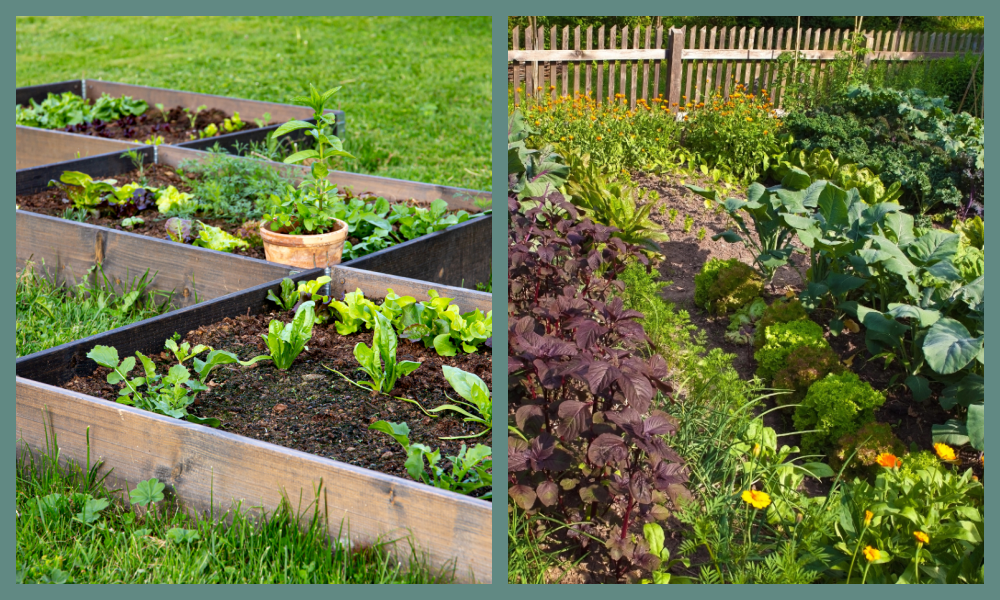
Pest, weed, and disease management
Raised bed vs ground presents different pest dynamics. Tactics that work:
- Raised beds reduce exposure to some ground pests and soil compaction.
- Ground beds can harbor beneficial predators and a balanced soil food web.
Integrated strategies
- Rotate crops yearly to reduce disease build-up in both systems.
- Use barriers or row covers to manage insect pests.
- Mulch heavily to suppress weeds and conserve moisture.
- Solarize or amend soil when diseases persist in ground beds.
How to choose: decision checklist
Use this short checklist to pick raised bed vs ground for your situation.
- Problem soil or poor drainage? Choose raised beds.
- Large area and good soil? Choose ground beds.
- Need portability or accessible height? Choose raised beds.
- Tight budget or long-term deep roots? Choose ground beds.
- Want fast results and intensive yields? Choose raised beds.
- Prefer low construction and minimal setup? Choose ground beds.
Follow these steps
- Test your soil and drainage.
- Clarify budget and time available.
- Pick plants you want to grow.
- Start small and expand based on results.
My experience and practical tips
I’ve built over a dozen raised beds and tended large ground plots. Here are lessons I learned the hard way:
- Don’t buy treated wood for vegetable beds; choose untreated or stone.
- Mix local compost into raised beds; pure bagged mixes can be expensive and settle quickly.
- Install drip irrigation in raised beds to save time and water.
- If your ground soil is heavy clay, build narrow raised beds rather than amending the whole yard.
- Try a trial bed for one season before converting your whole space.
Mistakes to avoid
- Overfilling raised beds with soil that compacts fast.
- Planting too close together in ground beds without accounting for root spread.
- Skipping soil tests and guessing nutrient needs.
Common quick questions
What is the main advantage of raised beds?
Raised beds let you control soil quality, drainage, and temperature for faster growth.
Are raised beds worth the cost?
Yes, when native soil is poor or space is limited; the return is quicker harvests and less soil work.
Can I mix raised bed and ground methods?
Absolutely. Many gardeners use raised beds for intensive crops and ground beds for large or deep-rooted plants.
Frequently Asked Questions of raised bed vs ground
Is a raised bed better than planting in the ground?
Raised beds can be better when native soil is poor, compacted, or drains poorly. Ground planting is often fine if your soil is deep and fertile.
How deep should a raised bed be?
A depth of 8 to 12 inches works for most vegetables; 12 to 18 inches is ideal for root crops and long-term planting. Deeper beds give more root space and moisture buffer.
Do raised beds dry out faster than ground beds?
Yes. Raised beds usually drain and warm faster, which can cause quicker drying. Mulch and drip irrigation help maintain moisture.
Can I convert a ground bed to a raised bed later?
Yes. You can add framing and fill over existing ground, but remove perennial weeds and improve soil before filling.
Which system produces better yields?
Both can produce high yields. Raised beds often give faster yields per square foot due to tighter spacing and better soil control, while ground beds excel for large-scale or deep-rooted crops.
Conclusion
Choosing between raised bed vs ground comes down to your soil, space, budget, and crop goals. Raised beds offer control, speed, and accessibility. Ground beds offer scale, lower cost, and deep soil benefits. Start with a small test area, track results, and adapt as you learn. Try one raised bed and one ground bed side-by-side next season to see what fits your garden best. Share your results, ask questions, or subscribe for more gardening guides to help you succeed.