Plant circadian rhythms are natural, internal cycles that help plants track time. These cycles last about 24 hours and control many daily activities, including leaf movement, photosynthesis, growth, water use, and flowering. Light and temperature help keep the internal clock in sync with the day.
Across the United States, plants face a daily cycle of sunlight, darkness, and changing temperatures. A tomato plant in a California garden, a maple tree in New England, and a houseplant in a Florida home all respond to these daily changes. Yet plants do more than react to the weather. They also use an internal clock to prepare for changes before they happen.
This internal system is called the circadian clock. It works inside plant cells and helps control when certain activities take place. Some plants move their leaves at night. Others open flowers near dawn or adjust the tiny pores on their leaves before sunlight arrives.
These patterns are not random. They help plants use light, water, and stored food in a useful way. The clock also helps plants sense seasonal changes and prepare for flowering or other stages of growth.
Understanding plant circadian rhythms can help gardeners make better choices about light, darkness, and daily plant care. It also explains why plants may show regular patterns even when their surroundings stay almost the same.
Source: storage.googleapis.com
What Are Plant Circadian Rhythms?
Plant circadian rhythms are repeating biological patterns controlled by an internal timing system. The word circadian comes from two Latin words that mean around a day. This name fits because the rhythm usually lasts close to 24 hours.
The clock works even when a plant does not receive clear signals from the outside world. For example, a plant can keep showing daily leaf movements under steady laboratory conditions. This shows that the rhythm comes from inside the plant rather than from sunlight alone.
The clock helps plants prepare for changes in their surroundings. A plant may start preparing its leaves for daylight before the sun rises. It may also change its growth rate as night approaches.
Many of these changes are too small to see. Some take place inside cells through changes in gene activity, protein levels, and chemical reactions. Other changes, such as leaf folding or flower opening, are easy to observe.
Internal timing
The rhythm comes from biological activity inside the plant. It does not need a new signal from sunlight every time a cycle begins.
Near 24-hour cycle
Most plant circadian clocks run close to a full day, although the exact period can vary by species and conditions.
Daily preparation
The clock helps a plant prepare for expected changes in light, temperature, and other environmental conditions.
Visible and hidden changes
Leaf movement is easy to see, while changes in gene activity and metabolism need special tools to measure.
Circadian Rhythms Versus Daily Responses
A direct daily response happens when a plant reacts to an event in its surroundings. For example, a leaf may change position when sunlight reaches it. This response depends on an outside signal.
A circadian response comes from the internal clock. It can continue even when the normal light and dark signals are removed for a time. This is the key difference between a daily pattern and a true circadian rhythm.
Scientists often use the term diel rhythm for a pattern that follows the daily light and temperature cycle. A circadian rhythm must also show an internal timing pattern that continues under constant conditions.
Direct response
A plant reacts to a current change, such as light reaching a leaf or a drop in temperature.
Circadian response
A plant follows an internal schedule that can continue without regular outside signals.
Why Plants Need an Internal Clock
Plants cannot move away from every change in their surroundings. They must manage their resources while staying in one place. An internal clock helps them prepare before conditions change.
Without good timing, a plant may use energy at the wrong time or fail to prepare for the next period of light. The clock helps match important biological activities with the conditions in which they are most useful.
How Does the Plant Circadian Clock Work?
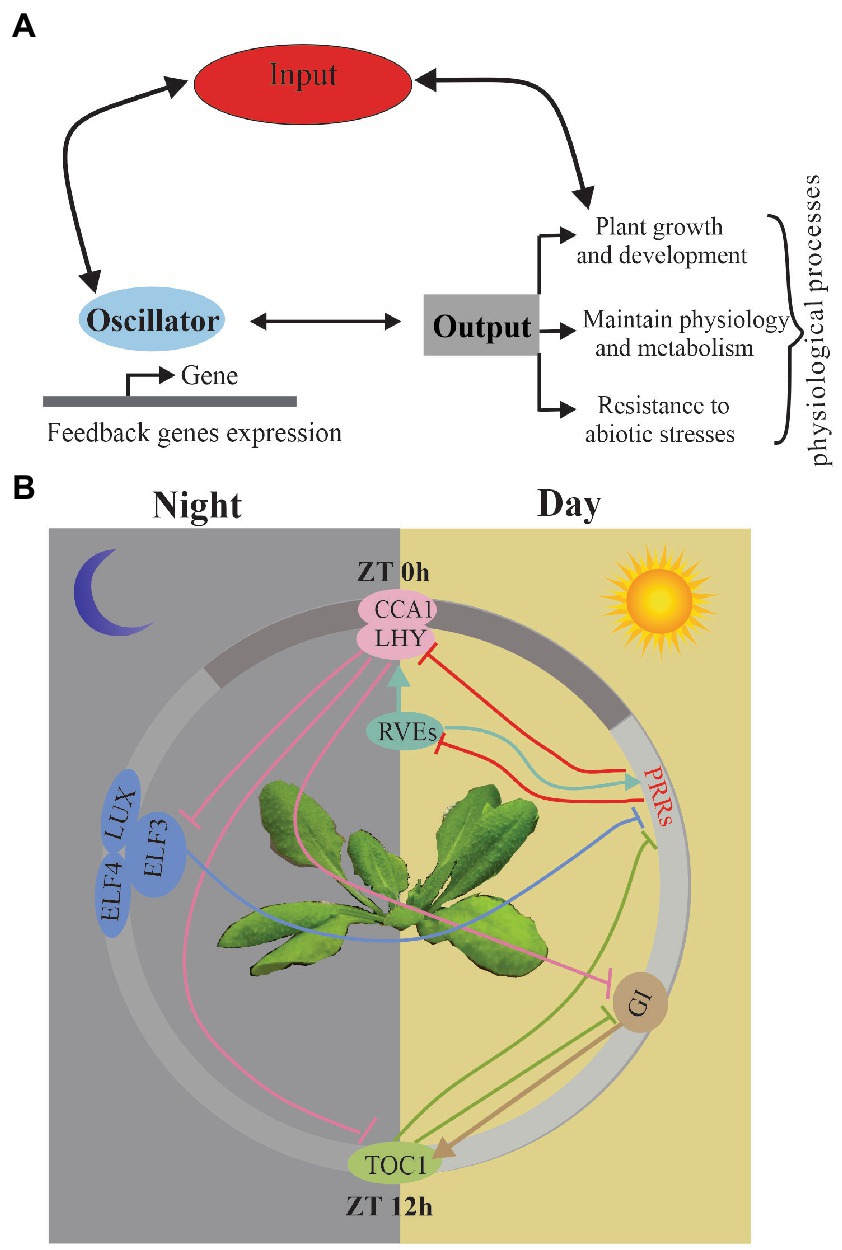
The plant circadian clock works through a network of genes and proteins. These parts control one another in repeating loops. As the amount of one protein rises, it can slow the production of another. Later, the first protein level falls, allowing the cycle to begin again.
Scientists call this system a transcription and translation feedback loop. Transcription is the process of making an RNA copy from a gene. Translation is the process of using that RNA to make a protein.
These repeating changes create an internal rhythm. Different clock genes become active at different times. Their combined activity helps set the timing of many plant processes.
Much of the detailed research comes from Arabidopsis thaliana, a small flowering plant used in plant science. Its clock has helped researchers understand many basic parts of plant timekeeping. Other plant species may use different versions of some clock components.
Source: frontiersin.org
CCA1
CIRCADIAN CLOCK ASSOCIATED 1 is a key clock gene with strong activity around dawn. It helps control the timing of other clock genes.
LHY
LATE ELONGATED HYPOCOTYL works with CCA1 in the morning part of the clock network.
PRR genes
PSEUDO-RESPONSE REGULATOR genes become active in sequence during the day and help control morning clock activity.
TOC1
TIMING OF CAB EXPRESSION 1, also called PRR1, is an important evening clock regulator.
Evening Complex
ELF3, ELF4, and LUX form a group called the Evening Complex. It helps control nighttime gene activity.
The Morning, Day, and Evening Clock
The plant clock follows a changing pattern throughout the day. Morning genes such as CCA1 and LHY become active near dawn. They help control the next group of genes in the cycle.
During the day, several PRR genes become active in sequence. Their activity helps reduce the activity of some morning genes. This allows the clock to move toward its evening phase.
Near evening, TOC1 and other clock regulators help control the next stage. The Evening Complex also helps regulate gene activity during the night. These linked steps keep the cycle moving.
Do All Plant Cells Have a Clock?
Research shows that many plant cells have their own circadian timing system. This means a leaf cell and a root cell can both keep time. Their rhythms may differ because they receive different signals and perform different jobs.
These local clocks still need to work together. Light can strongly affect clocks in leaves, while other signals help connect activity across the plant. The result is a coordinated system that supports whole-plant growth.
Temperature Compensation
A useful feature of the plant clock is temperature compensation. This means the internal rhythm stays close to its normal period across a suitable range of temperatures.
Many chemical reactions speed up as temperatures rise. Yet the circadian clock does not simply speed up at the same rate. Its control system helps keep the timing stable under normal changes in temperature.
Temperature compensation does not mean that plants are safe from heat or cold stress. Extreme temperatures can damage cells and disrupt normal growth. It means that ordinary temperature changes do not automatically make the internal clock run much faster or slower.
What Keeps Plant Circadian Rhythms in Sync?
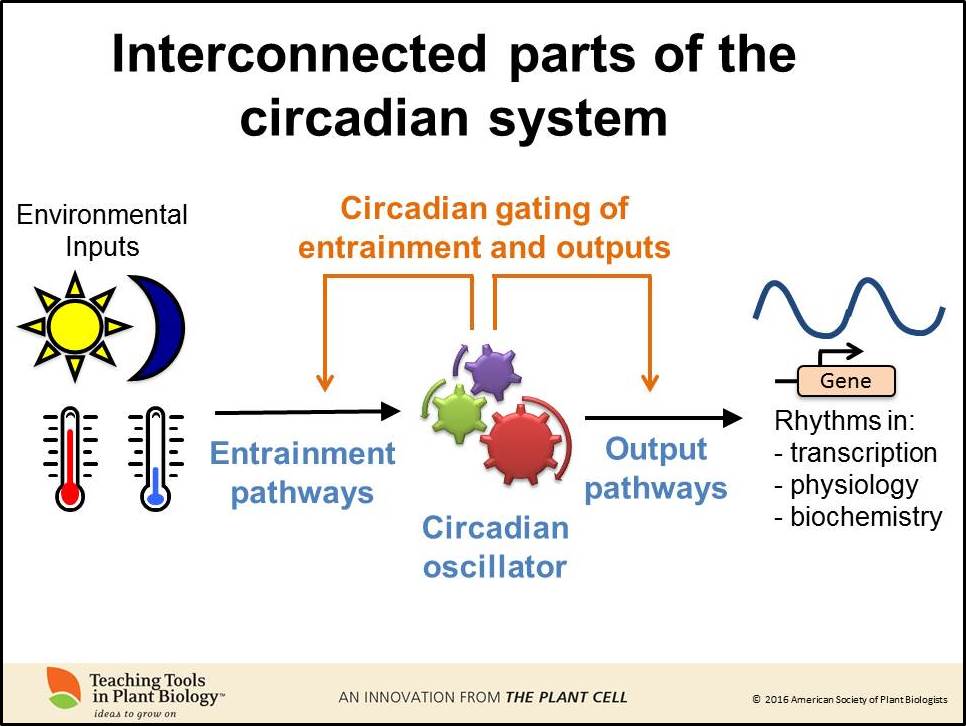
Light and temperature are the two main environmental signals that keep plant clocks in sync with the outside world. These signals help reset the internal clock so that its timing matches the local day and night cycle.
The process of matching an internal rhythm with an outside cycle is called entrainment. Without regular signals, a plant clock may slowly move away from the local sunrise and sunset times. Daily environmental cues help correct this difference.
Light is a strong timing signal. Plants use special light-sensing proteins called photoreceptors. These proteins detect changes in light and send information to the clock system.
Temperature also provides useful timing information. A regular pattern of warm days and cooler nights can help set the clock. This is useful because daylight and temperature often change together in natural settings.
Source: thetattooedteacher.com
Light
Light at dawn and changes in light during the day help set the timing of the internal clock.
Darkness
The dark period provides important timing information and helps plants maintain normal night-related processes.
Temperature
Regular warm and cool periods can help adjust the phase of the plant clock.
Metabolic signals
Changes in sugar levels and other internal signals can also interact with clock activity.
How Light Resets the Internal Clock
When light reaches a plant, photoreceptors detect its presence and quality. Different photoreceptors respond to different parts of the light spectrum. Their signals affect clock genes and help adjust the timing of the internal cycle.
Dawn is especially useful as a timing signal. It tells the plant that a new light period has begun. Evening changes also provide information about the end of the day.
This system allows plants to prepare for sunlight instead of waiting until light is already strong. It also helps connect daily growth and metabolic activity with the local light schedule.
How Temperature Changes Affect the Clock
A repeating temperature cycle can help reset a plant clock. For example, a cooler night followed by a warmer morning can provide a regular signal.
The effect depends on the size and timing of the temperature change. Small, short-term changes may have little effect on the clock. Stronger changes can shift its phase.
Light and temperature work together in natural conditions. If the two signals do not match, plants may need to balance both when setting their internal timing.
What Are Zeitgebers?
A zeitgeber is an outside signal that helps set a biological clock. The word means time giver. In plants, light and temperature are the main daily zeitgebers.
A zeitgeber does not create the entire clock. It adjusts the timing of a system that already works inside the plant. This is why a plant can keep a rhythm for a while without receiving a new signal.
What Do Plant Circadian Rhythms Control?
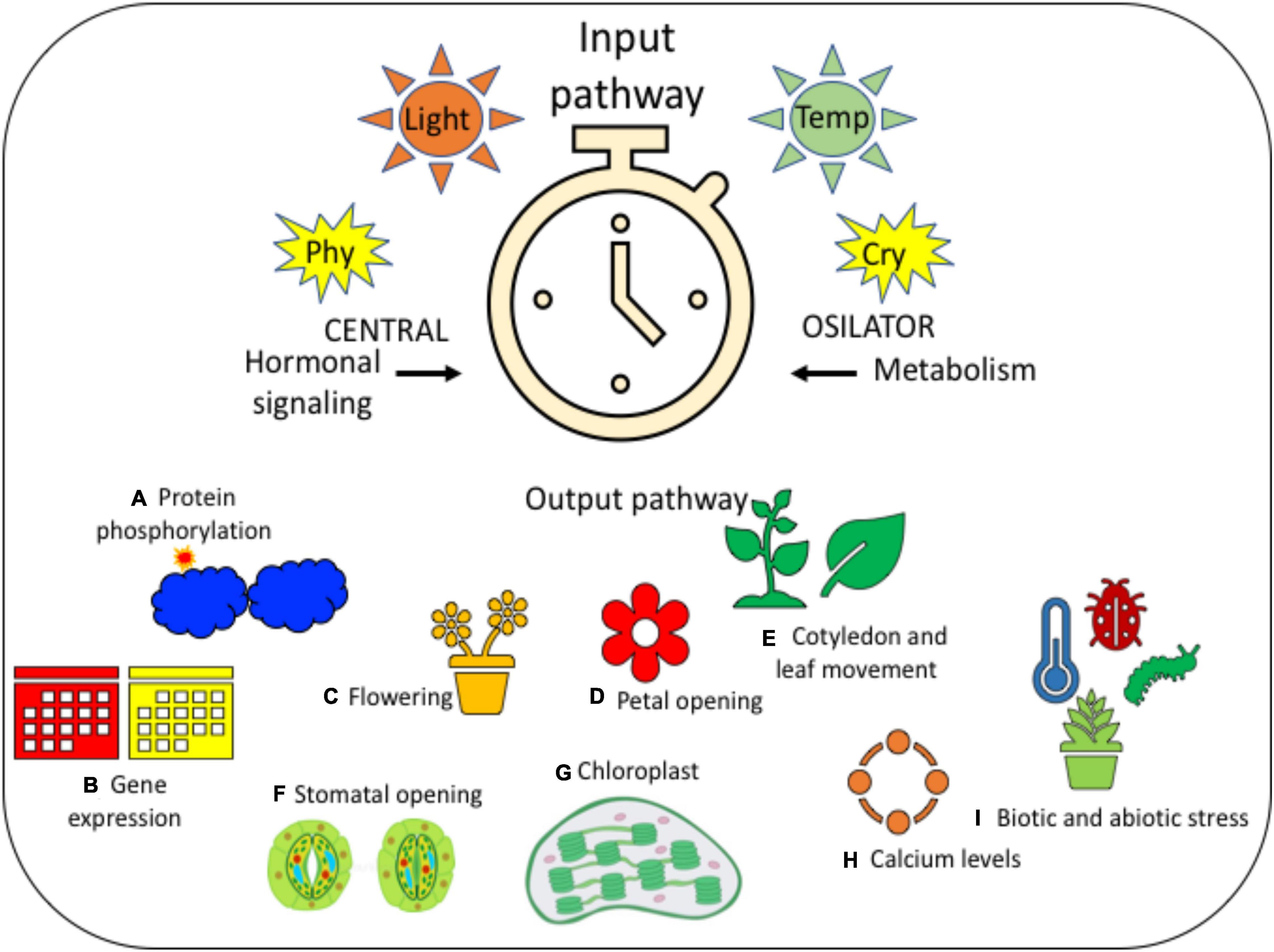
Plant circadian rhythms control many activities that affect daily growth and survival. They help plants prepare for light, manage water loss, use stored food, and control the timing of growth.
The clock does not work alone. Light, temperature, water supply, and other conditions also affect plant activity. The internal clock helps organize these responses so that they happen at useful times.
A major benefit is anticipation. For example, some plants begin preparing their stomata for daylight before the sun rises. This can help leaves take in carbon dioxide when light becomes available.
A well-known 2005 study by Dodd and colleagues tested Arabidopsis plants with different clock periods. Plants whose internal clocks matched the outside light and dark cycle showed better photosynthesis, growth, and survival than plants with clocks that did not match. This supports the value of good biological timing, although the results should not be treated as a universal growth formula for every crop.
Source: slideserve.com
Photosynthesis
The clock helps coordinate the activity of genes and proteins involved in capturing light and using carbon dioxide.
Stomatal movement
It helps control the timing of the tiny leaf pores that allow carbon dioxide to enter and water vapor to leave.
Plant metabolism
The clock helps organize the production, storage, and use of sugars during the day and night.
Growth
Some growth processes and hormone responses follow daily patterns controlled in part by the clock.
Flower movement
Some flowers open and close at regular times to match the activity of pollinators and other environmental conditions.
Photosynthesis and Stomatal Movement
Photosynthesis allows plants to use light energy to make sugars. It needs light, water, and carbon dioxide. The plant clock helps prepare the photosynthetic system for the expected light period.
Stomata are tiny openings found mainly on leaves. Each opening is controlled by two guard cells. When the guard cells change shape, the pore opens or closes.
Many plants open their stomata during the day. This allows carbon dioxide to enter for photosynthesis. The clock can help stomata prepare for daylight before sunrise.
However, not all plants follow the same pattern. Many CAM plants, including several succulents, open their stomata mainly at night. This helps them take in carbon dioxide while limiting water loss in hot, dry conditions.
Carbohydrate Storage and Nighttime Growth
Plants make sugars during photosynthesis. Some of these sugars are used at once, while others are stored as starch. The stored starch provides energy and carbon when sunlight is not available.
At night, many plants break down starch and use the released sugars for growth and other cell activities. The circadian clock helps control the timing of this process.
A 2010 study of Arabidopsis showed that the plant adjusts starch use to the expected length of the night. This helps prevent the stored supply from running out too early before the next day begins.
Research published in The Plant Cell in 2023 also found links between leaf starch metabolism and the timing of stomatal rhythms. This shows that the clock and plant metabolism work together.
Leaf Movement and Flower Opening
Some plants change the position of their leaves during the day and night. This behavior is often called nyctinasty. It can make leaves rise, lower, or fold as the internal clock changes.
Plants such as Mimosa pudica are well known for their leaf movements. Prayer plants also show visible changes in leaf position between day and night. These movements can continue for a time under steady conditions.
Some flowers also have daily opening and closing patterns. Daisies may open during daylight and close at night. These patterns can help match flower activity with pollinator visits and other conditions.
Plant Hormones and Daily Growth
Plant hormones control many parts of growth and development. These include stem extension, root growth, leaf expansion, and flowering.
The circadian clock can change when certain hormone pathways are most active. This is called circadian gating. It means that a plant may respond more strongly to the same signal at one time of day than at another.
This timing helps plants organize growth and use resources. It also helps explain why some growth processes show clear daily patterns even when the plant receives a steady supply of water and nutrients.
How Are Circadian Rhythms Different From Photoperiodism?
Circadian rhythms and photoperiodism are closely linked, but they are not the same thing. Circadian rhythms help plants track the time of day. Photoperiodism describes how plants respond to the length of daylight and darkness.
Photoperiodism is important for seasonal growth and flowering. Many plants use changes in day length to decide when to flower, form buds, or enter a resting stage.
The circadian clock helps plants measure these changes. It allows a plant to compare light signals with its internal timing. This gives the plant information about the season.
For example, a plant may respond to a light signal only when it arrives during a certain internal time window. This process is one way the clock helps control seasonal flowering.
Source: blog.aspb.org
Circadian rhythm
An internal timing cycle that usually lasts close to 24 hours and controls many daily biological activities.
Photoperiodism
A plant response to the length of light and dark periods, often used to time flowering and seasonal development.
Connection
The circadian clock helps plants interpret day length and decide when to begin seasonal changes.
Long-Day Plants
Long-day plants often flower when the day becomes longer than a certain critical length. Many respond to the length of the night as well as the light period.
Plants such as spinach and lettuce can show long-day flowering responses, although the exact response depends on the species and variety. Some varieties also have different temperature needs.
The internal clock helps these plants detect the right timing of light signals. This helps connect daily timekeeping with seasonal development.
Short-Day Plants
Short-day plants often flower when nights become longer than a certain critical length. Chrysanthemums and some rice varieties are examples of plants with short-day flowering responses.
A long period of darkness can provide the signal needed for flowering in these plants. Interrupting the dark period with light may change the response in some species.
The exact light and dark requirements vary by plant. Gardeners should check the needs of the specific species and variety rather than use one schedule for every plant.
Day-Neutral Plants
Day-neutral plants do not rely strongly on a specific day length to begin flowering. Their flowering may depend more on plant age, temperature, or other conditions.
This does not mean they lack a circadian clock. They still use internal daily timing for processes such as metabolism, growth, and stomatal movement.
How Gardeners Can Support Healthy Plant Rhythms
Gardeners can support normal plant rhythms by giving plants a suitable and steady light schedule. This is especially useful for indoor plants and seedlings grown under artificial lights.
Plants use light and darkness as timing signals. Frequent changes in the light schedule can shift their internal clocks. A consistent routine helps the clock stay closer to the natural day and night cycle.
The best schedule depends on the plant. A tropical foliage plant, a flowering annual, and a crop seedling may have different light needs. Their natural habitat and flowering response also matter.
Good plant care does not mean forcing every plant into the same daily routine. It means understanding the needs of each species and avoiding unnecessary changes.
Source: slideshare.net
Keep a steady light schedule
Use a regular time for turning grow lights on and off. A simple timer can help maintain a consistent routine.
Provide a suitable dark period
Many plants benefit from a regular period without artificial light. Follow the needs of the plant rather than assuming that more light is always better.
Avoid sudden light changes
Move plants into new lighting conditions gradually when possible. This gives them time to adjust.
Watch plant behavior
Look for changes in leaf position, new growth, flowering, and leaf color. These signs can help you understand how the plant responds to its environment.
Match care to plant needs
Use soil moisture, temperature, plant type, and growth stage to guide watering and feeding decisions.
Using Grow Lights Correctly
Grow lights can help indoor plants receive enough light when natural sunlight is limited. However, the timing of artificial light matters as well as its strength.
A timer can provide a regular light and dark cycle. Set it according to the needs of the plant. Do not assume that every plant needs the same number of light hours.
Continuous light is not suitable for every plant. Some species and varieties can develop leaf damage or other problems under long periods of uninterrupted light. Others can tolerate longer light periods under specific growing conditions.
Research on extended light and dark cycles in Solanaceae plants has shown that responses can vary with the plant species and lighting pattern. This is why a single lighting rule should not be applied to all crops.
Does Watering Time Affect Plant Circadian Rhythms?
The plant clock affects stomatal movement and water use. This means the timing of water loss can change during the day. However, this does not create one universal watering time for all plants.
A plant in a hot outdoor garden may lose water faster than one in a cool indoor room. Soil type, pot size, humidity, wind, and plant size also affect water needs.
Check the soil before watering. For many container plants, the upper part of the soil should be allowed to dry to the level suited to that species. Plants that need consistently moist soil require a different approach.
Watering should follow actual plant and soil needs. Do not let a fixed clock schedule replace regular checks.
Avoid Too Much Artificial Light at Night
Strong artificial light at night can change the light signals that plants receive. This may affect the internal clock and seasonal responses, especially in plants that use day length to time flowering.
The effect depends on light intensity, color, duration, distance, and plant type. A bright grow light left on all night is not the same as a brief, weak light from a nearby room.
Where practical, keep the normal dark period free from strong artificial light. This is a simple way to support a steady day and night pattern.
Do Not Confuse Clock Problems With Plant Stress
A plant with drooping leaves may need water, but leaf position can also change as part of a normal daily rhythm. Check the soil and the condition of the whole plant before deciding what is wrong.
Yellow leaves, poor growth, and weak flowering can have many causes. These include low light, excess water, root damage, pests, poor nutrition, and unsuitable temperatures.
A change in daily behavior alone does not prove that the circadian clock is damaged. Look at the growing conditions and check for other signs before making changes.
How to Observe Plant Circadian Rhythms at Home
You can observe some plant rhythms with simple tools. A plant with moving leaves or flowers is a useful choice. Prayer plants, Oxalis, and Mimosa pudica are examples that may show visible daily changes.
Choose a healthy plant and place it in a spot where the light and temperature are fairly steady. Watch its leaves or flowers at regular times. Take photographs from the same position so that small changes are easier to compare.
Record the time, light conditions, temperature if available, and the position of the leaves. Continue for several days. Look for a pattern that repeats at roughly the same time.
A repeating pattern is useful evidence of daily behavior. However, it does not prove that the behavior is controlled only by the internal clock. Light and temperature may still be causing some of the changes.
Choose a suitable plant
Select a plant with visible leaf or flower movement. A plant with healthy leaves will make changes easier to observe.
Keep conditions steady
Avoid moving the plant or changing its light schedule during the observation period.
Take regular photographs
Use the same camera position and take pictures at set times during the day and night.
Keep a simple record
Write down the time, leaf position, light conditions, and any unusual changes.
Compare several days
Look for a repeating pattern rather than drawing a conclusion from one day of observation.
A Simple Leaf Movement Experiment
Place a prayer plant or Oxalis in a location with a stable daily light schedule. Take a photograph in the morning, around midday, in the evening, and at night.
Repeat the same process for three to five days. Compare the leaf positions at similar times. If the movement follows a regular pattern, you have observed a daily plant rhythm.
You can also observe the plant during a short period when the outside light pattern changes less. However, a home setting is not a controlled laboratory. A clear test of a true circadian rhythm requires constant conditions and careful measurements.
How Scientists Test True Circadian Rhythms
Scientists first grow plants under regular light and dark cycles. This helps synchronize their internal clocks. They then move the plants into carefully controlled conditions with steady light and temperature.
Researchers measure changes in leaf movement, gene activity, or other biological processes over several cycles. If the pattern continues without normal daily environmental signals, this supports the presence of an internal circadian rhythm.
Scientists may also compare plants with different clock genes. This helps them understand which parts of the internal system control the observed pattern.
Common Mistakes and Misunderstandings
Plant circadian rhythms are often confused with other daily and seasonal responses. Understanding the differences helps prevent mistakes when studying plants or caring for them.
A visible change does not always mean that the internal clock caused it. Water stress, heat, direct sunlight, and physical contact can also change leaf position. The clock may work with these signals rather than control them alone.
Another common mistake is assuming that all plants follow the same schedule. Different species have different light needs, flowering patterns, and water-use strategies.
Mistake: Every plant follows a 24-hour cycle in the same way
Correction: Most plant clocks run close to 24 hours, but their exact periods and visible behaviors can differ.
Mistake: Plants only respond to sunlight
Correction: Plants also use internal timing, temperature signals, and other environmental information.
Mistake: All plants open stomata during daylight
Correction: Many plants follow this pattern, but CAM plants often open their stomata mainly at night.
Mistake: Circadian rhythms and photoperiodism mean the same thing
Correction: Circadian rhythms control daily timing, while photoperiodism describes responses to seasonal day length.
Mistake: More light always improves plant growth
Correction: Plants need suitable light and dark periods. Excessive light can harm some species.
Mistake: A drooping leaf always means the plant needs water
Correction: Some plants naturally change leaf position during the night. Check soil moisture and other signs before watering.
Why Plant Circadian Rhythms Can Change
The internal clock is stable, but it is not completely fixed. Changes in light, temperature, and other signals can adjust its timing. This is a normal part of how plants stay in sync with changing conditions.
A sudden change in the light schedule may shift the timing of some plant activities. A change in temperature may also affect the clock. The size of the effect depends on the species and the conditions.
Stress can also change plant behavior. Severe heat, drought, or poor growing conditions may affect both the clock and the processes it controls.
Limits of Current Plant Clock Research
Arabidopsis has helped scientists understand many clock genes. However, it is a model plant, not a complete example of every plant species. Crop plants, trees, succulents, and flowering plants can differ in their clock systems and daily responses.
Some basic clock functions appear across many plant groups, but the exact timing and effects may differ. Results from one laboratory species should not be treated as a direct growing rule for every garden plant.
More research is needed to turn clock biology into precise field advice. This is especially true for irrigation, crop protection, and light schedules across different climates and growing systems.
Useful Next Questions About Plant Circadian Rhythms
Understanding the internal clock often leads to practical questions about indoor lighting, watering, flowering, and leaf movement. The following gap map separates inferred reader needs from verified research findings. These questions are reasoned from the main topic and are not claims about measured search demand.
The reviewed educational and research material explains the basic clock, visible plant movements, molecular feedback loops, and seasonal timing. Practical decisions about grow-light schedules and watering receive less detailed treatment in some of the general educational material. The coverage labels below apply only to the pages reviewed, not to the entire internet.
INFERRED NEXT NEED: Does a grow light need to turn off at night?
Reader stage: Plant setup. Reviewed coverage: SHALLOW. Evidence: Research on extended light and dark cycles shows that plant responses vary by species and lighting pattern. Reader benefit: Helps indoor growers avoid assuming that continuous light is suitable for every plant. Priority: High. Placement: Grow light care section.
INFERRED NEXT NEED: Should I water plants at a certain time of day?
Reader stage: Daily plant care. Reviewed coverage: SHALLOW. Evidence: Circadian rhythms affect stomatal movement and transpiration, but soil moisture and environmental conditions also control water needs. Reader benefit: Prevents gardeners from using an unsupported universal watering schedule. Priority: Medium. Placement: Watering section.
INFERRED NEXT NEED: How can I tell whether leaf movement is circadian?
Reader stage: Observation and troubleshooting. Reviewed coverage: ANSWERED at the basic level, with limited practical home testing detail. Evidence: Repeated observations and controlled constant-condition experiments can help distinguish internal rhythms from direct environmental responses. Reader benefit: Helps readers interpret leaf movements correctly. Priority: Medium. Placement: Home observation section.
INFERRED NEXT NEED: Does the internal clock control flowering?
Reader stage: Seasonal plant planning. Reviewed coverage: ANSWERED at the general level. Evidence: Research on circadian regulation and photoperiodism explains how internal timing helps plants measure day length. Reader benefit: Helps gardeners understand flowering differences between plant groups. Priority: Medium. Placement: Photoperiodism section.
What Should Gardeners Do Next?
Start by identifying the plant species and learning its normal light needs. Then check whether it has a clear dark period and whether its daily behavior follows a repeating pattern.
If you grow plants indoors, use a steady light schedule that suits the species. If you grow plants outdoors, observe how natural daylight and seasonal changes affect their growth.
Keep notes for several days before changing the care routine. This makes it easier to separate normal daily behavior from a problem caused by light, water, or temperature.
Frequently Asked Questions
Q
Do plants have circadian rhythms without sunlight?
Yes. Plants can keep their internal rhythms for a time without normal sunlight and darkness. Their clocks are generated inside their cells, so they do not need a new sunlight signal for every cycle.
Scientists test this by moving plants into constant laboratory conditions after first setting their clocks with regular light and dark periods. Rhythmic activity can continue for several cycles.
Q
Do all plants have a 24-hour circadian rhythm?
Most studied plants have an internal clock with a period close to 24 hours. However, the exact period can differ between species and growing conditions.
Plants also differ in the biological activities controlled by their clocks. Some show clear leaf movements, while others show rhythms mainly through changes in gene activity, metabolism, or growth.
Q
Do plants sleep at night?
Plants do not sleep in the same way that animals do. However, many plants change their activity during darkness. Photosynthesis stops without light, while nighttime metabolism, starch use, and some growth processes continue.
Some plants also fold or lower their leaves at night. These changes are part of their daily biological rhythms, not animal-like sleep.
Q
How many hours of darkness do plants need?
There is no single dark-period rule for all plants. Their needs depend on species, variety, growth stage, and flowering response.
Some plants tolerate long light periods, while others need a regular dark period for normal growth or flowering. Follow species-specific growing guidance when setting indoor grow lights.
Q
Can changing a plant’s light schedule reset its internal clock?
Yes. Changes in light timing can adjust the phase of a plant’s circadian clock. A new sunrise time or a change in artificial lighting may shift when certain biological activities take place.
The response depends on the plant and the size of the change. A steady schedule is usually easier for plants to follow than frequent, sudden changes.
✦ Wrapping Up
Conclusion
Plant circadian rhythms help plants keep time. These internal cycles coordinate daily activities such as photosynthesis, stomatal movement, metabolism, leaf movement, and growth. They also help plants connect daily timing with seasonal changes.
Light and temperature keep the internal clock in sync with the environment. The clock then helps the plant prepare for expected changes instead of reacting only after they happen.
For gardeners, the main lesson is simple. Give plants the light and dark schedule that suits their species, avoid unnecessary changes, and observe their natural patterns. A better understanding of plant timekeeping can lead to more informed growing decisions.
💡 Key Takeaway
Choose one plant and observe its leaves or flowers at the same times for several days. Keep its light schedule steady, record any changes, and compare its behavior across day and night. Use what you observe to understand its natural rhythm before changing its care routine.