Plant vegetative growth stages are the steps in which a plant builds its roots, stems, branches, and leaves before or during its shift toward flowering. The main stages include seedling establishment, leaf development, stem growth, branching, and canopy development.
In the United States, gardeners and farmers watch plant growth from the first spring seedlings to full-grown crops. A tomato plant in a backyard garden, a young maple tree, and a corn crop in the Midwest all pass through periods of active growth. During these periods, plants build the parts they need to take in light, water, and nutrients.
The vegetative stage is the part of plant development focused on roots, stems, and leaves. These parts help the plant collect resources and build the strength needed for later growth. The exact stages vary by plant type, so a corn plant does not follow the same stage chart as a soybean or a garden flower. Learning the main signs makes it easier to judge plant health, plan care, and spot growth problems early.
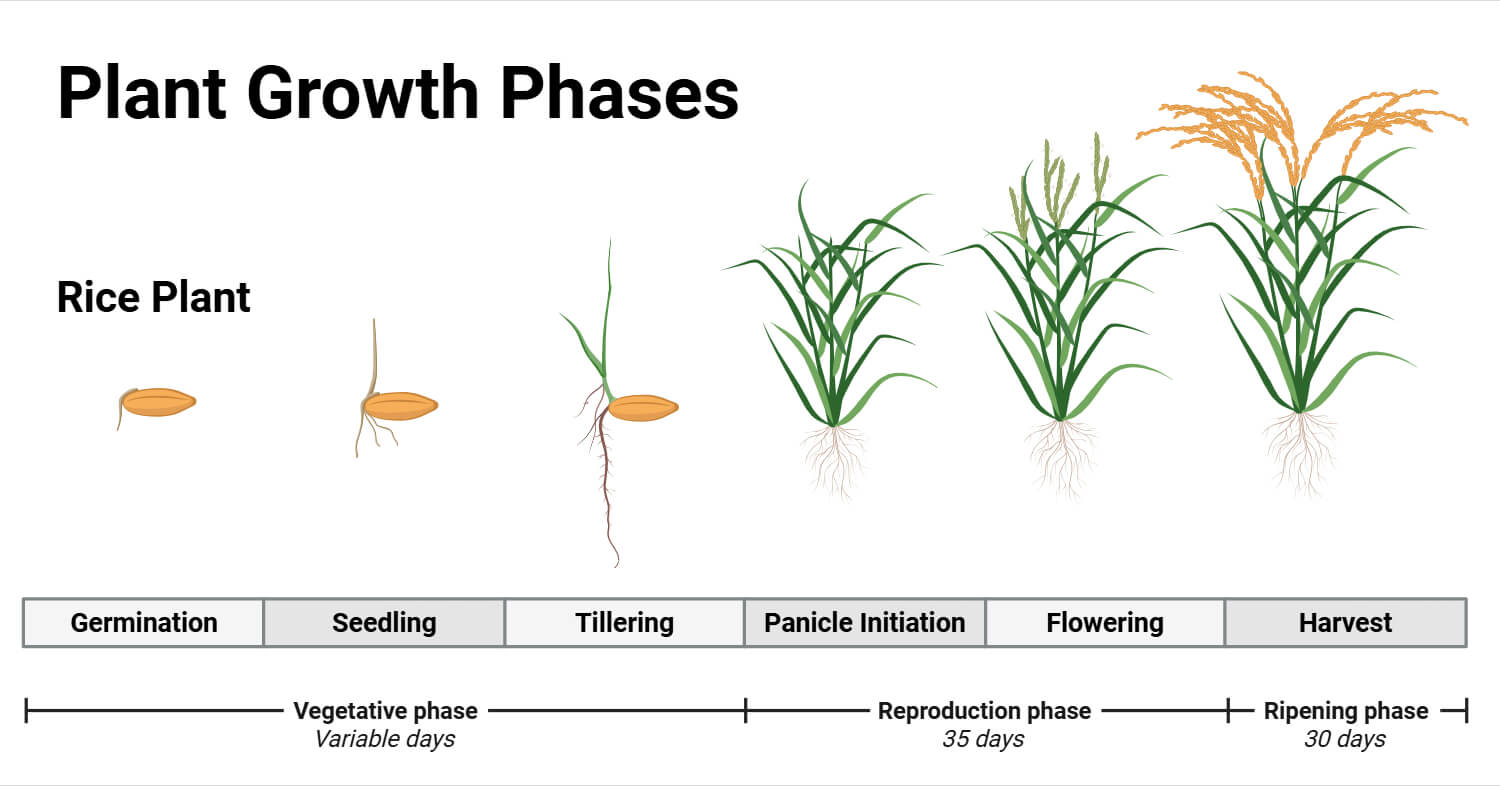
display: block; margin: 0 auto;”>
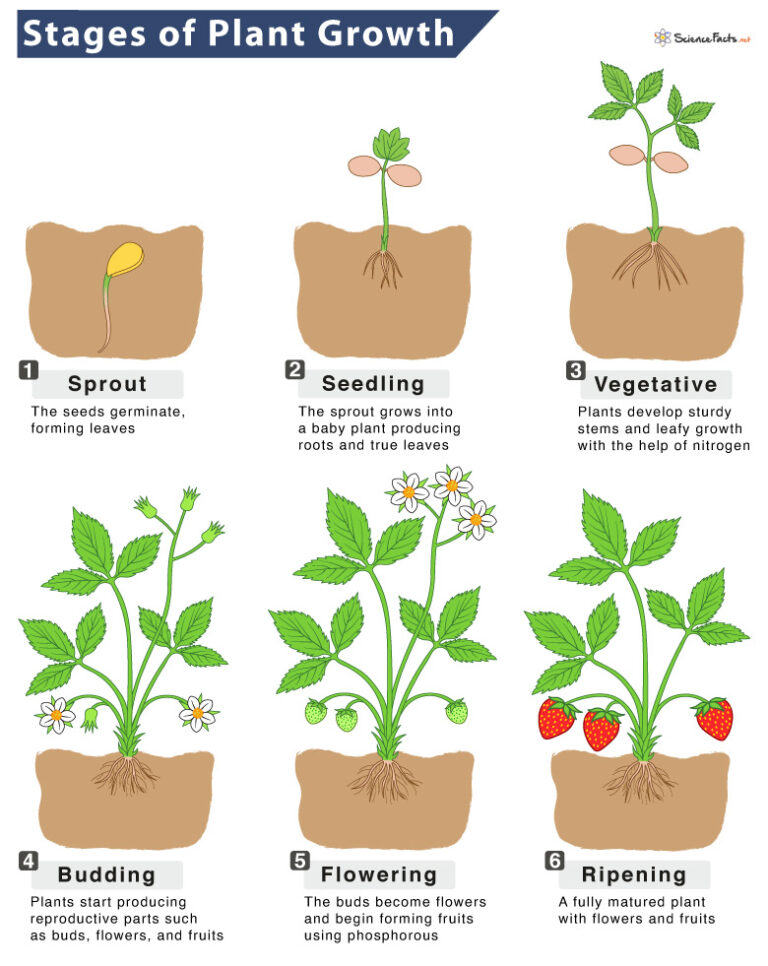
Source: microbenotes.com
What Are Plant Vegetative Growth Stages?
Plant vegetative growth stages describe the steps a plant takes while building its main body. These steps focus on roots, stems, leaves, and side shoots. They help a plant grow larger and collect the resources it needs.
A plant uses its roots to take in water and minerals. Its leaves capture light and make sugars through photosynthesis. Its stems hold the leaves up and move water and food to different parts of the plant.
The vegetative phase often starts around seedling emergence and continues until the plant begins its reproductive phase. However, the exact start and end points depend on the species and the staging system. Some plants also keep growing new leaves after their first flowers appear.
Plant growth is driven by small groups of cells called meristems. These cells divide and make new plant tissue. Shoot tips help form new stems and leaves, while root tips help roots grow deeper or spread through the soil.
Vegetative growth is not just a way to make a plant look bigger. It builds the leaf area needed to collect light, the root system needed to take in water, and the stem structure needed to hold the plant upright.
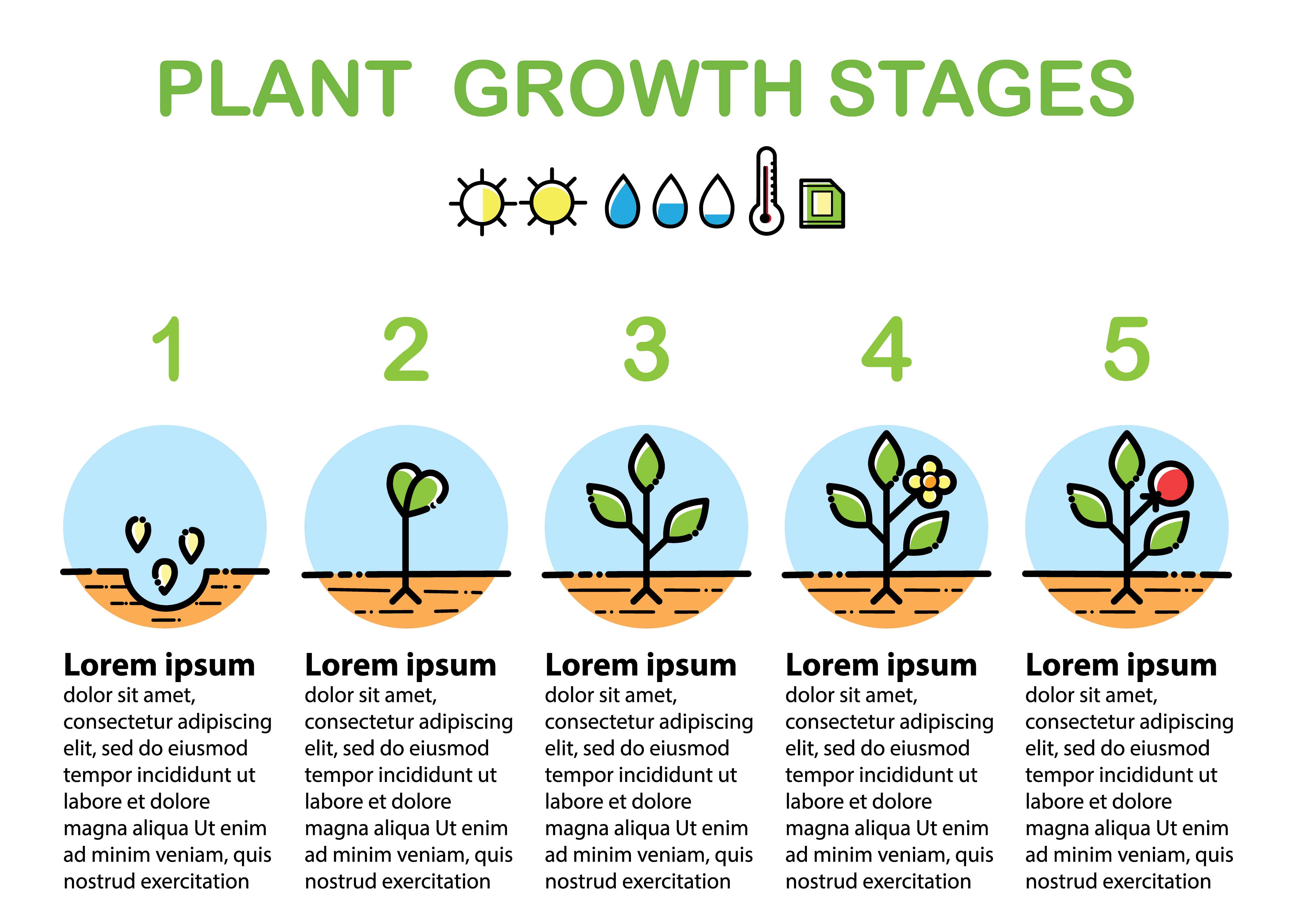
Source: pinterest.ca
Root development
Roots spread through the soil and take in water and mineral nutrients. They also help hold the plant in place.
Stem development
Stems grow longer or thicker and support leaves, branches, and other plant parts.
Leaf development
New leaves open and add more surface area for photosynthesis.
Branch development
Side buds may grow into new shoots. This can make the plant wider and add more growing points.
Vegetative Growth Versus Reproductive Growth
Vegetative growth builds the plant body. Reproductive growth makes flowers, fruits, cones, or seeds. These two types of growth have different main goals, but they can overlap.
For example, a tomato plant may keep making new leaves and stems while its first flowers develop into fruit. A tree may also add new shoots while forming flowers or fruit. The change is not always a sudden stop in leaf growth.
Vegetative phase
The plant mainly develops roots, leaves, stems, and branches.
Reproductive phase
The plant forms flowers or other reproductive structures and begins seed or fruit development.
The Main Plant Vegetative Growth Stages
Most garden and crop plants pass through several clear steps as they develop their roots and shoots. These steps provide a useful way to understand plant growth, even though the names and timing vary by species.
A simple model has five main stages: seedling emergence, establishment, leaf development, stem and branch growth, and canopy development. These stages may overlap, and some plants skip or change parts of this pattern.
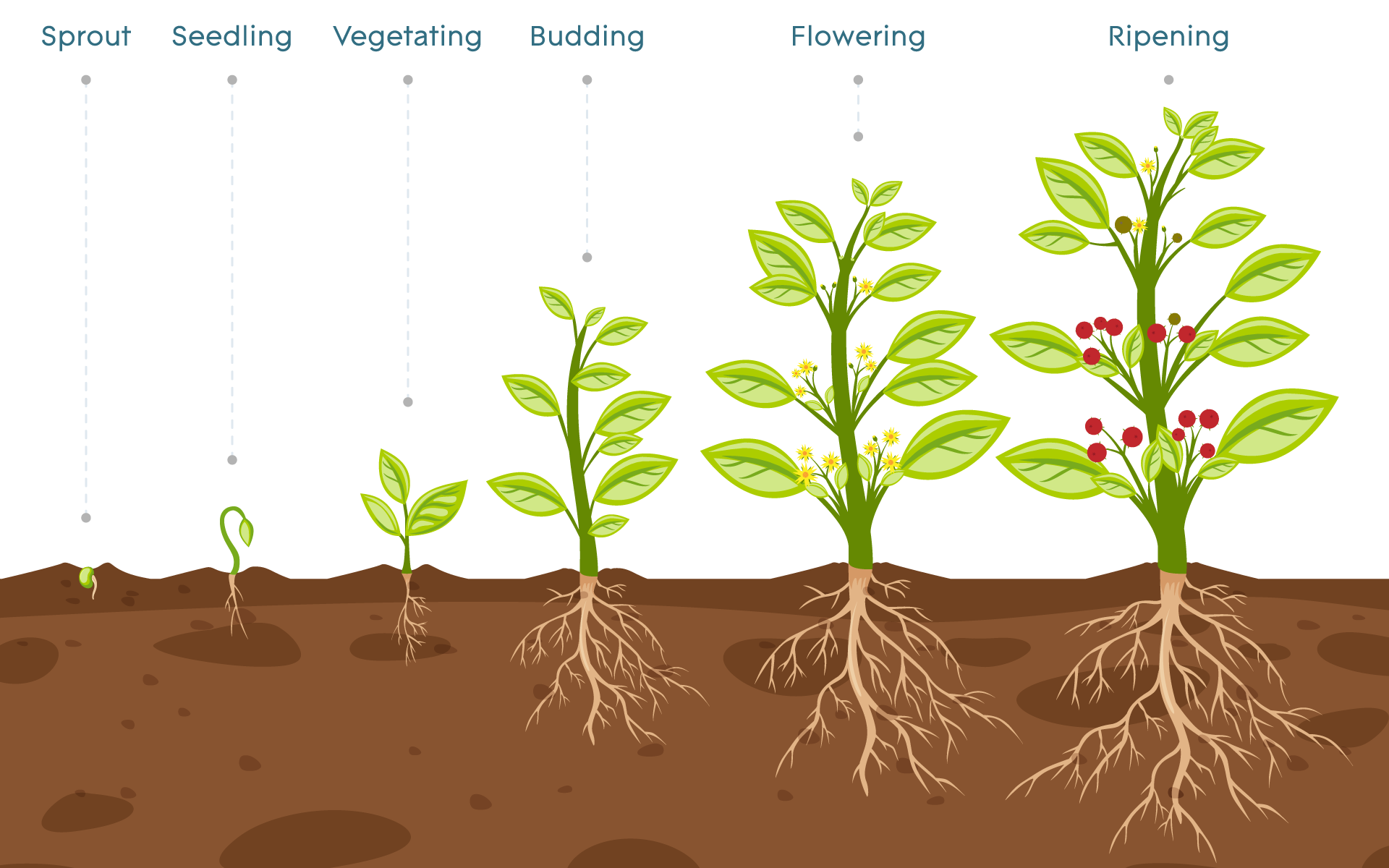
Source: storage.googleapis.com
Stage 1: Seedling emergence
The young shoot reaches the soil surface and begins to open its first leaves.
Stage 2: Seedling establishment
The young plant develops true leaves and builds a stronger root system.
Stage 3: Active leaf development
New leaves form and expand as the plant increases its ability to make food.
Stage 4: Stem growth and branching
Stems extend, new nodes form, and side shoots may develop.
Stage 5: Canopy development
The plant builds a larger leaf area and a stronger shoot system before or during the transition to flowering.
Stage 1: Seedling Emergence
Seedling emergence begins when the young shoot grows out of the soil. Before this happens, a germinating seed takes in water. Its outer coat softens, and the first root, called the radicle, starts to grow.
The young shoot then moves toward the soil surface. Once it reaches the light, its first green parts can begin to take part in photosynthesis. The seed still provides stored food during this early period.
Different plants emerge in different ways. Beans often push their seed leaves above the soil. Peas can keep their seed leaves below the soil. Corn uses a protective shoot structure called a coleoptile to help its young shoot reach the surface.
A healthy seedling usually has a firm stem, fresh color, and roots that begin to spread. Very wet soil, dry soil, deep planting, and cold conditions can slow or prevent emergence.
Visible sign
A young shoot or seed leaves appear above the soil.
Main growth task
The plant establishes its first root and shoot structures.
Care need
Keep the root zone moist but not waterlogged, and avoid disturbing the young shoot.
Stage 2: Seedling Establishment
Seedling establishment begins as the first true leaves appear and the roots become more active. True leaves usually look more like the leaves of the mature plant than the first seed leaves do.
The first seed leaves are called cotyledons. They often hold stored food that helps the young plant get started. True leaves take on a larger role in photosynthesis as they expand.
At this stage, the plant must build a good balance between its roots and shoots. A small shoot with healthy roots may be stronger than a tall plant with weak roots. Strong roots help the plant take in water and nutrients as its leaves grow.
This is a sensitive stage. Root damage, poor drainage, pests, and sudden changes in sunlight can slow growth. A young plant may also wilt when its roots cannot replace water lost through its leaves.
Visible sign
The first true leaves unfold and the stem becomes firmer.
Main growth task
The root system grows and the plant begins to rely more on its own leaves.
Care need
Give the plant suitable light, steady moisture, and enough room for root growth.
Stage 3: Active Leaf Development
Active leaf development is the stage when the plant makes new leaves at a faster rate. Each healthy leaf adds more surface area for light capture. This helps the plant make more sugars to support its growth.
New leaves often form near the growing tip of a stem. They start small and may look folded or soft. As they grow, they spread out and become firmer.
The number of leaves is not the only sign of progress. Leaf size, color, shape, and spacing also matter. A plant with many small, pale leaves may have a problem with light, water, roots, or nutrients.
Leaf growth can differ across plant types. A lettuce plant makes a dense group of leaves, while a young sunflower grows leaves along an upright stem. Both are in active vegetative growth.
Visible sign
New leaves appear, expand, and become more like the mature leaves of the plant.
Main growth task
The plant builds more leaf area for photosynthesis.
Care need
Provide enough light and avoid stress from dry soil, poor drainage, or excess fertilizer.
Stage 4: Stem Growth and Branching
Stem growth becomes easier to see as the plant gets taller or wider. The spaces between points where leaves attach may grow longer. These spaces are called internodes. The points where leaves or branches attach are called nodes.
Many plants also begin to form side shoots. These shoots often grow from small buds found near the base of a leaf. These are called axillary buds. They may stay small, or they may develop into full branches.
Some plants grow as a single main stem. Others form many side branches. Corn and many grasses can form extra shoots called tillers, while tomatoes and peppers may develop side branches from leaf joints.
A plant’s growth pattern depends on its genes and its growing conditions. Light, spacing, plant age, and pruning can affect how much it branches. Removing the growing tip can also change the balance between the main shoot and side buds in some plants.
Visible sign
The main stem grows, new nodes appear, and side shoots may develop.
Main growth task
The plant adds support tissue and new growing points.
Care need
Allow enough space and provide support when the plant type needs it.
Stage 5: Canopy Development
Canopy development is the stage when the plant has a larger network of leaves and shoots. The canopy is the group of leaves and branches above the ground. It helps the plant capture light from the space around it.
A strong canopy can support later flowering and fruit or seed growth. However, a very dense canopy can also block light and air from reaching lower leaves. This may increase the risk of some leaf diseases when moisture stays on the plant for long periods.
The plant may also begin to form the first signs of reproductive growth during this stage. A growing tip may change from making leaves to making flowers or other reproductive parts. This change is called floral transition.
The timing depends on plant type, age, day length, temperature, and other signals. Some plants make a large leaf system before flowering. Others flower while they are still quite small.
Visible sign
The plant has a fuller canopy, more branches, and many expanded leaves.
Main growth task
The plant builds the leaf area and structure needed for its next stage.
Care need
Check spacing, airflow, light access, and the first signs of flower formation.
How to Identify a Plant’s Vegetative Growth Stage
You can identify a plant’s growth stage by looking at its leaves, nodes, stems, and growing tips. The best method depends on the plant. A general garden plant may need only a simple visual check, while a field crop may need a formal stage code.
Start by finding the main stem or main shoot. Look for the newest leaves and the points where older leaves attach. Then check whether the plant is still making leaves, has started to branch, or has begun to form flowers.
Do not judge a plant by height alone. Two plants of the same age may have very different heights because of their variety, light, soil, and weather. A short plant may be well established, while a tall plant may have stretched due to low light.
For a more useful record, check several plants of the same type. Write down the date, the number of fully formed leaves or nodes, and any new branches or flower buds. This makes it easier to compare growth over time.
Source: electrovagant.de
Check the true leaves
Look for leaves that have opened and expanded. Do not count seed leaves as true leaves unless the crop’s staging guide tells you to.
Find the nodes
A node is the place where a leaf attaches to the stem. Count visible nodes when the plant’s stage system uses this method.
Look for new branches
Check the leaf joints and the base of the main stem for side shoots.
Check the growing tip
Look for new leaf growth or signs that the tip may be forming a flower or other reproductive structure.
Compare several plants
Use a group of healthy, typical plants rather than relying on one unusually large or small plant.
Understand Nodes and Internodes
Nodes and internodes are two useful parts of a stem. A node is the point where a leaf, bud, or branch attaches. An internode is the stem section between two nodes.
When a plant grows, it may add new nodes or extend the internodes that are already present. Counting nodes can help show how far a plant has developed, while internode length can help explain why a plant looks tall or short.
Long, weak internodes may point to low light or strong competition for light. Short internodes may be normal for compact plant types. Always compare the plant with its own variety and normal growth form.
Node
The point on a stem where a leaf or branch grows.
Internode
The section of stem between two nodes.
Growing point
The active tip where new stem and leaf tissue may form.
Vegetative Growth Stages in Different Plant Types
Not all plants use the same stage system. General gardening guides often describe broad phases, while crop guides use exact signs that can be counted in the field. This difference matters when you need to compare plants or plan farm work.
Corn, soybeans, and wheat are good examples. Each crop has a system that matches its own growth pattern. These systems help farmers and crop advisers describe plant development in a clear way.
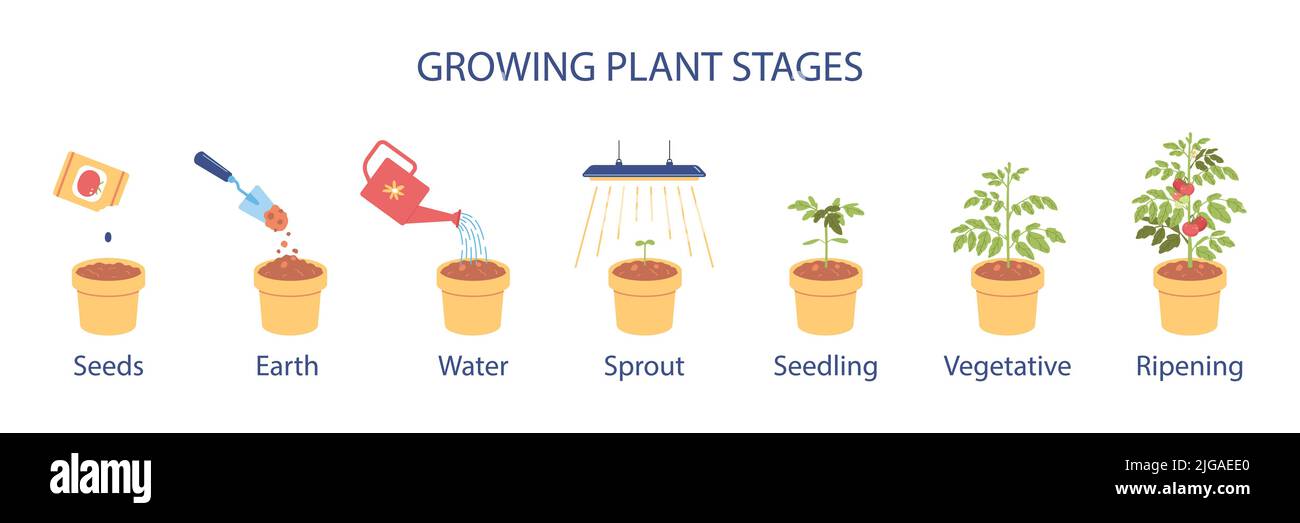
Source: alamy.com
Corn
Uses visible leaf collars to identify its vegetative stages.
Soybeans
Use fully developed leaves and main stem nodes to identify vegetative stages.
Wheat
Uses a decimal growth scale that includes leaf production, tiller growth, and stem node development.
Garden plants
Often use broad visual signs such as true leaves, branching, and canopy growth.
Corn Vegetative Growth Stages
Corn uses a system that starts with emergence and continues through tassel formation. Its vegetative stages are marked with the letter V and a number. The number shows how many leaf collars are visible.
The first stage is VE, which means emergence. V1 means one visible leaf collar, V2 means two, and the count continues as more leaves develop. The collar is the pale band where the leaf blade joins the leaf sheath.
The last vegetative stage is VT, when the tassel is visible. The next stage, R1, begins when silks appear outside the husk. This system helps farmers judge when a crop may be affected by stress or when a field task should be done.
VE
The young corn shoot has emerged from the soil.
V1
The first leaf collar is visible.
V2
Two leaf collars are visible.
V(n)
The number shows the count of visible leaf collars.
VT
The tassel is visible, marking the end of the vegetative stage.
Soybean Vegetative Growth Stages
Soybeans use a different system. Their vegetative stages are marked as VE, VC, V1, V2, and higher V numbers. The system looks at cotyledons, unifoliolate leaves, and nodes on the main stem.
VE means the cotyledons have appeared above the soil. VC means the first pair of single leaves has opened enough for the leaf edges to stop touching. V1 means the first node has a fully developed leaf. Later stages use the number of fully developed nodes on the main stem.
A leaf counts as fully developed when the next younger leaf has opened enough for its leaflets to partly unroll and stop touching. This rule helps make field checks more consistent.
VE
The cotyledons are above the soil.
VC
The first pair of unifoliolate leaves has opened.
V1
The first node has a fully developed leaf.
V(n)
The number represents fully developed nodes on the main stem.
Wheat and Other Small Grains
Wheat uses the Zadoks decimal growth scale. Its early stages include germination, leaf production, tiller production, and stem node development. Later stages cover reproductive growth and grain development.
One useful detail is that wheat leaf growth and tiller growth can happen at the same time. A plant may have several leaves on its main shoot and also have side shoots called tillers. This means more than one growth stage may describe the same plant at once.
This overlap is a good reason not to force every plant into one simple stage chart. A crop-specific system gives a more useful picture of what is happening.
Zadoks 0
Germination and early seed growth.
Zadoks 1
Leaf production on the main shoot.
Zadoks 2
Tiller production.
Zadoks 3
Stem node production and stem growth.
Vegetative Growth in Trees and Perennials
Trees and many perennial plants do not follow the same short growth pattern as annual garden crops. They may produce new shoots each spring, add new leaves, and increase the thickness of older stems and roots.
Young trees often focus on root and shoot growth. Older trees may keep making new leaves and branches while also adding wood to their trunks and limbs. This increase in thickness is called secondary growth.
Some perennials grow from crowns, bulbs, rhizomes, or other stored plant parts. Their new shoots may appear above the soil each season, even though the plant has an established root or storage system below ground.
New seasonal shoots
Fresh stems and leaves grow from buds or underground plant parts.
Secondary growth
Woody stems and roots increase in thickness.
Long-term development
The plant builds its size and structure over many growing seasons.
What Affects Plant Vegetative Growth?
Plant vegetative growth depends on several factors working together. A plant needs suitable light, water, air, temperature, nutrients, and enough room for its roots and leaves. A problem with one factor can slow the whole plant.
The best growing conditions depend on the plant type. A cool-season crop may grow well in mild weather, while a warm-season crop may grow slowly in cold soil. The same care plan will not work for every plant.
Source: freepik.com
Light
Light provides the energy plants use for photosynthesis. Too little light may cause weak stems and poor leaf growth.
Water
Water supports cell growth and carries dissolved minerals through the plant. Both drought and waterlogged soil can harm roots.
Temperature
Temperature affects seedling growth, root activity, leaf expansion, and the speed of plant development.
Soil and nutrients
Healthy soil supplies water, air, and mineral nutrients. Poor soil structure can limit root growth.
Space
Crowded plants may compete for light, water, and nutrients.
Light and Photosynthesis
Light is the energy source for photosynthesis. During this process, leaves use light, water, and carbon dioxide to make sugars. These sugars help build new roots, stems, and leaves.
Plants that receive too little light may grow tall and thin. Their stems may lean toward a window or other light source. This is often a sign that the plant is stretching to reach more light.
The right amount of light depends on the species. Some plants grow well in full sun, while others need shade or filtered light. Check the needs of the plant before changing its location.
Too little light
May cause pale leaves, weak stems, and slow growth.
Suitable light
Supports firm growth and healthy leaf color.
Too much direct sun
May cause leaf scorch in plants that are not suited to strong sunlight.
Water and Root Health
Water keeps plant cells firm and helps move nutrients from the roots to the shoots. Young plants need steady access to water because their root systems are still small.
Too little water can slow leaf expansion and cause wilting. Too much water can fill the air spaces in the soil and reduce oxygen around the roots. Roots need oxygen to stay active and support healthy growth.
Check soil moisture before watering. The soil surface can look dry while the root zone is still wet. A finger test or a simple soil probe can help you judge the moisture below the surface.
Dry root zone
Can cause wilting, leaf curl, and slow new growth.
Waterlogged soil
Can reduce root oxygen and raise the risk of root damage.
Balanced moisture
Supports steady root growth and leaf expansion.
Soil Nutrients and Plant Growth
Plants need several mineral nutrients to build healthy tissues. Nitrogen supports the growth of leaves and stems. Phosphorus plays a role in energy transfer and many cell processes. Potassium helps regulate water balance and supports many plant functions.
A lack of nutrients can lead to slow growth or changes in leaf color. However, pale leaves do not always mean the soil needs more fertilizer. Poor roots, high soil moisture, unsuitable soil pH, and pests can cause similar signs.
A soil test is a better starting point than adding fertilizer by guesswork. Use the results and the needs of the plant to guide any nutrient changes. Follow the product label and avoid adding more fertilizer than the plant and soil need.
Nitrogen
Supports the formation of proteins and chlorophyll and is important for leaf and stem growth.
Phosphorus
Supports energy transfer, root development, and other cell processes.
Potassium
Helps with water balance and many enzyme functions.
How to Support Healthy Vegetative Growth
Healthy vegetative growth starts with good growing conditions. You do not need to force a plant to grow faster. The better goal is to help it build strong roots, firm stems, and healthy leaves at its natural rate.
Start by checking the plant type and its normal needs. Then look at the soil, light, water, and space around it. Make one change at a time when possible, so you can see whether the change helps.
Use suitable soil
Choose a growing medium that drains well and holds enough water for the plant.
Give the right light
Match the light level to the plant’s needs and avoid sudden changes.
Water with care
Check the root zone and water when the soil and plant need it.
Check plant spacing
Give roots and leaves enough room to grow.
Use fertilizer with care
Base nutrient changes on plant needs and soil test results.
A Simple Step-by-Step Plant Growth Check
A regular plant check helps you spot changes before they become serious. It also gives you a clear record of how the plant moves from one stage to the next.
Use the same method each time. Check the same group of plants, look at the same parts, and record what you see. This makes it easier to tell normal growth from a sudden change.
Step 1: Identify the plant
Find the plant name or variety. Look up its normal growth form and preferred conditions.
Step 2: Check the roots and soil
Look for signs of good drainage, suitable moisture, and healthy root growth. Avoid pulling up an established plant unless there is a clear reason.
Step 3: Count new leaves or nodes
Use the method that fits the plant. Record new leaves, visible nodes, and side shoots.
Step 4: Check leaf and stem health
Look for normal leaf color, firm stems, fresh growth, and signs of pest or disease damage.
Step 5: Record the date
Write down the date and growth stage. Repeat the check after a suitable interval for the plant.
Step 6: Adjust care only when needed
If growth is poor, check the cause before adding water, fertilizer, or other treatments.
Signs of Healthy Vegetative Growth
A healthy plant usually shows steady new growth that matches its species and growing conditions. New leaves should open in a normal shape, and stems should be firm enough to support the plant.
Healthy roots are also important, even though they are often hidden. When a plant grows well above the soil but has weak roots below it, it may struggle during hot or dry weather.
Fresh new leaves
New leaves appear and expand without severe twisting, spots, or damage.
Firm stems
Stems support the plant and do not show unusual weakness or collapse.
Steady growth
The plant adds leaves, nodes, roots, or shoots at a rate that fits its type and season.
Healthy root zone
The soil drains well and roots show no clear signs of decay.
Common Vegetative Growth Problems and How to Fix Them
Slow growth does not always mean a plant is sick. It may be resting, growing roots, or responding to a change in weather. The first step is to compare the plant with its normal growth pattern and recent conditions.
Look at the symptoms before changing the care plan. A wilted plant may need water, but it may also have damaged roots in wet soil. Adding more water without checking the soil can make the problem worse.
Source: agrowtronics.com
Slow or stopped growth
Check light, soil moisture, temperature, root health, and the season before adding fertilizer.
Yellow leaves
Check drainage, root health, soil conditions, and the age of the leaves. Older leaves may turn yellow as part of normal growth.
Long, weak stems
Check whether the plant receives enough light and has enough space.
Brown or burned leaf edges
Check water stress, salt buildup, fertilizer use, and exposure to strong sun.
Wilting in wet soil
Check drainage and root health before adding more water.
Why Is My Plant Growing Slowly?
Slow growth may come from low light, cold soil, poor drainage, drought, root damage, or a lack of suitable nutrients. Some plants also grow slowly by nature, especially woody plants and many perennials.
Check the plant’s recent conditions. If the weather has become cold, the plant may slow down. If the roots are crowded or damaged, the shoots may stop growing even when the leaves look healthy.
Do not use a strong fertilizer as the first fix. If the problem comes from poor roots or waterlogged soil, more fertilizer will not solve it. Correct the growing condition that is holding the plant back.
Check light
Make sure the plant gets the amount of light its species needs.
Check soil moisture
Look below the surface to see whether the root zone is too dry or too wet.
Check roots
Look for signs of decay, severe crowding, or damage when inspection is safe and practical.
Check temperature
Compare current conditions with the plant’s normal growing range.
Why Are My Plant’s Stems Too Long and Weak?
Long, thin stems often develop when a plant does not receive enough light. The plant may stretch toward a brighter area. This response is known as shade avoidance or, in many cases, a form of etiolation.
Crowding can also cause plants to stretch as they compete for light. Move container plants only when the new spot matches their light needs. For garden plants, use suitable spacing and avoid placing tall plants where they block light from shorter ones.
Do not cut back every weak stem at once. First find the cause, then decide whether pruning, support, or a light change is suitable for the plant.
Improve light access
Place the plant where it can receive suitable light without causing sudden sun damage.
Reduce crowding
Give plants enough space for leaves to spread.
Add support if needed
Use a suitable stake or support for plants that naturally need help staying upright.
Why Are the Leaves Turning Yellow?
Yellow leaves can result from several problems. Older leaves may turn yellow as the plant grows and replaces them. But widespread yellowing may point to water stress, poor roots, nutrient limits, pests, or disease.
Check whether the yellow leaves are at the top, bottom, or across the whole plant. Also look for spots, soft stems, unusual odors, and wet soil. These details help narrow down the cause.
If many plants show the same problem, check the growing area for a shared cause. A soil test or help from a local plant clinic may be useful when the cause is not clear.
Older leaves only
May reflect normal leaf aging, especially when new growth looks healthy.
New leaves are pale
Check nutrient access, root health, soil pH, and water conditions.
Many leaves turn yellow
Check for a broad water, root, nutrient, pest, or disease problem.
When Does Vegetative Growth End?
Vegetative growth usually shifts toward reproductive growth when a plant begins forming flowers or other reproductive structures. The exact signal depends on the species. In some plants, the change happens after the plant reaches a certain age or size. In others, day length or temperature plays a major role.
The first visible flower bud is not always the first sign of the change. The growing tip may begin to form a flower before a bud can be seen. This means the internal change can start before the plant looks different from the outside.
Some annual plants move from leaf growth to flowering within one season. Biennial plants may grow leaves and store food during their first season, then flower in a later season. Perennials may repeat periods of vegetative growth over many years.
Flowering does not mean all vegetative growth stops. Tomatoes, peppers, and many fruit crops can keep making leaves and stems while flowers and fruits develop. The plant may shift how it uses sugars and nutrients, but its growing parts can remain active.
Flowering begins
The plant starts to form flowers or other reproductive structures.
Growth can overlap
New leaves and stems may still form after flowering starts.
Plant type matters
Annuals, biennials, and perennials may follow different growth patterns.
What Causes the Shift to Flowering?
The shift to flowering is controlled by plant genes and signals from the environment. Day length, temperature, plant age, and stored energy can all play a part. The effect of each signal depends on the plant.
Some plants flower when days become longer. Others flower when days become shorter. Day-neutral plants are less dependent on day length and may flower once they reach the right stage of development and growing conditions.
Temperature also matters. Some plants need a period of cool conditions before they can flower. This process is called vernalization. It is common in certain winter crops and biennial plants.
These differences explain why one plant may remain leafy while another flowers at the same time of year. Use the needs of the species rather than a fixed calendar date to judge its stage.
Day length
The length of daylight can affect the timing of flowering in many plant species.
Temperature
Warm or cool periods may help trigger flowering in certain plants.
Plant maturity
Some plants must reach a certain age or size before they can flower.
Stored energy
The plant’s energy reserves can help support the shift toward reproduction.
Common Mistakes When Reading Plant Growth Stages
Growth stage charts are useful, but they can cause confusion when people apply one plant’s system to another. A corn leaf collar count does not work as a general stage rule for a tomato or a maple tree.
Another common mistake is to treat plant height or age as the only measure of growth. A plant’s stage is based on the development of its parts, not just how large it looks.
Counting seed leaves as true leaves
Cotyledons are the first seed leaves. Many stage systems count later leaves or nodes instead.
Using one stage chart for every plant
Stage codes are often made for a certain crop or plant group.
Assuming all plants grow at the same speed
Variety, weather, soil, light, and plant health can change the time between stages.
Confusing height with development
A tall plant may have weak growth, while a short plant may have a healthy and well-developed root system.
Overusing fertilizer
Extra fertilizer cannot fix every growth problem and may harm roots or leaves.
Assuming flowering ends leaf growth
Many plants keep producing leaves and stems after flowering begins.
Why There Is No Universal Vegetative Growth Calendar
There is no single number of days or leaves that defines each vegetative stage for every plant. A fast-growing annual crop may pass through several stages in a short period, while a tree may add new growth over many seasons.
Even plants of the same species can differ. A variety bred for compact growth may have shorter stems than a tall variety. Plants grown in cool weather may also develop more slowly than plants grown in suitable warm conditions.
Use stage signs instead of fixed dates whenever possible. For farm crops, follow the stage guide for the exact crop. For home gardens, compare the plant with its normal form and look for steady, healthy development.
Species
Different plants have different growth patterns and stage definitions.
Variety
Plants of the same species may differ in size, leaf count, and growth speed.
Environment
Light, temperature, water, and soil affect the pace of development.
Research Scope and Useful Next Questions
This guide uses broad plant development concepts and crop-specific stage systems. Research for this article was reviewed on November 16, 2026, with a focus on U.S. gardening and crop education. The review included University of Minnesota Extension material on soybean stages, Iowa State University guidance on corn stages, the Food and Agriculture Organization’s explanation of the Zadoks scale, a garden establishment guide, and Virginia Tech botany material on meristems.
The reviewed pages explain useful parts of plant growth, but they often focus on one crop or one part of the life cycle. The main improvement in this guide is to connect the broad stages with practical signs, explain why crop codes differ, and show how to check common growth problems without assuming that every plant follows the same pattern.
The following gap map separates questions supported by the reviewed material from useful next needs inferred from the reader’s task. It does not claim that these are measured search trends or that every page on the internet has been checked.
Question: How can I tell when a leaf is fully developed?
Basis: Inferred next need. Reviewed soybean and corn guidance gives crop-specific leaf rules. Coverage: Answered for those crops, but not as a general rule for all plants. Reader benefit: The guide explains true leaves, leaf collars, and nodes.
Question: Can two growth stages happen at the same time?
Basis: Inferred next need. The FAO Zadoks guide explains overlap between leaf and tiller development in wheat. Coverage: Answered for wheat but less clear in broad garden guides. Reader benefit: The guide explains why stage overlap is normal.
Question: What should I check when vegetative growth slows?
Basis: Inferred next need. The reviewed stage guides focus more on crop identification than general home garden troubleshooting. Coverage: Not checked as a full troubleshooting topic. Reader benefit: The guide provides a safe order for checking light, moisture, roots, temperature, and nutrients.
Question: Does flowering stop leaf growth?
Basis: Inferred next need. General life cycle guides describe the shift to reproduction, but the overlap may need more explanation. Coverage: Shallow in the broad guides reviewed. Reader benefit: The guide explains how vegetative and reproductive growth can overlap.
Question: Can I use one stage chart for all plants?
Basis: Inferred next need. The reviewed crop pages use different staging methods. Coverage: The crop guides answer this through their separate systems, but a direct comparison is useful. Reader benefit: The guide compares corn, soybeans, wheat, garden plants, and perennials.
The Best Next Step for Plant Owners
If you want to track a plant, first identify its species or crop type. Then choose a stage guide that matches it. Record new leaves, nodes, branches, and flower development rather than relying only on height or age.
If the plant shows poor growth, check the growing conditions before changing its care. For a serious or spreading problem, contact a local Cooperative Extension office, plant clinic, or qualified plant professional.
For home gardeners
Keep a simple record of new leaves, branches, soil moisture, and changes in plant health.
For crop growers
Use the formal stage system for the crop and follow local Extension guidance for management decisions.
For tree owners
Check seasonal shoot growth and overall plant health. Seek help from a qualified arborist if major decline or structural damage appears.
Frequently Asked Questions
Q
What are the five main stages of vegetative plant growth?
A simple model includes seedling emergence, seedling establishment, active leaf development, stem growth and branching, and canopy development. These stages describe how a plant builds its roots, leaves, and shoots.
The exact names and signs vary by plant type. Crop guides may use more detailed stage codes.
Q
How long does the vegetative growth stage last?
There is no fixed length for the vegetative stage. It may last only a few weeks in some fast-growing annual plants or continue for months in other crops. Trees and many perennials can have repeated periods of vegetative growth over several years.
Plant type, variety, light, temperature, water, and growing conditions all affect its length.
Q
What is the difference between seedling growth and vegetative growth?
Seedling growth is the early period when a young plant emerges and forms its first true leaves and roots. Vegetative growth is the wider period focused on building roots, stems, leaves, and branches.
Seedling establishment is often treated as the first part of vegetative development in general gardening guides, although some crop systems give emergence its own stage.
Q
Do all plants have the same vegetative growth stages?
No. All plants need to develop structures that support growth, but their patterns are different. Corn uses leaf collars, soybeans use fully developed leaves and nodes, and wheat uses a decimal system that tracks leaf and tiller growth.
Garden flowers, trees, and perennial plants may need a broader description rather than a crop-specific stage code.
Q
Can a plant keep growing leaves after flowering starts?
Yes. Many plants continue to make new leaves and stems while flowers, fruits, or seeds develop. This is common in plants such as tomatoes and peppers.
The shift to reproductive growth changes the plant’s development and use of resources, but it does not always stop vegetative growth.
✦ Wrapping Up
Conclusion
Plant vegetative growth stages show how a plant builds its roots, stems, leaves, and branches. The main steps include emergence, establishment, leaf development, stem growth, branching, and canopy development. Each step helps prepare the plant for continued growth and, in many species, later flowering.
The best way to identify a plant’s stage is to look at its actual growth signs. Check its true leaves, nodes, stems, roots, and growing tips. Remember that different plant types use different stage systems, and their growth rates can change with weather and care.
Healthy growth comes from giving each plant the conditions it needs. Check light, soil moisture, drainage, temperature, and nutrients before making changes. A steady record of plant development can help you spot problems early and make better growing decisions.
💡 Key Takeaway
Identify your plant, check its newest leaves and nodes, record its current stage, and review its light, water, soil, and root health. Use a crop-specific stage guide when you need precise growth measurements.
 display: block; margin: 0 auto;”>