Seedling ventilation management means giving young plants fresh air and gentle airflow while keeping their growing medium moist but not wet. Open humidity dome vents when seeds begin to sprout, remove the cover when most seedlings emerge, and use a gentle fan to move air around the leaves. Good airflow helps control excess moisture, supports healthy growth, and lowers the risk of seedling diseases.
Across the United States, home gardeners start tomatoes, peppers, lettuce, herbs, and flowers indoors before the outdoor growing season. Some use basement shelves, sunny spare rooms, or small backyard greenhouses. These spaces need the right balance of warmth, light, water, and fresh air.
Young seedlings need more than water and light. They also need air that moves around their leaves and stems. Without enough airflow, moisture can build up around plants, leaves may stay wet, and disease risks can rise.
Good ventilation does not mean placing a strong fan beside every tray. Too much wind can dry the growing mix and harm tender leaves. The goal is a gentle flow that keeps air moving without making seedlings bend or wilt.
This guide explains when to open humidity dome vents, how to use a small fan, and how to manage air in a greenhouse. It also covers watering, temperature, spacing, disease warning signs, and common mistakes. The advice applies to home seed starting and small-scale seedling production, with crop needs taking priority.
Source: realipm.co.za
What Is Seedling Ventilation Management?
Seedling ventilation management is the process of controlling air movement and fresh air exchange around young plants. It helps prevent stale, damp conditions and keeps the growing space more stable. It also helps plants exchange gases with the air around their leaves.
Air movement affects the thin layer of air that sits near each leaf. This layer is called the boundary layer. Gentle airflow helps mix this layer with the air around it. This supports gas exchange and helps remove moisture from leaf surfaces.
Poor air movement can allow damp air to remain trapped between crowded leaves. When moisture stays on plant surfaces for long periods, some plant diseases have better conditions to develop. Good airflow helps, but it must work with proper watering, spacing, light, and clean trays.
Air circulation
Air circulation moves air around the growing space. A small oscillating fan can help move air between seedling trays and reduce still pockets.
Ventilation
Ventilation brings fresh outside air into a room or greenhouse and removes older indoor air. Open vents, windows, and exhaust fans can support this process.
Humidity control
Air movement and fresh air exchange can help reduce excess moisture around leaves and growing surfaces. Their effect depends on outside conditions and room temperature.
Gas exchange
Plants use carbon dioxide during photosynthesis and release water vapor through their leaves. Fresh air helps prevent the air around the canopy from becoming stagnant.
Why Do Young Seedlings Need Moving Air?
Young seedlings have soft stems and small root systems. They can suffer when the growing space stays too wet or has poor air movement. Gentle airflow helps keep leaves from remaining damp for long periods.
Light air movement can also provide mild mechanical stimulation. A controlled 2020 greenhouse study on tomato seedlings found that moderate, intermittent airflow changed seedling growth and stem properties. However, the results came from a specific setup and do not establish one ideal fan speed for every crop or home growing space.
Less stagnant air
Moving air helps reduce still pockets around dense groups of seedlings.
Better moisture control
Air movement helps leaf surfaces dry after watering and reduces persistent dampness.
Stronger growth
Mild mechanical movement may help seedlings develop more resilient stems as they grow.
Ventilation Is Not the Same as Wind Exposure
A healthy seedling does not need to face a strong wind all day. A fan should move air through the growing area, not force a harsh stream onto one plant.
Think of airflow as a gentle breeze through an open room. The leaves may move a little, but the stems should stay upright. This is a better starting point than trying to copy outdoor wind.
Good airflow
Leaves move slightly, plants remain upright, and the growing medium does not dry too quickly.
Excess airflow
Leaves flap, stems bend, and seedlings wilt or dry out faster than expected.
When Should You Vent a Seedling Humidity Dome?
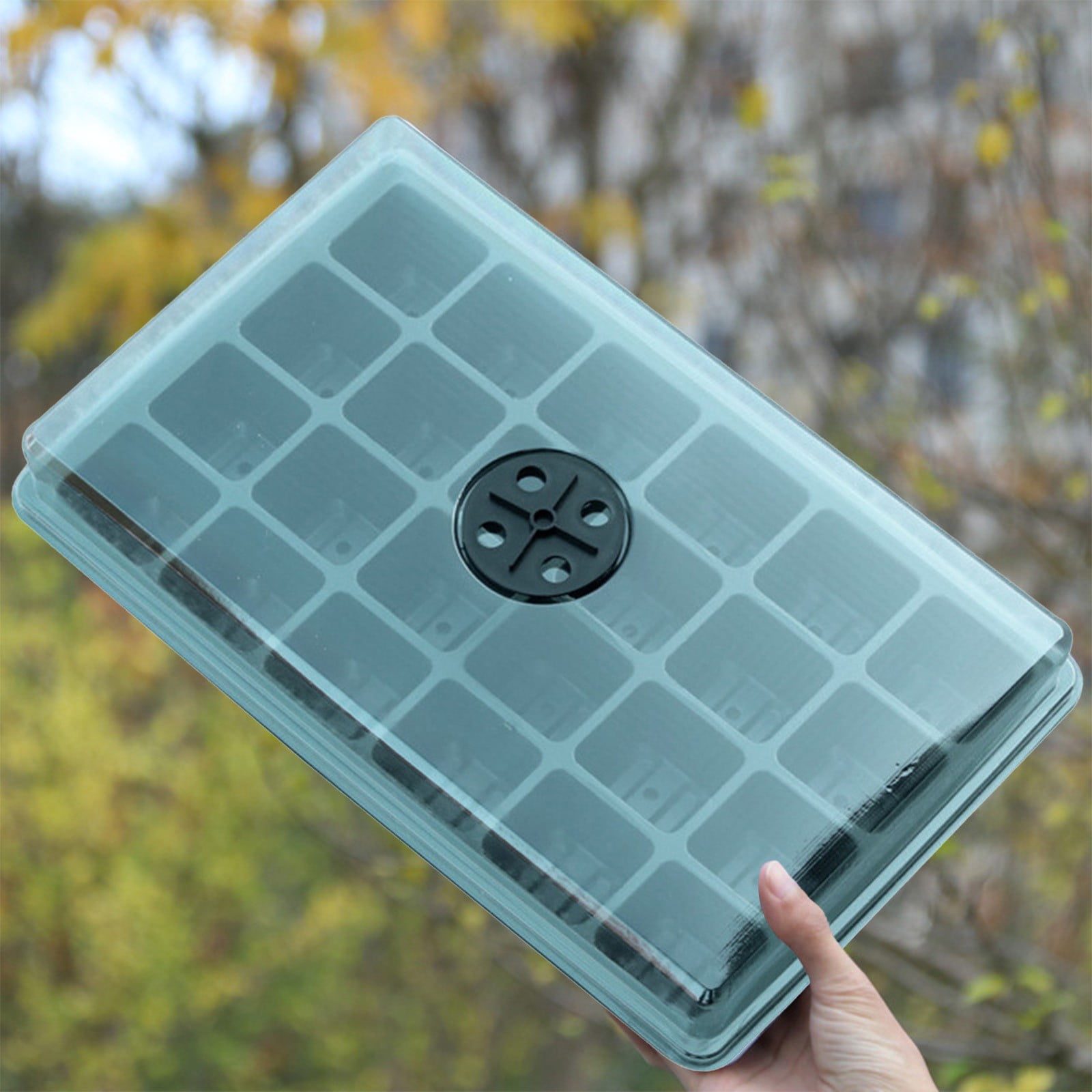
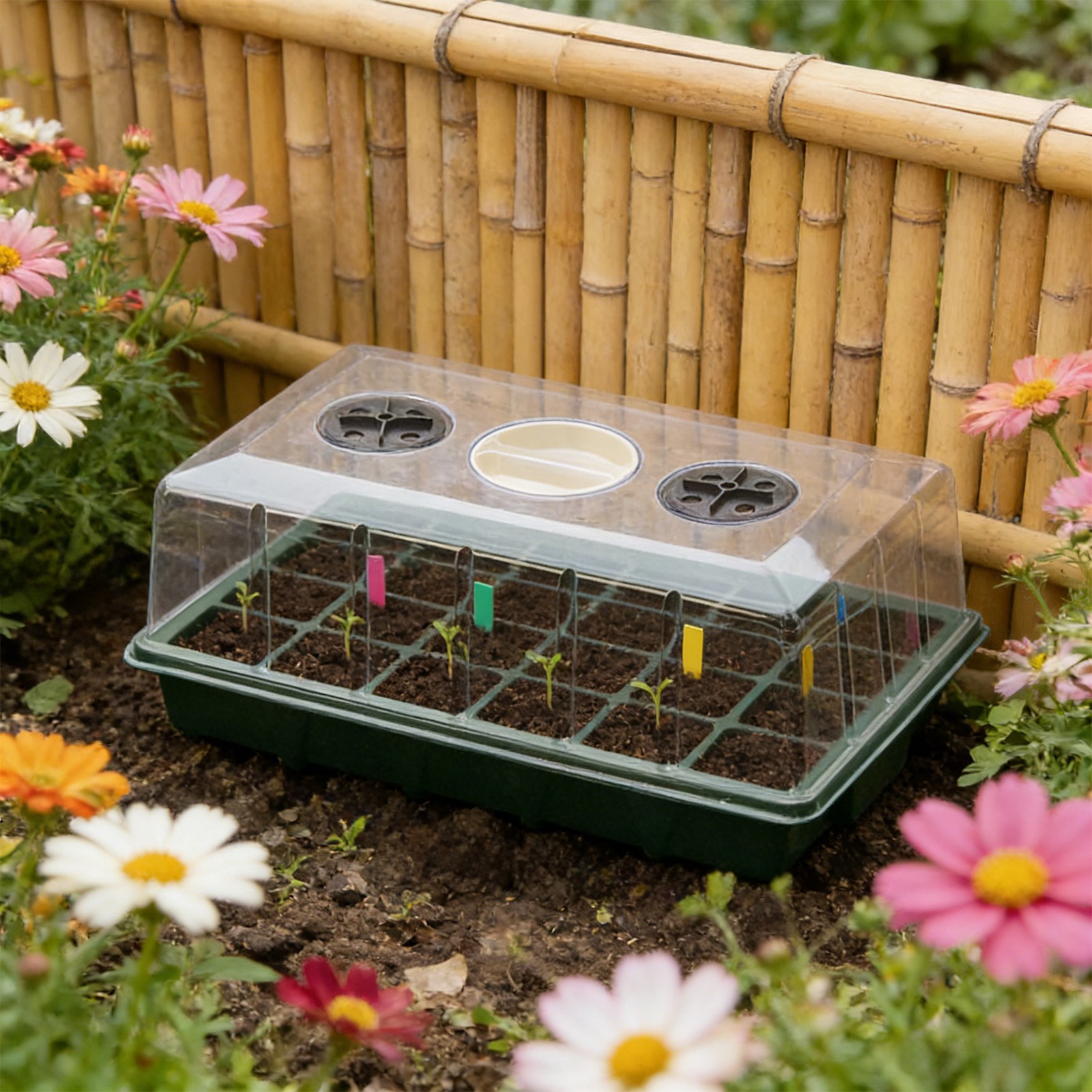
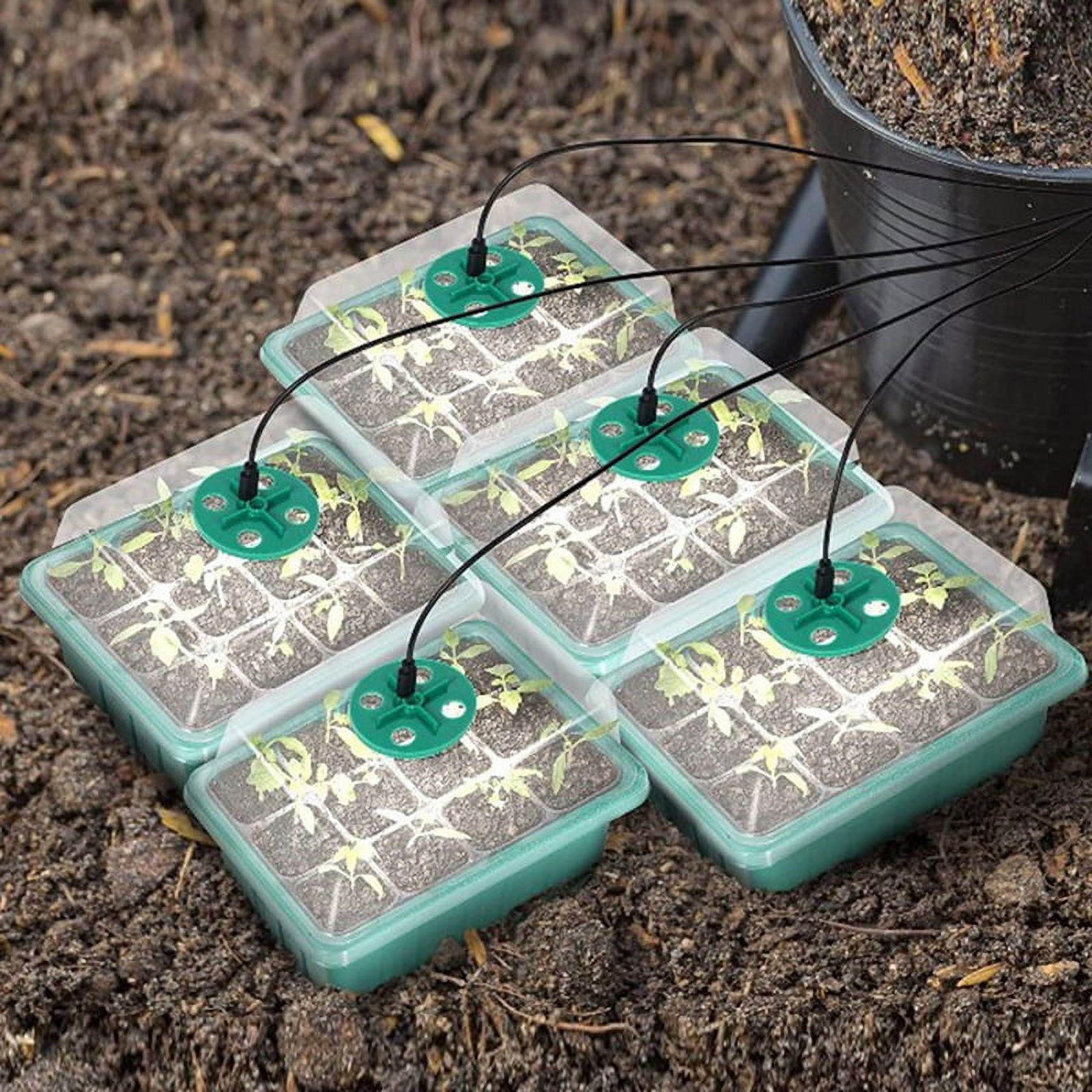
Begin venting a humidity dome when the first seedlings emerge. Remove the cover when about half of the expected seedlings have sprouted. Do not wait for every seed to grow before giving emerged plants fresh air.
A humidity dome helps seeds germinate by slowing moisture loss from the growing medium. Before germination, the seeds need steady moisture. After emergence, young leaves and stems need light and better air exchange.
Keeping a closed dome over growing seedlings for too long can trap excess moisture. Large water droplets may form on the lid and fall onto the plants or growing mix. This can keep the surface wet and make disease management harder.
The exact timing depends on the crop, tray design, room temperature, and growing medium. Some seeds emerge at different times, so check each tray instead of following a fixed number of days.
Source: walmart.com
Before germination
Keep the cover in place when needed to maintain steady moisture. Use the vents as directed by the tray design, and prevent the medium from becoming waterlogged.
At first emergence
Open adjustable vents or create a small opening. Check the first sprouts for signs of excess moisture.
When about half have emerged
Remove the dome for a uniform tray when roughly half the expected seedlings have appeared. This is a useful starting point, not a strict rule.
After dome removal
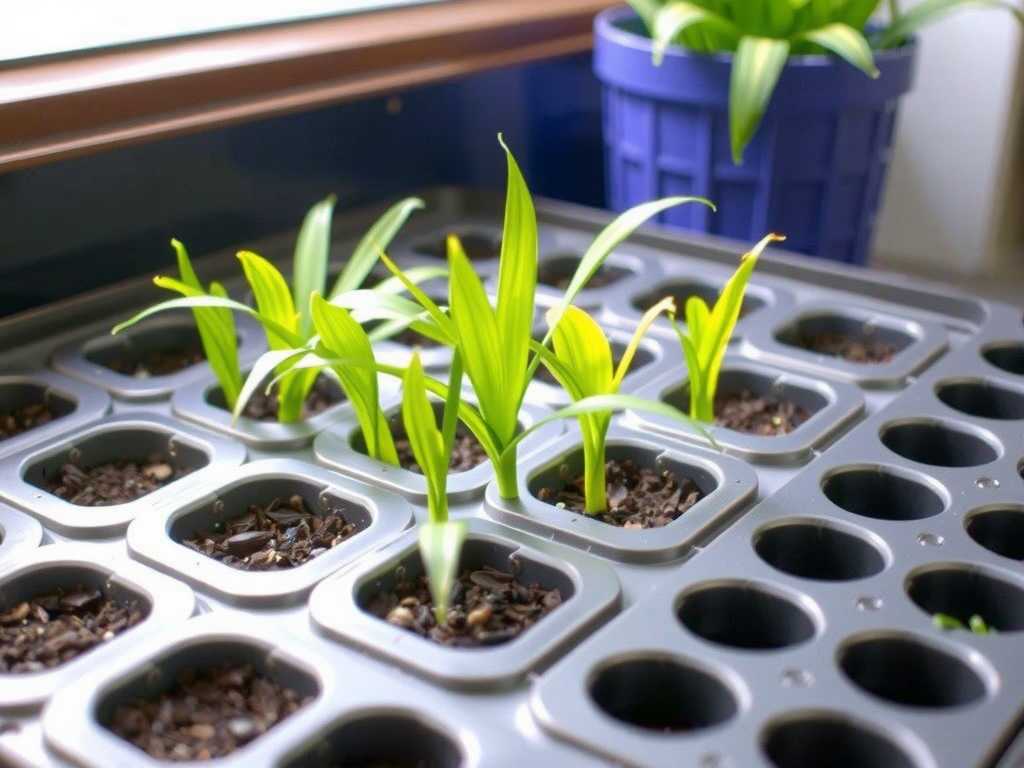
Provide suitable light and gentle air movement. Check the growing medium more often because it will lose moisture faster.
Signs That a Humidity Dome Needs More Ventilation
Condensation is normal under many humidity domes. However, constant dripping and saturated growing mix are signs that the setup needs attention. Check the vents, watering, and temperature before the seedlings become stressed.
Remove the cover sooner if plants touch the wet lid or the growing medium remains soaked. If only a few seeds have sprouted, open the vents and monitor the remaining cells instead of keeping the entire tray sealed.
Heavy condensation
Large droplets keep forming and falling from the inside of the lid.
Wet growing medium
The mix stays saturated long after watering, or water remains in the bottom tray.
Weak seedling growth
Young stems become soft, narrow, or discolored near the soil surface.
Leaves touching the lid
The cover no longer gives seedlings enough room and may keep their leaves wet.
Can You Remove the Dome All at Once?
Many vegetable and flower seedlings can move from a vented dome to normal indoor conditions once emergence is established. A long transition is not always needed.
If the room is very dry or the seedlings wilt after removal, use a short monitored transition. Open the vents first, then lift the cover for longer periods before removing it. Keep the growing medium evenly moist, not soaked.
Watch the leaves
Check for wilting, curling, or dry edges after the cover comes off.
Check the root zone
Make sure the growing mix remains moist and that the tray drains well.
Avoid direct sun under a closed dome
A clear cover can heat up quickly in direct sunlight and may damage young seedlings.
How to Set Up Gentle Airflow for Indoor Seedlings
A small fan is often enough for a home seed-starting shelf. Place it where it can move air around the plants without blowing directly onto one tray. A low-speed or oscillating fan can help spread airflow across a wider area.
Start with a short period of gentle airflow after seedlings emerge. Utah State University Extension describes short periods of light, direct airflow, such as 5 to 10 minutes or more, as a possible way to support seedling development. This is a starting reference, not a fixed schedule for every plant.
Check the leaves and growing medium after each change. If the leaves move gently and the soil does not dry too fast, the setup may be suitable. If plants bend or wilt, reduce the airflow or move the fan farther away.
Source: walmart.com
Use a small fan
Choose a fan with a low setting. An adjustable fan gives better control over air movement near tender plants.
Avoid direct strong airflow
Aim the fan across the growing area or toward a nearby wall so air moves around the seedlings.
Allow gentle movement
Look for slight leaf movement. The stems should not bend or shake strongly.
Watch moisture loss
Check small cells and tray edges often. They may dry faster than the center when air moves across them.
Adjust as plants grow
Larger seedlings can handle more airflow than newly emerged sprouts. Increase air movement slowly.
Where Should You Place a Seedling Fan?
Place the fan beside the growing shelf or at a position where it can move air across the plants. Keep it far enough away to avoid a strong stream on the leaves.
For several trays, an oscillating fan can spread air across the growing area. A fixed fan can also work if it points away from the plants and creates a gentle room-level breeze.
Small seedling shelf
Use a small fan near the side of the shelf and check that all trays receive some air movement.
Several growing trays
Use an oscillating fan or adjust the fan position so the same plants do not receive all the airflow.
Very young sprouts
Keep airflow indirect and mild until stems and leaves become more developed.
How Much Airflow Is Enough?
There is no single fan speed that works for every seedling setup. Fan strength depends on distance, room size, plant type, temperature, and how much moisture the growing medium holds.
A simple paper strip can help you judge air movement. Hold a light strip near the canopy. If it moves gently, the airflow is likely mild. If it blows flat in one direction, reduce the fan speed or change its position.
Do not use a commercial greenhouse airflow rate as a direct target for a small indoor seed tray. Large greenhouse systems use different equipment, crop layouts, and environmental controls.
Too little movement
Air stays still around dense leaves, and moisture may remain on plant surfaces.
Moderate movement
Leaves move slightly, the air feels fresh, and seedlings remain firm.
Too much movement
Plants bend, leaf edges dry, and the growing medium loses water too quickly.
Ventilate a Small Greenhouse Without Chilling Seedlings
A small greenhouse needs both fresh air exchange and internal air circulation. Open vents and exhaust fans can remove warm, moist air. Circulation fans help move air around the plants without always bringing in outside air.
Warm, sunny days can cause greenhouse temperatures to rise quickly. Open suitable roof vents, side vents, or doors when needed. The goal is to remove excess heat while keeping air movement even across the growing area.
Cold weather needs a different approach. A large opening on a cold or windy day can expose young plants to a sudden temperature drop. Use smaller vent openings or short periods of ventilation when conditions allow, and close or adjust them before temperatures fall too far.
Fresh outside air does not always contain less moisture. On a humid day, ventilation may not dry the greenhouse as much as expected. Watch condensation, leaf wetness, and temperature rather than relying on one humidity reading.
Source: simplygreenhouse.com
Use high and low openings
Suitable roof and side openings can help warm air escape and allow replacement air to enter.
Keep air moving through the crop
Place circulation fans so air passes around the seedling canopy instead of moving only above the benches.
Avoid short-circuit airflow
Do not place an intake opening so close to an exhaust fan that incoming air leaves before passing through the growing area.
Watch cold nights
Reduce outside air exchange when cold conditions threaten young plants. Use safe internal circulation to reduce stagnant pockets.
Check fan condition
Clean fan guards and blades, inspect electrical cords, and make sure vents open and close properly.
Natural Ventilation for Small Greenhouses
Natural ventilation uses openings such as doors, roof vents, and sidewalls. Warm air rises and can leave through higher openings while cooler air enters through lower openings.
This method can work well in a small greenhouse when outdoor conditions allow it. However, the amount of airflow changes with wind, temperature, and vent size. Check the plants during the day because some areas may become warmer than others.
Open vents during heat buildup
Use suitable openings when the greenhouse becomes warmer than the crop can tolerate.
Avoid strong cold drafts
Do not direct cold outdoor air straight at tender seedlings.
Check every growing zone
A greenhouse may have warm corners and still air near the benches even when a door is open.
Mechanical Ventilation and Circulation
An exhaust fan removes greenhouse air and draws replacement air through an intake. A circulation fan moves air within the greenhouse. These systems have different jobs and should not be treated as interchangeable.
Larger greenhouses may need properly sized fans and planned intake openings. Commercial fan sizing depends on greenhouse volume, resistance, layout, and local conditions. A home gardener should not copy a commercial fan formula without considering the structure.
Exhaust fan
Removes warm or moisture-laden air and supports fresh air exchange.
Horizontal airflow fan
Moves air through the crop and helps reduce areas with stagnant air.
Adjustable vents
Allow growers to control how much outside air enters the structure.
Balance Airflow With Water, Light, and Temperature
Ventilation works best when watering, light, temperature, and plant spacing are also managed well. A fan cannot correct every problem in a seedling tray. It cannot replace healthy roots, suitable light, or clean growing materials.
As seedlings grow, they release more water vapor through their leaves. They may also use more water from the growing medium. After removing a humidity dome, check the trays more often until you understand how quickly they dry.
The growing medium should remain evenly moist, not soaked. Waterlogged roots have less access to oxygen. Very dry growing mix can also harm young seedlings, so adjust watering to plant size, cell volume, and room conditions.
Source: walmart.com
Water when needed
Check the growing medium and tray weight instead of following a fixed watering calendar.
Allow drainage
Empty standing water after bottom watering. Do not leave seedling trays sitting in water for long periods.
Provide suitable light
Use enough light for the crop and stage. Weak light can cause tall, thin seedlings even when airflow is good.
Keep suitable temperatures
Follow crop-specific temperature guidance. Excess heat can increase water loss and encourage weak growth.
Give plants enough room
Thin crowded seedlings or move them into larger cells so leaves do not form a dense, damp layer.
How Does Airflow Affect Seedling Humidity?
Relative humidity describes how close the air is to holding as much water vapor as it can at a given temperature. It changes as air temperature changes, even when the amount of water vapor stays the same.
Air movement helps mix the air around the leaves. Fresh air exchange may also remove some moisture from a growing space. However, opening a window on a humid day may not lower moisture levels as much as expected.
Look for practical signs. Leaves should dry after watering, condensation should not drip constantly, and the growing medium should not remain saturated. These signs are useful even when you do not own a humidity meter.
Good moisture balance
The medium stays moist, leaves are dry between watering events, and seedlings remain firm.
Excess moisture
Condensation keeps returning, the medium stays wet, and algae or mold may appear on the surface.
Too much drying
Leaves wilt, cell edges dry quickly, and seedlings need water more often after airflow increases.
Why Light and Spacing Matter
Seedlings need enough light to grow short, sturdy stems. When light is weak, they often stretch toward the nearest source. Increasing fan speed will not fix this problem.
Crowded seedlings also block airflow between leaves. Thin them when needed and move larger plants into separate containers. This gives each plant more room for light and air.
Thin crowded plants
Keep the healthiest seedling in each cell when the crop and sowing method call for thinning.
Move plants apart
Separate trays when leaves overlap and air cannot pass through the canopy.
Adjust growing lights
Keep lights at a suitable distance and move them as seedlings gain height.
Build a Simple Daily Seedling Ventilation Routine
A short daily check can prevent many ventilation problems. You do not need a complex control system for a small indoor seedling shelf. Watch the plants, check the growing medium, and adjust the airflow as conditions change.
The best routine changes as seeds move from germination to active growth. Before emergence, moisture control is the main concern. After emergence, fresh air, light, and gentle circulation become more important.
Record changes when you adjust the fan or remove a dome. This helps you see which conditions work best for your crop and growing space.
Source: spidercaretips.com
Morning check
Look for condensation, wet leaves, weak stems, and signs of poor airflow. Open dome vents when seedlings begin to emerge.
Air movement check
Run the fan at a low setting or use short periods of gentle airflow. Confirm that leaves move only slightly.
Moisture check
Touch or inspect the growing medium. Water only when needed and remove excess water from the base tray.
Temperature check
Check the growing area for excessive warmth or cold drafts. Adjust vents and heat sources as needed.
Evening check
Look for new condensation and make sure leaves are not staying wet. Adjust ventilation before the growing space cools.
A Practical Ventilation Schedule by Growth Stage
The following schedule is a general guide for home seed starting. It is not a universal crop rule. Follow the seed packet and adjust the routine to the room, tray, and growing medium.
Seed stage
Use a humidity dome when needed. Keep the medium moist and provide suitable germination conditions.
First sprouts
Open dome vents and check condensation. Give emerged seedlings access to suitable light.
Early seedling stage
Remove the dome as emergence becomes established. Begin gentle air circulation and check moisture daily.
Established seedlings
Maintain steady airflow, adequate spacing, and suitable light. Adjust fan strength as plants become larger.
Before outdoor planting
Begin outdoor hardening off according to crop needs. Gradually expose plants to outdoor light, air, and temperature changes.
Troubleshoot Common Seedling Ventilation Problems
When seedlings look unhealthy, check the growing environment before increasing fan speed. Several problems can look similar. A weak stem may come from poor light, excess heat, overwatering, or disease rather than a lack of airflow.
Start with the growing medium, temperature, and leaf condition. Then check the fan and humidity dome. Make one change at a time so you can see whether the problem improves.
If several seedlings show the same symptoms, inspect the whole tray. A problem that affects one corner may point to uneven airflow or watering. A problem that spreads across a tray may need closer disease checks.
Problem: Seedlings bend away from the fan
Possible cause: Airflow is too strong or too direct. Move the fan farther away, reduce its speed, or point it across the room.
Problem: Leaf edges become dry
Possible cause: Fast moisture loss, strong airflow, heat, or low root-zone moisture. Check the growing mix and reduce direct airflow.
Problem: Condensation keeps dripping
Possible cause: The dome is too closed, watering is excessive, or temperature changes are causing moisture to collect. Open the vents and review watering.
Problem: Seedlings become tall and weak
Possible cause: Insufficient light, excess warmth, or crowding. Improve light and spacing instead of simply increasing fan strength.
Problem: Leaves stay wet
Possible cause: Poor circulation, crowded plants, frequent overhead watering, or excess humidity. Improve spacing and airflow and water earlier when practical.
Problem: Seedlings wilt after dome removal
Possible cause: Faster moisture loss, dry growing mix, weak roots, or a sudden change in conditions. Check the root zone first and use a short monitored transition if needed.
How to Recognize Possible Damping-Off
Damping-off is a disease that affects germinating seeds and young seedlings. Several soilborne fungi and fungus-like organisms can cause it. Common signs include a dark, soft, or narrow stem near the soil line.
An infected seedling may wilt and fall over even when the growing medium is wet. Some seeds may decay before they emerge. Infected plants often do not recover once the stem or roots are badly damaged.
Poor airflow can add to an unfavorable growing environment, but damping-off is not simply caused by still air. Contaminated trays, infected growing media, water splash, poor drainage, and excess moisture can also contribute.
Remove affected seedlings
Remove badly affected plants with their growing medium. Keep nearby seedlings under close observation.
Clean the growing area
Clean used trays, tools, and work surfaces. Do not reuse infected growing medium.
Use fresh growing mix
Choose a clean, well-drained seed-starting mix and suitable containers with drainage holes.
Improve moisture control
Avoid constant overhead misting and standing water. Keep the medium moist without making it soggy.
Seek a proper diagnosis
If the problem spreads or the cause is unclear, contact a local Cooperative Extension office or plant diagnostic service.
What If Better Airflow Does Not Fix the Problem?
Do not keep increasing fan speed when seedlings fail to improve. Check other growing conditions first. Poor light, root damage, unsuitable temperature, fertilizer injury, and disease can all affect young plants.
If the growing medium is wet and the leaves are wilting, check the roots and stem base. If the roots are brown or the stem is soft near the soil line, a disease problem may be more likely than simple airflow stress.
Keep a short record of watering, temperature, and ventilation changes. This makes it easier to find the cause and avoid repeating the same problem in future trays.
Check the roots
Look for healthy roots and a firm stem base. Dark, soft roots may point to root disease or prolonged waterlogging.
Check the light
Make sure seedlings receive enough suitable light for compact growth.
Check the temperature
Compare the growing area with the needs of the crop. Remove excess heat when needed.
Check sanitation
Clean tools and containers before starting another tray.
Common Seedling Ventilation Mistakes and Safety Limits
The most common mistake is treating ventilation as a problem that can be solved with a stronger fan. Seedlings need balanced conditions, not constant wind. A small change in fan position may be more useful than a large increase in speed.
Another mistake is leaving humidity domes on for too long. A dome is useful during germination, but emerged seedlings need light and fresh air. Remove the cover at the right stage and check moisture more often afterward.
Ventilation also has limits. It cannot replace sanitation, correct watering, proper light, or crop-specific temperature control. It cannot guarantee that seedlings will avoid disease.
Using too much fan power
Strong air movement can damage tender leaves and dry small cells. Start low and increase airflow only when plants remain healthy.
Leaving seedlings under a sealed dome
A closed cover can trap excess moisture after emergence. Open vents early and remove the cover when most seeds have sprouted.
Watering by habit
A fixed watering schedule may cause overwatering after dome removal or increased airflow. Check the actual moisture level.
Ignoring plant spacing
Crowded leaves block air movement. Thin or transplant seedlings before they form a dense canopy.
Using ventilation to fix weak light
More airflow cannot replace enough light. Correct the light source and distance when seedlings become thin and stretched.
Opening greenhouse vents during harsh weather
Cold drafts, extreme heat, and outdoor pollutants can harm plants. Choose suitable times and protect tender seedlings.
Ignoring electrical safety
Keep fans, plugs, and extension cords away from water. Use equipment designed for the growing area and follow electrical safety instructions.
Ventilation Versus Outdoor Hardening Off
Indoor ventilation and outdoor hardening off are related, but they are not the same process. Ventilation manages the air around seedlings while they grow indoors or inside a greenhouse.
Hardening off prepares indoor-grown seedlings for outdoor conditions before transplanting. It involves gradual exposure to sunlight, wind, and temperature changes. A fan inside the growing room does not complete this process.
Begin hardening off according to the crop and local weather. Start in a sheltered area, then increase outdoor exposure over time. Avoid freezing conditions and sudden exposure to strong wind or harsh sun.
Indoor ventilation
Maintains suitable air movement and moisture conditions during seedling growth.
Outdoor hardening off
Helps plants adjust to sunlight, wind, and outdoor temperature changes before planting.
Next Questions After the First Seedlings Emerge
Research for this guide was checked on November 16, 2026, for the United States market. The review covered four university and Cooperative Extension resources on indoor seedling care, seed starting, and greenhouse environmental control, along with a recent humidity dome guide.
The reviewed extension guidance answers the main questions about removing covers, spacing seedlings, preventing excess moisture, and using gentle airflow. The most useful areas for added practical detail are judging fan strength, managing cold-weather greenhouse ventilation, and knowing when poor growth may be caused by something other than airflow.
The following gap map separates questions found during research from practical needs inferred from the seedling care process. It also shows where the article addresses each question.
Observed question: When should humidity dome vents open?
Source: EDAR humidity dome guide, October 12, 2026. Reviewed coverage: Answered by the Utah State and Ohio State Extension guidance. Reader benefit: Use first emergence and roughly 50 percent germination as practical triggers instead of relying on a fixed number of days. Placement: Humidity dome section.
Observed question: Should I use a fan after removing the dome?
Source: EDAR humidity dome guide, October 12, 2026. Reviewed coverage: Shallow across the reviewed indoor seed-starting guidance because fan strength and placement need practical context. Reader benefit: Use slight leaf movement as a simple airflow check and watch for fast drying. Placement: Indoor airflow section.
Inferred next need: How do I ventilate a greenhouse during cold weather?
Basis: Growers may move seedlings from indoor trays into small greenhouses. Reviewed coverage: University of Alaska Fairbanks guidance explains greenhouse ventilation and internal air circulation, but tray-level cold-weather decisions need separate context. Reader benefit: Balance fresh air exchange with protection from cold drafts. Placement: Greenhouse ventilation section.
Inferred next need: Does better airflow cure damping-off?
Basis: Growers may increase fan speed after noticing weak or collapsed seedlings. Reviewed coverage: University Extension pages discuss prevention and disease conditions, but the distinction between prevention and treatment needs clear emphasis. Reader benefit: Identify possible disease symptoms and understand that airflow cannot cure infected seedlings. Placement: Troubleshooting section.
Frequently Asked Questions
Q
Do seedlings need ventilation every day?
Most emerged seedlings benefit from regular air movement. A gentle breeze helps prevent stagnant air around the leaves and supports moisture control. The amount of airflow depends on plant size, room conditions, and growing medium.
Check the plants daily and adjust the fan as needed. Continuous strong airflow is not required.
Q
Can I use a regular household fan for seedlings?
Yes. A small household fan can work well if it has a low setting. Place it to move air around the growing area rather than blowing directly onto tender seedlings.
An oscillating fan can help spread airflow across several trays. Always check leaf movement and growing medium moisture after changing its position.
Q
Should humidity dome vents stay open during germination?
The vents can remain mostly closed during early germination if the medium is not waterlogged and the tray is not overheating. Open them when the first seedlings emerge.
Remove the dome when about half the expected seedlings have sprouted. Adjust sooner if heavy condensation, standing water, or weak growth appears.
Q
Does ventilation prevent damping-off?
Good airflow can help reduce excess moisture and unfavorable conditions around young seedlings. However, it cannot prevent every case of damping-off.
Use clean trays, fresh growing mix, good drainage, suitable temperatures, and careful watering. Remove badly affected seedlings and their growing medium when disease appears.
Q
Can too much ventilation harm young seedlings?
Yes. Strong airflow can bend tender stems, damage leaves, and increase water loss. Small cells may dry especially fast after a humidity dome is removed.
Start with gentle airflow and increase it only when the plants remain firm and healthy. Reduce the fan speed if leaves flap, stems bend, or the growing medium dries too quickly.
✦ Wrapping Up
Conclusion
Good seedling ventilation management is about balance. Young plants need fresh air and gentle movement, but they also need steady moisture, suitable light, and the right temperature.
Open humidity dome vents when the first sprouts appear. Remove the cover when most seeds have emerged, then introduce gentle airflow. Watch the leaves, growing medium, and temperature as the plants develop.
💡 Key Takeaway
Start today by checking your seedling trays for heavy condensation, crowded leaves, and still air. Open the dome vents when sprouts appear, remove the cover at the right stage, and use a low-speed fan to create gentle leaf movement. Check moisture daily and adjust airflow whenever seedlings show signs of stress.