Divide perennial plants by lifting, splitting the root ball, and replanting healthy sections quickly.
If you want fuller blooms, healthier clumps, and more plants for free, learning how to divide perennial plants is one of the smartest gardening skills you can pick up. I’ve done it with crowded hostas, tired daylilies, and stubborn asters, and the pattern is always the same: when a perennial gets too packed, it starts acting old. Division gives it room to breathe, grow, and perform again.
What it means to divide perennial plants
Dividing perennial plants means separating one mature plant into two or more smaller plants. Each new piece must have roots, and usually some shoots or buds too. It is a simple way to refresh crowded plants and keep them strong.
In practice, dividing perennial plants is a lot like repotting a houseplant that has outgrown its pot. The roots need space, the center needs renewal, and the plant often looks better almost right away. Many gardeners use division to control size, fill other parts of the yard, and save money on new plants.
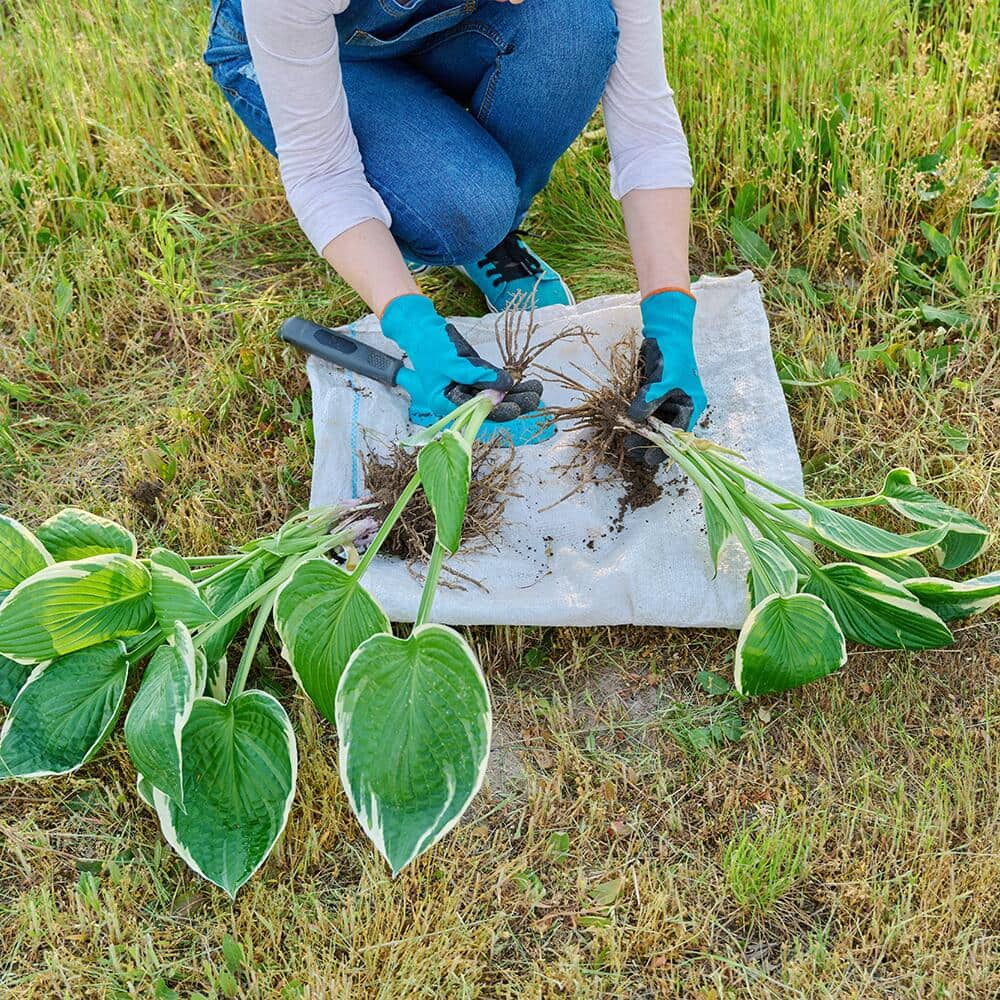
Why dividing perennials helps your garden
There are several good reasons to divide perennial plants, and most of them come down to plant health and garden design. Older clumps can become woody, thin, or bare in the middle. When that happens, bloom size and flower count often drop too.
Dividing perennial plants can help you:
- Rejuvenate old plants so they flower better
- Reduce overcrowding and improve airflow
- Control plant size in tight spaces
- Create new plants for free
- Move perennials to better spots in the garden
I’ve seen clumps of iris and shasta daisy go from weak and messy to strong and tidy in just one season after division. That said, not every perennial loves being split often, so timing and technique matter.
Which perennial plants should be divided
Not every perennial needs division at the same pace. Fast growers and clump-forming plants usually benefit most. Slow growers may only need it every few years, while some woody or taprooted perennials are harder to divide and may not recover well.
Good candidates for division often include:
- Hostas
- Daylilies
- Bearded iris
- Astilbe
- Black-eyed Susans
- Bee balm
- Ornamental grasses
- Coneflowers
- Shasta daisies
- Sedum
Plants that are often harder to divide include:
- Peonies, which usually prefer leaving alone unless they are very mature
- Butterfly weed, which has a strong taproot
- Lavender, which can be fussy if split badly
- Some woody herbs and shrubs, which are not true herbaceous perennials
If you are unsure, check how the plant grows. Clump-forming perennials are usually the easiest and safest to divide.
The best time to divide perennial plants
The best time to divide perennial plants depends on when they bloom and how they grow. A good rule is to divide when the plant is not in active bloom and the weather is mild. Cool, cloudy days are ideal because the plant loses less water.
General timing tips:
- Spring bloomers are usually divided in late summer or early fall
- Summer and fall bloomers are usually divided in spring
- Cool-season growers can often handle early fall division well
I like to divide plants after a rain or after a good watering, because the soil is softer and roots come up with less damage. In my own garden, dividing in heat always led to more stress and slower recovery. If the plant is already struggling, wait for gentler weather.
Signs a perennial needs division
A perennial usually tells you when it is crowded. The clues are easy to miss at first, but once you know them, they stand out fast.
Look for these signs:
- The center of the clump is bare or dying
- Flowers are smaller than usual
- The plant flops open or looks weak
- The clump keeps spreading outward
- Blooming is less impressive than before
- The plant dries out too fast after watering
These signs often show up after a few seasons in the same spot. I’ve found that many gardeners wait too long because the plant still looks “fine” from a distance. But when you get close, the difference between a healthy clump and an overcrowded one is usually obvious.
What tools you need
You do not need fancy tools to divide perennial plants. A few basic tools are enough for most jobs. Clean tools also help reduce disease spread.
Helpful tools include:
- Garden spade
- Sharp shovel
- Hand fork or digging fork
- Pruners or garden shears
- Sharp knife for tough roots
- Tarp or wheelbarrow for moving clumps
- Watering can or hose
- Gloves
Clean, sharp tools make a big difference. A dull shovel tears roots instead of cutting them cleanly, and that can slow recovery.
How to divide perennial plants step by step
The process is simple once you break it down. Go slowly, keep the roots moist, and treat the plant gently. Think of it as surgery for the garden, not demolition.
1. Water the plant first
Water the plant the day before division if the soil is dry. Moist soil is easier to dig and easier on the roots. This small step can prevent a lot of stress.
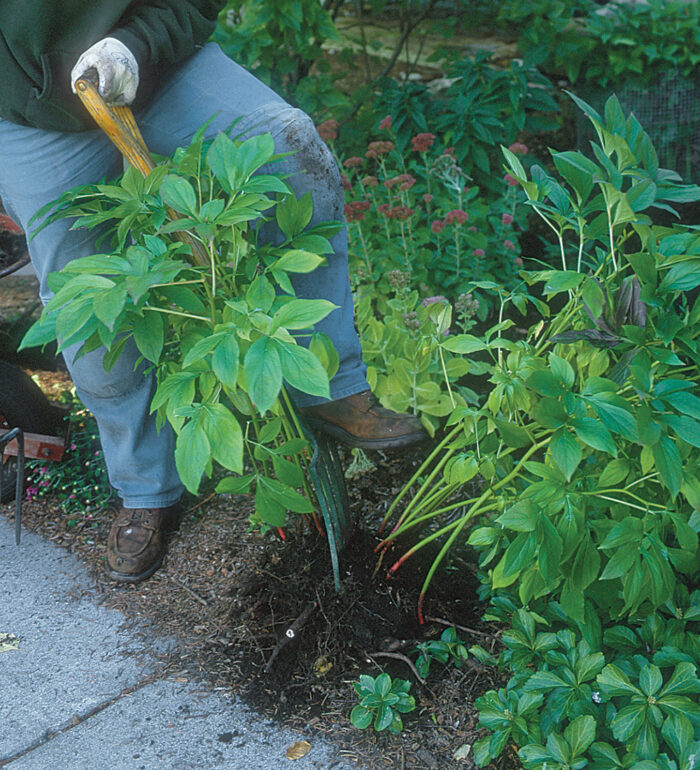
2. Dig around the clump
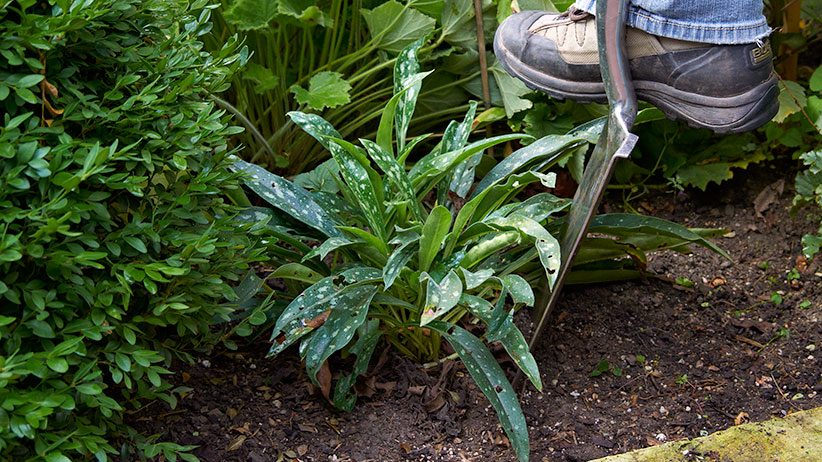
Dig several inches away from the crown so you do not slice into the main roots right away. Work around the whole plant and lift it from underneath. Try to keep as much of the root ball intact as possible.
3. Lift the clump carefully
Use a shovel or fork to lift the plant out of the ground. If it is large, lift part of it at a time if needed. Shake off loose soil so you can see the structure of the roots and crowns.
4. Separate the plant into sections
You can divide perennial plants in a few different ways:
- Pull apart by hand if the roots are soft and loose
- Use two garden forks back to back for tough clumps
- Cut with a sharp knife or spade for dense roots
Each section should have healthy roots and at least one strong growing point. For many plants, a division with three to five shoots is a good size.
5. Remove weak or dead parts
Trim away dead centers, damaged roots, and weak stems. This helps the plant focus energy on new growth. It also makes planting easier and neater.
6. Replant quickly
Do not let the divisions dry out. Replant them at the same depth they were growing before. Press the soil gently around the roots and water well.
7. Mulch and monitor
Add a light layer of mulch to help hold moisture and protect the roots. Then keep an eye on the plant for the next few weeks. Some wilting is normal, but steady decline means the plant may need more water or less sun.
How to divide perennial plants by type
Different plants call for slightly different handling. The goal is always the same, but the method may change based on root structure. This is where experience matters most, because one size does not fit every perennial.
Clump-forming perennials
Plants like hostas, daylilies, and ornamental grasses often divide easily. You can usually pull or cut them into several chunks. These plants are some of the most forgiving for beginners.
Rhizomatous perennials
Bearded iris is a classic example. Its thick rhizomes spread along the soil surface, and old parts can get woody. Divide these by cutting clean sections with healthy fans and discarding old, weak pieces.
Fibrous-rooted perennials
Astilbe, black-eyed Susans, and similar plants often have dense fibrous roots. A digging fork or even two forks used together can help separate them. If the root mass is tight, a sharp knife may be the easiest option.
Deep-rooted perennials
Some plants have deeper roots and need extra care. Dig wider and deeper than you think you need to avoid breaking too much of the root system. These plants may take longer to settle after division.
Common mistakes to avoid
Over the years, I have made a few mistakes that taught me more than any book ever did. Most division failures come from moving too fast or dividing at the wrong time. Fortunately, these mistakes are easy to avoid once you know them.
Avoid these common errors:
- Dividing during extreme heat
- Making divisions too small
- Letting roots dry out in the sun
- Replanting too deep
- Forgetting to water after transplanting
- Dividing plants that are already stressed or diseased
One mistake I made early on was splitting a crowded hosta into tiny pieces because I wanted more plants. The result was a season of weak growth and a lot of patience. Bigger, healthier divisions almost always recover better.
How to care for divided perennials after planting
After division, your plants need time to settle in. The first few weeks matter the most. Good aftercare helps roots reconnect with the soil and lowers transplant shock.
Post-division care tips:
- Water deeply right after planting
- Keep soil evenly moist for several weeks
- Add mulch, but keep it away from the crown
- Remove faded leaves or broken stems
- Avoid fertilizer right away unless the soil is poor
- Watch for wilting during hot afternoons
In most cases, the plant will spend energy on roots before it looks great above ground. That is normal. Give it time, and do not overcorrect with too much water or fertilizer.
Benefits of dividing perennial plants regularly
Regular division does more than make new plants. It can improve the whole garden. A well-timed division often leads to stronger growth, better flower production, and cleaner beds.
The main benefits include:
- Healthier plants with better vigor
- More blooms and fuller growth
- Better spacing and less disease pressure
- Free plants for other parts of the yard
- Better control over plant size and shape
Many extension programs and horticulture experts recommend division for crowding-prone perennials because it supports long-term plant performance. From a gardener’s point of view, it is one of the easiest ways to keep a bed looking fresh without buying new stock every year.
How often should you divide perennial plants
There is no single schedule that fits every plant. Some perennials need division every 2 to 3 years, while others can go much longer. A plant’s growth rate, bloom habit, and garden conditions all play a role.
A simple guide:
- Fast spreaders may need division every 2 to 4 years
- Moderate growers may need it every 4 to 6 years
- Slow growers may only need it when they show clear crowding
If a plant still flowers well and looks full, leave it alone. Division is a tool, not a rule. Healthy plants should not be split just because the calendar says so.
Frequently Asked Questions of how to divide perennial plants
How do I know if a perennial can be divided?
Most clump-forming perennials can be divided if they are mature and healthy. If the plant has a woody crown, a deep taproot, or a delicate root system, it may be harder to split safely.
Can I divide perennial plants while they are blooming?
It is better to wait until bloom time is over for most plants. Dividing during bloom adds stress and can reduce flowers for that season.
Should I cut back the plant before dividing it?
Yes, cutting back tall leaves or stems can make the job easier and reduce water loss. For many perennials, trimming the top growth also helps the plant recover faster after replanting.
How big should each division be?
Each division should have enough roots and at least one strong growing point. Bigger divisions usually establish faster, while tiny pieces can take longer to recover.
What if the divided plant wilts after planting?
Some wilting is normal, especially in warm weather. Keep the soil moist, avoid direct stress, and give the plant a few weeks to settle in.
Conclusion
Learning how to divide perennial plants is one of the most useful skills in gardening. It helps crowded plants recover, keeps blooms strong, and gives you more plants to use elsewhere in the yard. When you divide at the right time and handle the roots with care, the results are usually well worth the effort.
If you have an overgrown clump sitting in your garden right now, this is a good time to act. Start with one easy plant, take your time, and watch how much better it performs after a fresh start.