The best way to strengthen seedling stems is to provide bright light, gentle airflow, proper spacing, steady moisture, and balanced nutrients. These conditions help seedlings grow shorter, firmer, and more stable.
Across the United States, many home gardeners start tomatoes, peppers, herbs, and flowers indoors before the outdoor growing season. Young plants often grow fast in warm rooms, but their stems may stay thin and weak. This is common when light is poor, plants are crowded, or the air stays still. A weak stem can bend when the plant gets taller or moves outdoors.
Seedling stem strengthening is not about forcing a young plant to grow thick overnight. It is about giving the plant the right conditions to build firm tissue as it grows. Bright light helps control stem length. Gentle air movement gives the plant a mild physical signal. Good water and food help it build healthy roots and shoots. Gardeners in cold northern states, warm southern areas, and mild coastal regions may follow different planting dates, but these basic care steps apply across the country. Also, do not wrap a tight rubber band around a young stem. Pressure can damage soft plant tissue instead of making it stronger.
Source: epicgardening.com
What Is Seedling Stem Strengthening?
Seedling stem strengthening means helping a young plant build a firm stem that can hold its leaves upright. A strong seedling often has a short or moderate stem, healthy green leaves, and steady growth. Its stem should support the plant without leaning or folding under the weight of new leaves.
A strong stem does not always mean a very thick stem. Different plants have different natural shapes. A young tomato may have a thicker stem than a young lettuce plant. Compare seedlings of the same type and age rather than judging every plant by one size.
Plant growth also changes in response to touch and movement. This response is called thigmomorphogenesis. In simple terms, a plant can change how it grows when it feels wind, touch, or other mild physical forces. Some plants respond by growing shorter and developing firmer stems. The effect depends on the plant type, age, and strength of the stimulus.
Stem firmness
A healthy stem should stand upright and support the leaves without looking soft or crushed.
Stem shape
A compact plant with steady growth is often stronger than a tall plant with a long, thin stem.
Root support
Healthy roots help the plant take up water and nutrients and hold the plant firmly in its growing mix.
Why Do Strong Stems Matter?
Strong stems help seedlings stay upright as their leaves grow. They also help young plants cope with normal handling and gentle outdoor movement. A firm stem can reduce the need for extra support during early growth.
However, a strong stem alone does not make a healthy plant. Roots, leaves, water, light, and plant health all matter. The goal is balanced growth from the roots to the top.
Better support
Firm stems can hold growing leaves without constant leaning.
Easier transplanting
Compact seedlings are often easier to move and handle than tall, weak plants.
Better adjustment
Well-grown seedlings are better prepared for gradual changes in outdoor light and airflow.
Give Seedlings Enough Light
Bright light is one of the most useful tools for building strong seedling stems. When light is too weak, a seedling may stretch toward the nearest source. This growth is called etiolation. The stem becomes long and thin, while the leaves may stay small and pale.
A sunny window may not give enough light during short winter days in many parts of the United States. A grow light or suitable LED fixture can provide more steady light. Place the light above the plants so they grow upright instead of leaning toward one side.
A common starting range for many indoor seedlings is 12 to 16 hours of light each day. The right amount depends on the crop, light strength, and fixture type. Use a timer to keep the schedule steady. Give plants a dark period each day instead of leaving the lights on all night.
The correct lamp distance also depends on the light. A weak lamp may need to sit closer than a powerful LED. Follow the fixture maker’s guidance and watch the plants. If stems stretch, the light may be too weak or too far away. If leaves bleach, curl, or show heat damage, the light may be too close or too strong.
Source: scienow.com
Use overhead lighting
Place the light above the seedling tray to support straight growth.
Keep a steady schedule
Use a timer to provide a regular daily light period and a dark rest period.
Adjust as plants grow
Raise or lower the fixture as needed to keep the correct distance from the leaves.
Rotate window-grown plants
Turn trays every few days when light comes mainly from one side.
How Can You Tell If Light Is Too Weak?
Look at the space between the leaves. Long gaps along the stem can point to poor light. A seedling may also lean toward a window or grow much taller than nearby plants of the same type.
Move the tray to a brighter place or add a suitable grow light. Do not expect an old, stretched stem to become short again. Better light helps the plant make stronger new growth.
Long, thin stems
Increase light strength or improve the lamp position.
Pale leaves
Check light quality, root health, and nutrient supply.
Uneven growth
Improve overhead light coverage and rotate the tray when needed.
Use Gentle Airflow to Build Stronger Stems
Gentle airflow helps young plants adjust to natural movement. Outdoors, plants face light wind and moving air. Indoor seedlings often grow in still air, so their stems may not be ready for outdoor conditions.
A small fan can help. Set it on a low speed and place it far enough away to avoid strong direct airflow. The leaves should move a little. They should not fold, whip, or bend toward the ground.
Start with a short session of about five to ten minutes. Watch how the plants respond. You can use one or more short sessions during the day if the seedlings remain healthy. Adjust the time based on plant size, room heat, and how fast the growing mix dries.
Air movement has two useful roles. It moves still air around the leaves and gives the plant a mild physical signal. Some research on young plants links repeated mechanical movement with shorter growth and changes in stem form. Still, the response is not the same in every plant. A fan is a care tool, not a promise of thicker stems.
A desk fan or small circulation fan is often enough for a home seed-starting area.
Start on low speed
Use mild air movement before trying longer or more frequent sessions.
Watch the leaves
A light leaf tremble is a better sign than strong bending.
Check soil moisture
Moving air can dry the growing mix faster, so check the tray more often.
Can You Brush Seedlings to Strengthen Them?
Gentle brushing is another way to give plants a mild touch signal. Some growers use a clean, soft hand or a soft brush to pass lightly over the tops of healthy seedlings. The aim is gentle movement, not bending or rubbing the stems.
Only try this with seedlings that have several healthy leaves and are growing well. Very young sprouts are easy to damage. If leaves tear, stems bend, or plants wilt after brushing, stop the practice. Gentle airflow is often easier to control and does not require direct contact.
Do not rub the stem hard or shake the tray with force. Mechanical stress can slow growth or harm a plant when the force is too strong. A small change in daily care is better than trying to force a fast result.
Use a soft touch
Move lightly over the leaf tops without pressing on the growing tip.
Avoid fresh sprouts
Wait until the plant has developed leaves and a stable stem.
Stop at the first sign of harm
Do not continue if leaves tear, stems crease, or growth slows.
Keep Water Levels Balanced
Good watering helps seedlings build healthy roots and stems. The growing mix should stay moist, but it should not remain soaked. Roots need both water and air. When the mix stays too wet, roots may struggle to take in enough oxygen.
Overwatering can make a seedling look weak even when the leaves seem healthy. Roots may become damaged, and the plant may wilt. Adding more water to a wilted plant can make the problem worse if the roots are already too wet.
Check the growing mix before you water. Press a finger lightly into the top layer or lift the tray to feel its weight. A tray that feels much lighter than it did after watering may need more water. Do not wait until the plant wilts.
Water gently at the base of the plants or use a clean bottom-watering tray. If you water from below, let the mix take up what it needs, then remove extra water. Do not leave seedling pots standing in water for long periods.
Keep the mix moist
Avoid both dry root balls and constantly wet growing media.
Use containers with drainage
Open drainage holes help extra water leave the root area.
Avoid frequent light misting
Misting only the surface may leave deeper roots dry while keeping the top too wet.
Empty the water tray
Remove standing water after bottom watering.
How Does Overwatering Affect Stem Strength?
Overwatering does not directly make a stem thin in every case. It can harm the roots, limit oxygen, and slow normal growth. A plant with damaged roots may have trouble holding itself upright.
Wet conditions can also favor damping-off disease. This disease may cause a young seedling to collapse near the soil line. A plant with this symptom needs a health check, not more airflow or a support stick.
Yellow lower leaves
Check for wet soil, poor drainage, and root damage.
Soft stem base
Check for damping-off rather than assuming the plant only needs support.
Control Temperature and Fertilizer
Temperature affects how fast seedlings grow. Warm conditions can speed up growth, but too much heat may lead to tall, soft plants. This is more likely when light is also weak.
Use the temperature range that suits the crop. Tomatoes and peppers need warmer conditions than many cool-season crops, such as broccoli and cabbage. Read the seed packet and check local growing guidance. Remove or reduce germination heat when the seedlings no longer need it.
Fertilizer also affects stem growth. Too much nitrogen can push fast leaf and stem growth. This new growth may be soft and weak. More fertilizer does not always mean a stronger plant.
Many seeds contain enough stored food for the first stage of growth. Wait until the seedlings have developed true leaves before starting a feeding plan, unless the growing mix already contains food. Use a balanced, water-soluble fertilizer at the rate listed for young plants. If the label gives no seedling rate, seek crop-specific guidance rather than guessing.
Match the crop
Keep warm-season and cool-season seedlings within their own suitable temperature ranges.
Avoid excess heat
Check whether a heat mat is still needed after germination.
Feed at the right stage
Do not rush to feed tiny sprouts that still use food stored in the seed.
Avoid heavy nitrogen
Use balanced plant food and follow the label for young plants.
Does More Fertilizer Make Stems Thicker?
No. Extra fertilizer does not guarantee thicker stems. Too much plant food can cause fast, soft growth and may harm young roots. A seedling with enough nutrients, good light, and steady water is more likely to grow in a balanced way.
If leaves look pale or growth stops, check the light, water, roots, and temperature first. Add fertilizer only when the plant needs it. Do not use a strong feed as a quick fix for weak stems.
Avoid strong feeds
High fertilizer rates can damage tender roots and leaves.
Read the label
Use a product rate suited to young plants and the type of growing mix.
Give Each Seedling Enough Space
Crowded seedlings often grow tall as they compete for light and room. Their leaves may overlap, and some plants may lean over their neighbors. Good spacing helps each plant receive more even light and air.
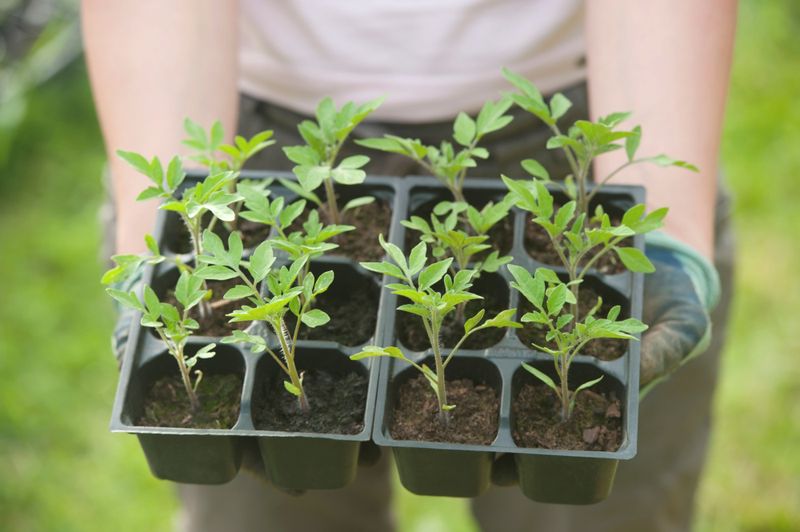
Thin seedlings when they begin to compete. Keep the strongest plant in each cell when the goal is one transplant per cell. Use clean scissors to cut unwanted seedlings at the soil line. Pulling them out can disturb the roots of the plant you want to keep.
Move seedlings into larger pots when their leaves overlap or their roots fill the current container. A plant with too little root space may stop growing well. A larger container gives roots more room to spread and helps support steady growth.
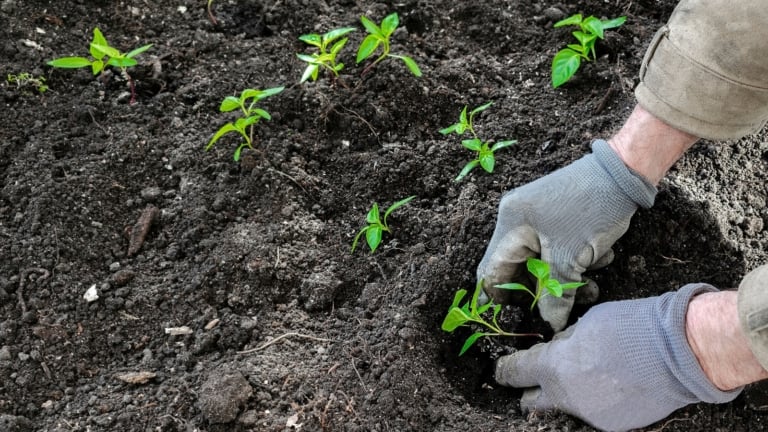
When moving a seedling, hold it by a leaf or lift it with the root ball. Do not grip the stem. A soft stem can be crushed by even light pressure. Handle the plant with care and water it after moving it.
Source: positivebloom.com
Thin crowded cells
Keep enough space between plants for light and air to reach each seedling.
Pot up when needed
Move plants to a larger container when roots fill the cell or leaves overlap.
Handle by the leaves
Avoid squeezing or pulling the delicate stem.
Use clean tools
Clean tools and containers help lower the risk of disease spread.
Why Does Spacing Help Stem Growth?
A crowded tray can create shade even when the grow light is strong. The lower leaves may receive less light, and stems may stretch as plants compete for space. Wider spacing also lets air move between the plants.
You do not need to leave a large gap between every seedling. Follow the crop and container needs. The main goal is to stop plants from pressing against each other as they grow.
Watch leaf overlap
Thin or move plants when their leaves stay crowded.
Check root space
Look for roots that fill the cell or form a dense mat.
A Simple Step-by-Step Plan for Strong Seedling Stems
A steady care plan works better than one strong treatment. Start by checking the plant’s light, roots, water, and space. Then add gentle airflow as the seedling grows. Change one or two things at a time so you can see how the plant responds.
This plan works for many common vegetable and flower seedlings. Still, each crop has its own light, heat, and water needs. Use the seed packet as your guide when a crop needs special care.
Step 1: Check the stems
Look for long growth, pale color, leaning, soft tissue, or damage near the soil line.
Step 2: Fix the light
Provide suitable overhead light and a steady daily schedule.
Step 3: Improve spacing
Thin crowded seedlings and move larger plants into suitable containers.
Step 4: Add mild airflow
Use a small fan on low speed and let the leaves move gently.
Step 5: Check water
Keep the mix moist but allow excess water to drain away.
Step 6: Review plant food
Feed only when the plant has reached the right stage and needs extra nutrients.
Step 7: Track new growth
Watch the next leaves and stem growth to see whether the changes are helping.
What Does Success Look Like?
A successful seedling care plan should lead to steady, compact growth. New leaves should look healthy, and the plant should stand upright without strong support. The stem may become firmer as the plant develops.
Do not judge success by stem thickness alone. A plant may grow well without a very thick stem. Look at the full plant, including its roots, leaves, color, and growth rate.
Healthy new leaves
New growth should have a normal color and shape for the crop.
Steady upright growth
The plant should hold itself up without repeated bending.
Healthy roots
Roots should show steady growth and should not sit in soggy media.
How to Fix Weak or Leggy Seedlings
Weak seedlings can often improve when their growing conditions change. However, a stem that has already stretched will not shrink back to its former length. Focus on helping the plant make better new growth.
First, move the seedling under stronger suitable light. Check that the light covers the whole tray. Next, give the plant more space and use gentle airflow. Review watering and temperature. Avoid adding extra fertilizer unless there is a clear need.
If the plant is tall and cannot stand, use a small support for a short time. A thin plant stake or clean plant clip can help keep it upright while the plant grows. Do not tie the stem tightly. Leave room for normal growth and remove support when the plant can stand on its own.
Some tomato seedlings can be planted deeper because tomato stems can form roots along buried sections. This may help support a tall tomato transplant. Do not use the same method for every crop. Check the needs of the plant before burying any part of its stem.
Source: completegardening.com
For tall, thin stems
Improve light strength, reduce excess heat, and give the plant more space.
For leaning plants
Use overhead light and rotate the tray if light comes from one side.
For a plant that falls over
Check whether the stem is simply weak or whether disease has damaged the base.
For damaged stems
Avoid further handling and use a loose support only when the stem is still intact.
Can an Already Leggy Seedling Become Strong?
Yes, many leggy seedlings can grow better after you fix the cause. The old stem may stay long, but new leaves and new stem growth can be more compact. The result depends on the crop and how much damage has already occurred.
If a seedling is badly stretched, very pale, or broken, it may not recover well. Keep the healthiest plants and start fresh when needed. Starting a new batch at the right time may be easier than trying to save every weak plant.
Keep healthy growing tips
A plant with an intact growing point has a better chance of making new growth.
Do not force a bend
Never bend a weak stem to make it look shorter or stronger.
Replace badly damaged plants
A fresh seedling may be a better choice when the stem is broken or diseased.
Tell Weak Stems Apart From Seedling Disease
Not every seedling that falls over has a weak stem. Damping-off is a disease caused by several soil-borne pathogens. It often affects very young plants in wet growing media.
A seedling with poor light may have a long, thin stem but still look alive and green. A seedling with damping-off may develop a dark, soft, or pinched area near the soil line. It can then fall over and die.
Do not try to save a seedling with clear damping-off signs by tying it to a stick. Remove the affected plant and its growing mix. Check nearby seedlings and improve drainage, spacing, and air movement. Use clean containers and fresh seed-starting mix for a new batch.
Long stem with healthy base
Poor light or excess warmth may be the cause. Correct the growing conditions.
Dark, thin area at soil level
Damping-off may be present. Remove the affected seedling and inspect nearby plants.
Wilted plant in wet soil
Check for root damage and poor drainage before adding more water.
Broken or crushed stem
Stop handling the plant and assess whether the growing tip remains healthy.
How Can You Reduce Damping-Off Risk?
Use a clean seed-starting mix that drains well. Wash reused trays and pots before planting. Give seedlings enough room, remove humidity covers after germination, and avoid keeping the surface wet for long periods.
Good care cannot prevent every plant disease, but it can reduce conditions that favor many seedling problems. If disease keeps returning, ask a local university extension office or plant clinic for help with diagnosis.
Clean containers
Wash and sanitize reused trays and tools before starting new seeds.
Allow space between plants and remove covers after germination.
Harden Off Seedlings Before Planting Outdoors
Indoor seedlings need time to adjust before they face outdoor sun and wind. This process is called hardening off. It helps young plants adjust to stronger light, moving air, and changing temperatures.
Begin the process about one to two weeks before planting, when local weather and the crop allow it. Start with a short time outdoors in a sheltered, shaded place. Bring plants back inside or into a protected area when conditions become harsh.
Increase outdoor time and sunlight in small steps. Add more airflow as the plants adjust. Watch for leaf scorch, wilting, and cold damage. If these signs appear, slow the process and give the plants more time to adjust.
In the United States, planting dates vary by region. Gardeners in northern states may need to wait longer than those in warm southern areas. Check your local frost dates and the crop’s safe outdoor temperature before moving seedlings into the garden.
Source: seedsman.com
Start in shade
Place seedlings in a protected outdoor spot for a short period.
Add time slowly
Increase outdoor exposure over several days as plants adjust.
Add more sunlight
Move from shade to partial sun, then to the light level the crop needs.
Watch the weather
Protect warm-season crops from cold nights, strong wind, and frost.
Why Is Hardening Off Part of Stem Strengthening?
Indoor stems grow in a stable setting. Outdoor plants face moving air and changing weather. Gradual exposure gives the whole plant time to adjust instead of facing a sudden change.
Hardening off does not make a frost-sensitive crop frost-proof. It also cannot repair a badly damaged stem. It prepares a healthy plant for normal outdoor conditions.
Builds outdoor readiness
Gradual exposure helps seedlings adjust to natural light and airflow.
Reduces sudden stress
A slow change is less harsh than moving a plant straight from indoors to full sun.
Common Mistakes That Weaken Seedling Stems
Many weak stems come from small care problems that build over time. A plant may receive enough water but not enough light. Another may get plenty of light but sit in wet soil. Look at the full growing setup before changing one part.
Avoid quick fixes that put pressure on the stem. Tight ties, hard rubbing, strong fans, and heavy fertilizer can cause more harm than good. Healthy growth comes from steady care, not force.
Leaving lights too far away
Weak light can cause long, thin growth. Check lamp strength and position.
Running fans too strongly
Hard airflow can bend leaves, dry the mix, and damage tender plants.
Overfeeding young plants
Too much fertilizer can cause soft growth and harm the roots.
Watering on a fixed daily schedule
Water needs change with plant size, room heat, pot size, and airflow.
Keeping seedlings too close
Crowding can lead to uneven light and poor air movement.
Using tight rubber bands
A tight band can press into a soft stem and restrict normal growth.
Skipping hardening off
A sudden move outdoors can expose tender plants to harsh sun and wind.
Is Supporting a Seedling the Same as Strengthening It?
No. A stake or clip can hold a weak plant upright, but it does not fix the reason the stem became weak. The plant still needs good light, water, air, and healthy roots.
Use support only as a short-term aid when needed. Keep ties loose and check them often. Remove the support when the plant can stand on its own.
Support
Keeps a plant upright while it grows or recovers.
Strengthening
Improves growing conditions so the plant can develop healthy tissue.
A Practical Stem Strength Troubleshooting Guide
Use the plant’s main symptom to decide what to check first. Do not change light, water, heat, and fertilizer all at once. Start with the most likely cause and watch the next stage of growth.
Tall, thin, pale seedlings
Likely issue: weak light or excess warmth. Fix: improve light, review temperature, and give plants more space.
Seedlings leaning to one side
Likely issue: one-sided light. Fix: add overhead light and rotate the tray.
Stems bending under leaves
Likely issue: weak growth, poor light, or a heavy top. Fix: improve light and use temporary loose support if needed.
Soft stems with wet soil
Likely issue: poor drainage or root stress. Fix: check the roots, drainage holes, and watering habits.
Sudden collapse at the soil line
Likely issue: damping-off. Fix: remove the affected plant and improve tray hygiene and airflow.
Slow growth after strong feeding
Likely issue: excess fertilizer or root injury. Fix: stop extra feeding and review the product rate and growing mix.
Leaf damage after fan use
Likely issue: airflow is too strong or too long. Fix: lower the fan speed, move it farther away, or stop the treatment.
When Should You Start Again?
Start a new batch when most seedlings are badly stretched, broken, or diseased. Fresh seeds and clean containers can give you a better result than trying to save plants with severe damage.
Before sowing again, check the planting date, light setup, growing mix, and tray space. Fix the cause before the next seeds sprout. This makes it easier to grow strong plants from the start.
Keep the best plants
Save seedlings with healthy leaves, roots, and growing tips.
Remove diseased plants
Do not keep seedlings with clear signs of damping-off.
Correct the setup
Improve light, airflow, drainage, and spacing before sowing again.
Next Questions to Ask After Improving Stem Strength
After fixing weak stems, a gardener may need to decide whether to keep a stretched seedling, move it into a larger pot, or begin hardening it off. These are inferred next needs based on the growing process, not claims about search volume.
The most useful next check is the health of the whole plant. A firm stem with healthy roots and leaves is a better sign than stem size alone. If the plant still struggles, check for disease or a crop-specific growing need before adding more treatments.
INFERRED NEXT NEED: Can a leggy seedling recover?
Reader stage: rescue. Check whether the growing tip and roots are healthy. Better light can improve new growth, but it will not shorten an old stretched stem.
INFERRED NEXT NEED: Should a seedling be moved to a larger pot?
Reader stage: ongoing care. Check for overlapping leaves, crowded roots, or a full root ball before potting up.
INFERRED NEXT NEED: How do I know if a seedling has damping-off?
Reader stage: troubleshooting. Check the stem base for dark, soft, or pinched tissue and remove plants with clear disease signs.
INFERRED NEXT NEED: When can seedlings go outside?
Reader stage: transplant preparation. Check local frost dates, crop temperature needs, and readiness for gradual hardening off.
A Useful Order for Future Care
First, make sure the seedling is healthy. Next, correct any light, water, or space problem. Then move it to a larger pot if the roots need more room. Start hardening off only when the plant and local weather are ready.
This order helps avoid extra stress. It also keeps the main goal clear: grow a healthy plant that can stand and keep growing.
Check plant health
Look at the roots, stem base, leaves, and growing tip.
Fix the growing setup
Correct the cause of weak growth before adding new treatments.
Prepare for transplanting
Pot up or harden off when the plant is ready.
Frequently Asked Questions
Q
How can I make seedling stems thicker?
Give seedlings strong overhead light, gentle airflow, enough space, and steady water. Keep the temperature within the crop’s suitable range. Avoid excess nitrogen fertilizer. These steps support healthy growth, but stem thickness will still depend on the plant type and age.
Q
Does a fan really strengthen seedling stems?
A small fan can help seedlings adjust to gentle movement. It also improves air circulation around the leaves. Use low airflow and short sessions at first. The leaves should move slightly, not bend hard. A fan can support healthy growth, but it does not guarantee thicker stems.
Q
Can I strengthen seedlings by touching or brushing them?
Some plants respond to gentle touch with changes in growth. This is called thigmomorphogenesis. If you try brushing, use a clean, soft touch on healthy plants with several leaves. Do not rub or bend the stems. Stop if you see damage. Gentle airflow is often easier to control.
Q
Why are my seedlings tall but still have thin stems?
The most common cause is poor light. Excess warmth and crowded trays can also cause long growth. Move the plants under suitable overhead light, give them more space, and check the room temperature. The old stem may stay long, but new growth can become more compact.
Q
How long does seedling stem strengthening take?
There is no fixed time. It depends on the crop, age, light, temperature, and plant health. You may see better growth as new leaves and stem sections develop. Watch the new growth rather than expecting an old weak stem to become short or thick again.
✦ Wrapping Up
Conclusion
Strong seedling stems start with good daily care. Bright light, gentle airflow, proper spacing, balanced water, and suitable plant food help young plants grow well. These steps are more useful than trying to force a weak stem with tight ties or hard brushing.
Check your seedlings often and make small changes when needed. Look at the whole plant, not just the stem. With steady care and gradual hardening off, many seedlings can develop into firm, healthy transplants ready for the garden.
💡 Key Takeaway
Start today by checking the light above your seedlings, spacing crowded plants, and testing the growing mix before watering. Add gentle airflow only when the plants are ready, then watch their new growth for signs of stronger, healthier stems.