LED grow lights outperform fluorescents in efficiency, lifespan, and spectrum control for most indoor grows.
I’ve designed and tested indoor gardens for years, helping hobbyists and pros choose the best light. This guide dives into LED Grow Lights vs Fluorescent Grow Lights with clear facts, real-world tips, and simple comparisons. You’ll learn how each technology works, when to pick one over the other, cost and energy trade-offs, setup tips I’ve learned from hands-on experience, and actionable steps to match lights to your plants. Read on to make a confident, cost-smart choice for your next grow.
How LED Grow Lights vs Fluorescent Grow Lights work
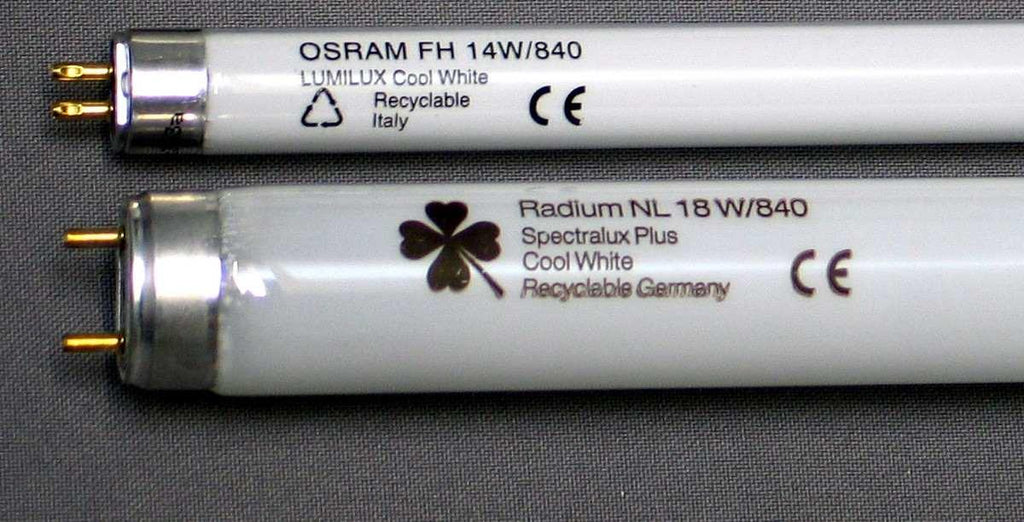
LED Grow Lights vs Fluorescent Grow Lights use different physics to make light. LEDs use semiconductor chips. They convert electricity directly into light with little heat. Fluorescent lights use gas and phosphor. They run cooler than many older lamps but still emit waste heat from the ballast and tube.
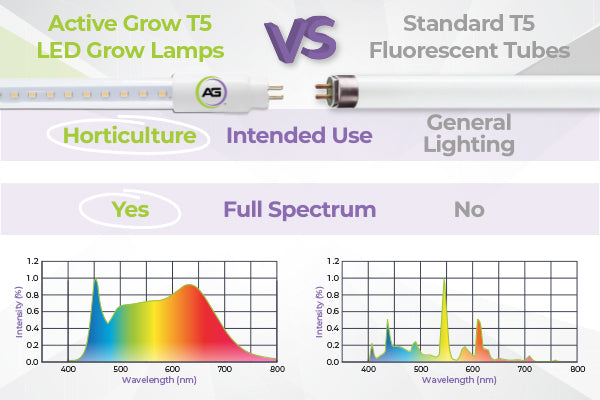
LED fixtures can mix colors and tune spectra. That allows growers to tune light for seedlings, veg, or bloom. Fluorescents come in balanced spectra but with limited options. They are often full-spectrum or cool white. Both light types produce usable light for plants, but they do so in different ways and with different efficiency and control.
Key differences at a glance
LED Grow Lights vs Fluorescent Grow Lights differ across core traits. Here are the main points I use when advising growers:
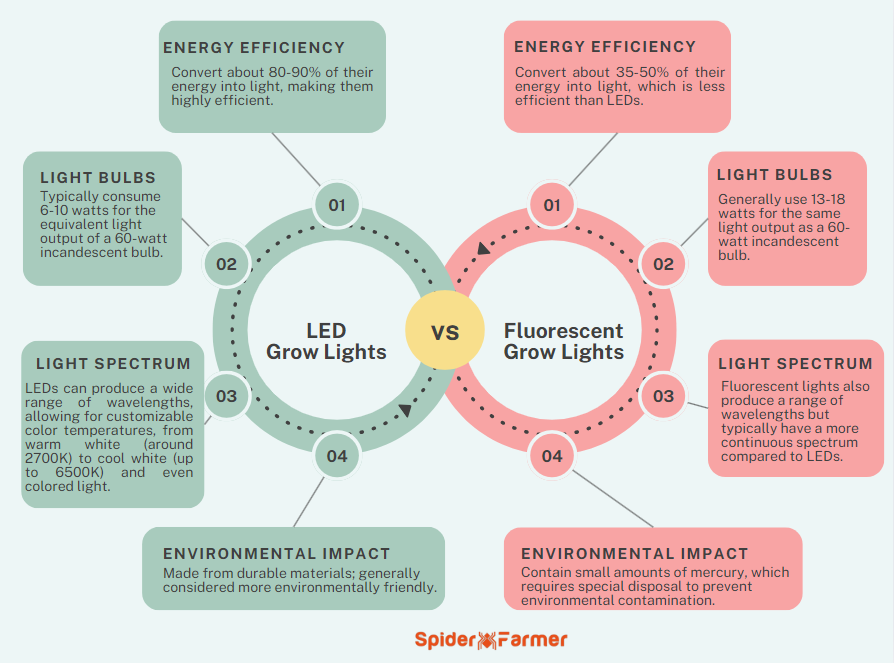
- Efficiency and power draw. LEDs use less electricity per unit of usable plant light and give higher lumens per watt.
- Spectrum control. LEDs offer selectable spectrums and full-spectrum options tailored to plant stages.
- Heat output. LEDs run cooler at the fixture surface but can create focused heat spots. Fluorescents emit more ambient heat nearby.
- Lifespan and maintenance. LEDs last longer, often 50,000+ hours. Fluorescent tubes need replacement more often, typically 10,000–20,000 hours.
- Initial cost and ROI. LEDs cost more up front but often repay via energy savings. Fluorescents are cheaper to buy but cost more in the long run.
- Light distribution. Fluorescent tubes spread light well for low ceilings and wide fixtures. Many LED arrays use lenses that focus light and may need more careful placement.
- Dimmability and control. LEDs integrate well with dimmers, controllers, and timers. Fluorescent dimming is possible but more limited.
These differences shape which system fits hobby closets, seedling racks, or commercial rooms. Use the checklist above to match the tech to your goals.
Spectrum, intensity, and plant response
Understanding light quality helps you choose between LED Grow Lights vs Fluorescent Grow Lights. Plants react to photon flux, not visible lumens. Two useful terms are:
- PAR (Photosynthetically Active Radiation). This is light plants use, measured in micromoles per square meter per second.
- PPFD (Photosynthetic Photon Flux Density). This tells you how much PAR hits a plant surface.
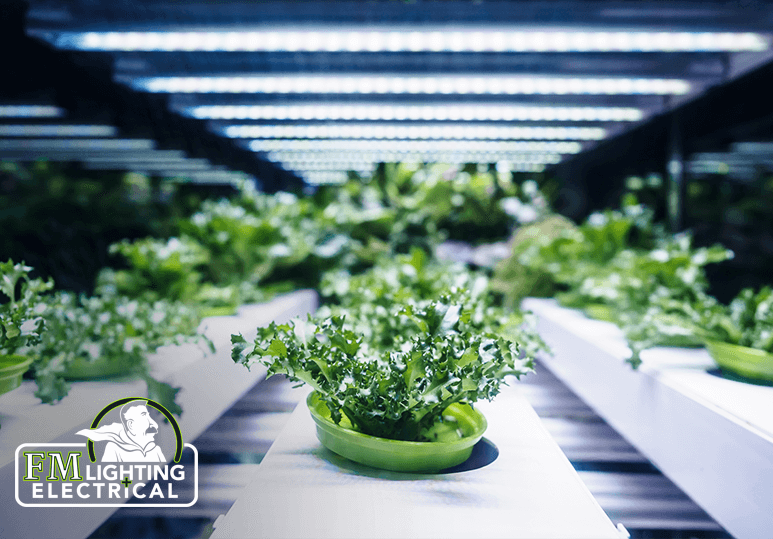
LEDs usually give higher PPFD for less watts. They can also shift spectra to boost blue for veg or red for bloom. Fluorescent tubes often give a balanced white spectrum that is great for seedlings and clones. They deliver gentle light and low PPFD compared to many LEDs.
Practical examples from my work:
- For seedlings and clones, I used T5 fluorescents because the light is soft and even. Growth was steady with minimal stress.
- When I moved to larger vegetative racks, I switched to LED panels. They raised PPFD and reduced my power bills.
PAA-style questions growers ask:
- Do LEDs make plants grow faster than fluorescents? LEDs can increase growth when they deliver higher PPFD and a tuned spectrum. For low-light needs, fluorescents may be adequate.
- Are LEDs better for flowering? Yes. LEDs that offer strong red and far-red can boost bloom stages more efficiently than standard fluorescents.
- Will fluorescents harm my plants? No. Fluorescents work well for seedlings and low-light species. They simply lack the power and lifespan of modern LEDs.
Energy use, cost, and ROI
Cost matters for most growers. LED Grow Lights vs Fluorescent Grow Lights show clear differences in lifetime cost.
- Upfront cost. LEDs are more expensive to buy. Fluorescent fixtures and tubes are cheaper initially.
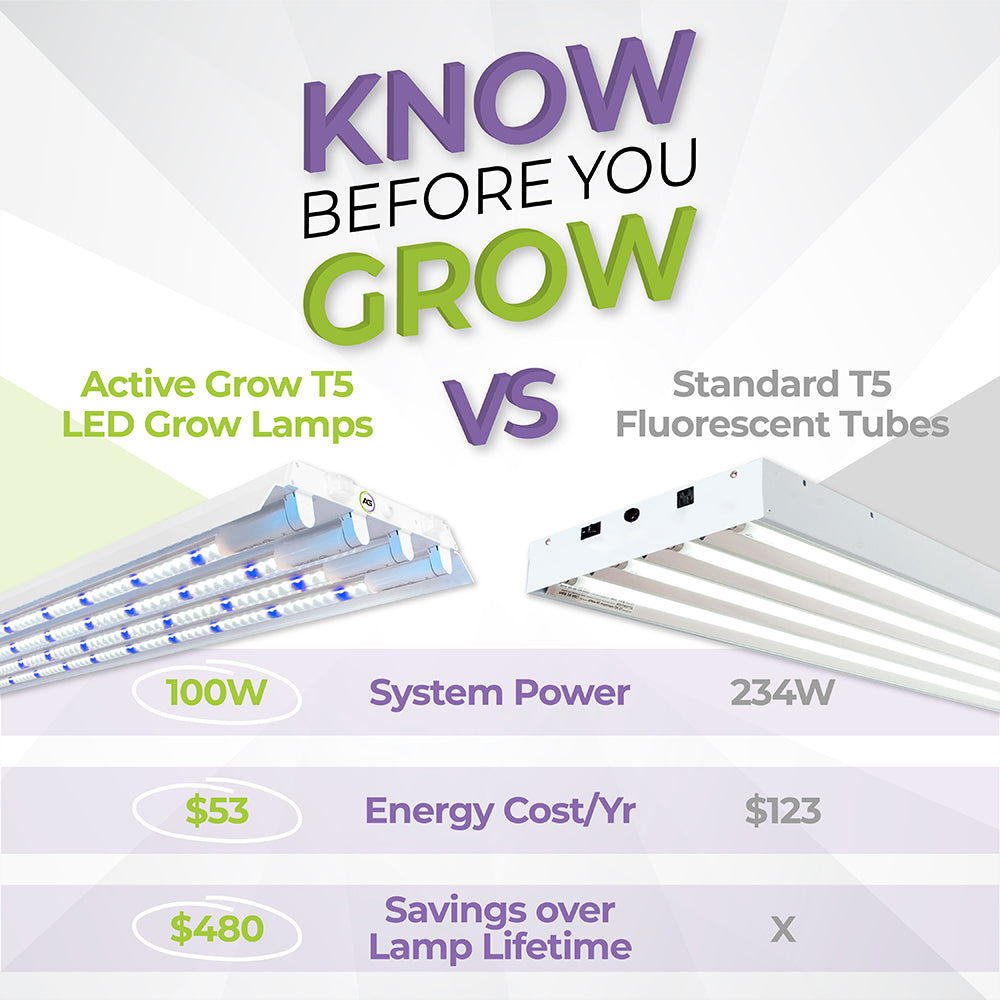
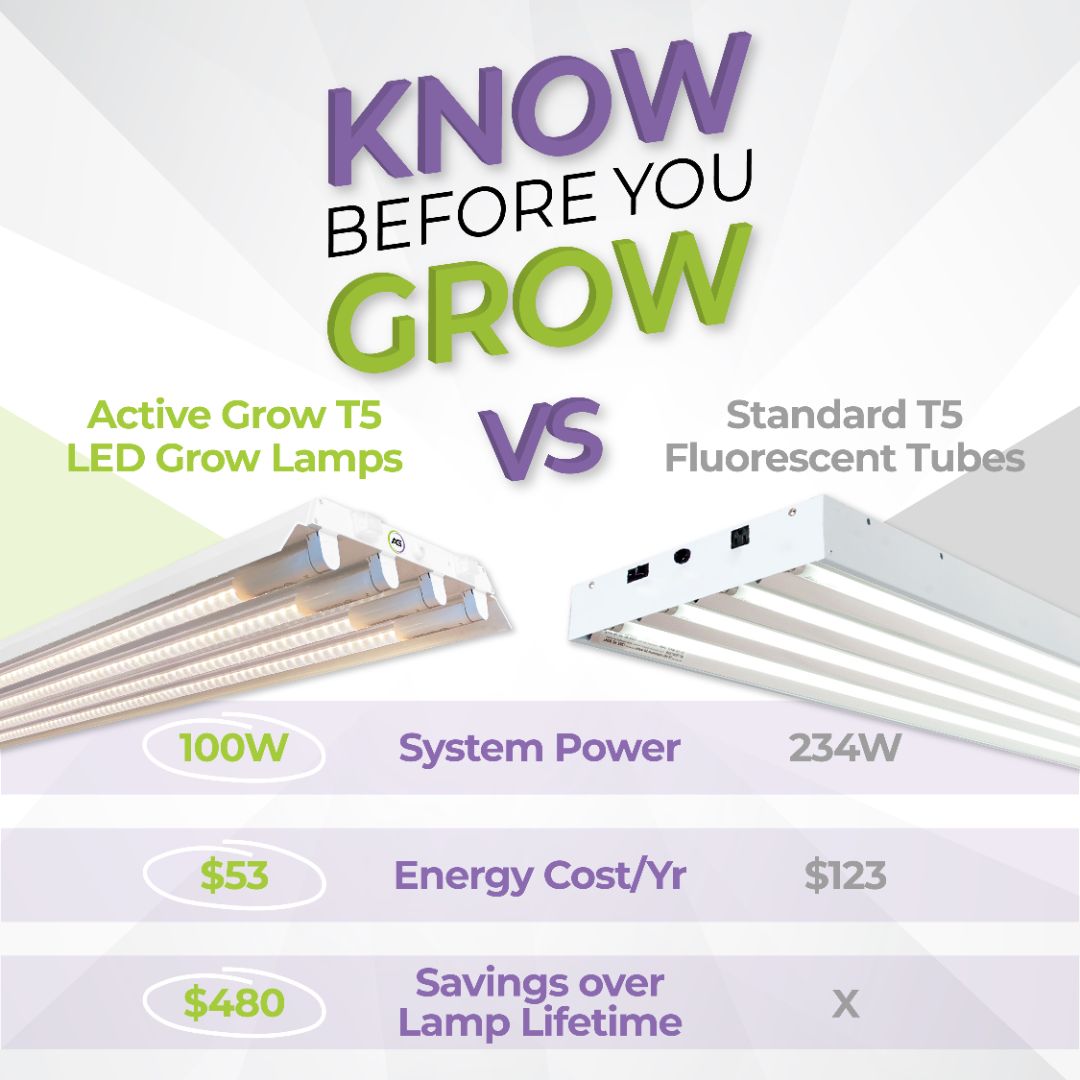
- Electricity. LEDs use 30–60% less energy for similar plant output in many cases. That saves money every month.
- Replacements. Fluorescent tubes need swapping every 1–2 years in heavy use. LED fixtures last years without lamp swaps.
- Heat and HVAC. LEDs reduce room heat and can lower cooling costs. Fluorescents add heat and raise cooling needs.
Example ROI math I used for a 4×4 hobby tent:
- Fluorescent setup: $150 initial, 200 watts, tubes replaced yearly.
- LED setup: $450 initial, 120 watts, no replacement for 5 years.
- Over five years, LED saved around 40–60% in energy and replacement costs depending on local electricity rates.
These numbers vary by brand and scale. If you plan long-term and run lights many hours, LEDs often win the ROI game.
Practical setup tips and mistakes to avoid
Choosing and using lights is more than buying a fixture. From hands-on experience, these tips help you avoid common mistakes.
- Match light to plant stage. Use cool white or blue-rich spectrum for seedlings. Switch to red-rich for flowering.
- Keep correct hang distance. For LEDs, follow manufacturer PPFD maps. For fluorescents, keep tubes 2–6 inches above seedlings.
- Rotate and space evenly. Prevent hot spots by staggering LED panels or using reflectors with fluorescents.
- Watch heat, not just touch. LED tops may be warm. Heat buildup can stress plants if ventilation is poor.
- Check ballast type. Electronic ballasts in fluorescents are quieter and more efficient than magnetic ballasts.
- Avoid cheap LED knock-offs. Low-cost LEDs may use low-quality diodes that drop spectrum or fail early.
Personal lesson: I once used a high-power LED too close to seedlings. Leaves curled and growth slowed. I moved the fixture up and reduced intensity. Growth normalized within a week. Lesson learned: intensity and distance matter more than brand.
Choosing the right light for your grow
Pick by use case, budget, and scale. Here are common scenarios and my recommendation.
- Seedlings, clones, and microgreens. Choose fluorescent T5 or low-intensity LEDs. They offer soft, even light.
- Small hobby tent with mixed growth. Choose full-spectrum LED panels. They save space and energy and handle all stages.
- Large veg rooms. Use high-output LED arrays for high PPFD and control. They scale better and cut long-term costs.
- Commercial grows. Invest in high-quality LEDs with proven PAR specs and warranties. Consider lifecycle cost and service.
- Low budget or single-year projects. Fluorescents can be a cheap start. Expect higher long-term cost if you grow year-after-year.
When picking, compare PAR charts, watt draw, beam angle, dimming, and warranty. If you can, measure PPFD in your space. That beats raw watt claims every time.
Frequently Asked Questions of LED Grow Lights vs Fluorescent Grow Lights
Are LED Grow Lights vs Fluorescent Grow Lights interchangeable?
They can both grow plants, but they are not fully interchangeable. LEDs often replace fluorescents for higher PPFD and longer life, while fluorescents still shine for low-light and seedling tasks.
Which is cheaper to run: LED Grow Lights vs Fluorescent Grow Lights?
LEDs are usually cheaper to run. They use less power for the same usable plant light and need fewer replacements over time.
Do plants need a full spectrum light?
Plants grow with a range of wavelengths. Full-spectrum LEDs and quality fluorescents both provide usable light. Tailored spectra can optimize specific growth stages.
How far should I hang LED or fluorescent lights?
Fluorescent tubes are best 2–6 inches above seedlings. LED panels vary more; many need 12–24 inches or more depending on output. Always check PPFD and follow manufacturer guidelines.
Can I mix LED Grow Lights vs Fluorescent Grow Lights in the same garden?
Yes. Mixing can balance spectrum, spread light, and control heat. For instance, use LEDs for core PPFD and fluorescents for side fill or seedlings.
How long do LED Grow Lights vs Fluorescent Grow Lights last?
LEDs often last 50,000 hours or more. Fluorescent tubes commonly need replacement after 10,000–20,000 hours, depending on use and ballast.
Conclusion
LED Grow Lights vs Fluorescent Grow Lights each have clear strengths. LEDs win on efficiency, lifespan, and spectrum control. Fluorescents still work well for seedlings, low budgets, and wide low-height setups. My practical tip: match the lamp to your plant stage and long-term goals. Start small, measure PPFD, and adjust distance and intensity as plants respond.
Take action: test a single LED panel alongside your fluorescent setup and compare growth and power use for a month. Share results, ask questions, or subscribe for more grow lighting guides.